|
Movies we've seen © 2004-2013 by John Varley; all rights reserved |
J
|
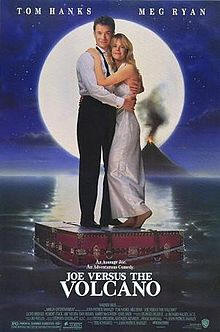
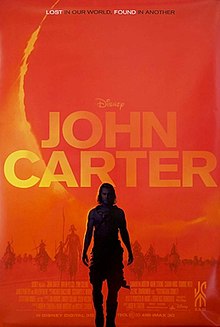
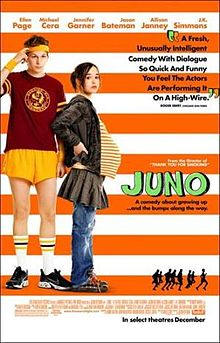
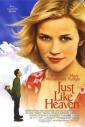
J. Edgar (2011) Of all the sorry sacks of shit this country ever spawned, J. Edgar Hoover was the sorriest until Dick Cheney came along. Forget Benedict Arnold, forget all the other spies and traitors, Hoover presented the greatest threat to our constitution and freedoms than anyone else. Like all super-patriots, his real interest was personal power, and he accumulated it every year of his life, until he sat like a bloated, smelly, poisonous toad on enough illegally-gained tools of blackmail to pretty much destroy this country if he chose to do so. One of the few good things I can say that he ever did in his life was to destroy all that shit posthumously, through his ever-faithful personal secretary, Helen Gandy. And he didn’t even do that for his country, he did it because he hated Richard Nixon and didn’t want it all to fall into his hands. Hell, he hated pretty much everybody. I can understand why Leonardo DiCaprio wanted to play this part. Any actor would revel in it. I find it a little harder to see why Clint Eastwood wanted to make it. To make a biography of someone so loathsome … I couldn’t do it. And it’s difficult for me to enjoy a film about someone I hate so much—I still haven’t seen Oliver Stone’s W. and I probably never will. That rat bastard is still alive. But it’s a good movie, within the limitations of the genre. It hopscotches over his life from his first days at the Bureau of Investigation, when they weren’t even allowed to carry firearms, to his death. We see him in all his horrible paranoia and egomania, get glimpses of all the things he did to undermine all our civil rights, and all the lies he told. (These lies are presented as facts, until near the end there is a summing up, and we see what actually happened.) One of the tools government uses to justify its existence is fear, and Hoover was a master at it. Fear of communists, fear of Negroes, fear of pathetic nobodies like the Weathermen. During times of fear most people are eager to jettison their civil rights in the name of staying safe, as we’ve seen once more in the last decade, when 9/11 proved such a godsend to the masters of war and fear. Hoover would have known exactly how to make the most of it. With Hoover, there is always the question of homosexuality and cross-dressing. How would Eastwood handle this? After all, in spite of all the allegations, there exists no proof that he ever donned an evening gown. I think his homosexuality (I can’t bring myself to use the word “gay” when describing him) is pretty much given … but how are you going to show that? Fairly obliquely, as it turns out. We’ll never know just how far Hoover and Clyde Tolson expressed their mutual love, but the scene where it is spelled out as opposed to being just hinted at struck me as a plausible scene. Oddly enough, the only thing I can find to admire about Hoover is the only thing in his life that he was certainly deeply ashamed of: his love for Tolson. These days, who cares if he was … okay, gay … who cares if he wore women’s clothing? But like many other self-hating gay men of that generation (such as that prick Roy Cohn), he made up for it by hating queers all the more, going after them legally and with blackmail with exaggerated fervor, and possibly never admitting even to himself that he was “one of them.” IMDb.com Jackass Number Two (2006) Second feature at drive-in. IMDb.com James’ Journey to Jerusalem (Massa'ot James Be'eretz Hakodesh) (Israel, 2003) I enjoyed this film, which is presented as a modern-day fable concerning a young African on a pilgrimage to the Holy Land, but I have to say I don’t know what the moral was unless it is Never Trust a Jew. Since this was made by an Israeli, that’s probably not it. But everyone James meets in Israel, without exception, is a thief and a cheat, interested only in shafting everybody in sight. He makes it only to Tel Aviv, where he is put into what is basically slavery. He must work for the man who has his passport, or be deported. It’s quite a racket, and not a picture of Israel that I’ve seen before. He begins as an innocent, learns the ropes, finds that the only God worshipped in the Holy Land is the Holy Shekel. IMDb.com Jane Eyre (2011) This story by Charlotte Brontë has been filmed no less than twenty-two times, all the way back to 1914. Somehow, I was able to avoid every one of them until now, so I won’t be comparing it to past performances. This is a beautiful production, great photography, great acting, great adaptation. But it’s still a gothic romance, and I’m afraid that’s a genre that holds few attractions for me, whether it’s high-class stuff like this, or Wuthering Heights (which I really didn’t like) or the garbage of the Twilight series of books and movies. Don’t get me wrong, this is a very good movie and I’m glad I saw it, but I just always sit there grumbling: “What is it she sees in Heathcliff/Rochester/Cullen?” Dark, brooding guys without any attraction I can discern other than good looks. I’ve concluded it’s a girl thing (though of course there are plenty of non-gay men who do enjoy this sort of thing). The stories just don’t pluck a chord in my Y chromosome. Plus, with this one, every time I hear the word “Rochester,” my mind supplies the next line: “Comin’, Mistah Benny!” IMDb.com Japanese Story (Australia, 2003) Toni Collette is wonderful. I can’t say much about the story because it contains one of the most surprising twists in the middle since Psycho, but it isn’t a thriller at all. It simply doesn’t go where you expect it to go. Recommended. IMDb.com Japon (Mexico, 2002) We hereby bestow the coveted “Gerry” Award for Cinematic Pointlessness to Mexican director Carlos Reygadas. This is a new award, nominated and voted on solely by Lee and myself, for the most egregious example of pretension, sloppiness, artsy-fartsyness, and most of all being the boooooriiiingest movie of the year (or month, week, depending on how often we decide to give it out). Named in honor of Gus van Sant, whose unbearably awful Gerry inspired us. The award is a cardboard cut-out of the letters FF, mounted on a Popsicle stick and embedded in a base of hardened cow flop. The letters FF signify that, at some point we looked at each other and said, simultaneously “Fast Forward!!!” A movie where you can fast forward without any fear at all of missing something, where you care so little for the characters and situations that you don’t mind them going by at 1.5X with dialogue by Chip ‘n Dale, 5X with no sound at all, or even at 60X is a movie richly deserving of the Gus Award. Summary: An artist goes to a remote valley in Mexico to kill himself. Why this valley? Why kill himself? We aren’t told. He rents a room from an 80-year-old woman who lives at the top of a hill. This entails a lot of walking up and down. We see just about every step of every trip up and down. To make it even more excruciatingly boring, the artist has a limp, so it takes him a long time. Why does he limp? We aren’t told. He finds a dead horse. He decides not to kill himself. He fucks his landlady. We see this in all its clinical detachment. Is this meant to shock us? It didn’t shock me. His landlady’s relatives want her barn. Not as a building, they just want the stones it’s made of. The artist protests. They tear down the barn anyway. They haul the stones down the mountain. Then we get a long, long, long tracking shot of stones and bodies scattered along a railroad track. The last body is the old landlady. Apparently, on perfectly level ground, on a track straight as an arrow, the people have been hit by a train and all killed. Do we care? Not at all. Why is it called Japon? (Spanish for Japan.) Maybe because before it’s over you want to commit ritual suicide. Suicide and sex with an 80-year-old woman is a lot more fun in Harold and Maude, with music by Cat Stevens before he changed his name to Yusuf Islam and "turned his back on the music industry." IMDb.com Jennifer's Body (2009) First feature At the Drive-In with Whiteout. IMDb.com Jersey Girl (2004) It’s funny to compare the careers of Ben Affleck and Matt Damon after their breakout co-production Good Will Hunting. Both have made some turkeys, but Damon seems to have been more astute at choosing his scripts. Affleck has spent entirely too much time making by-the-book schlock like this. Oddly, the movie did perk up a little when Will Smith showed up, and I have to admit I did enjoy seeing “God, That’s Good!” from Sweeney Todd staged at an elementary school ... but that’s because I like Sweeney Todd, not this movie. I pretty much hated this movie; wish I could have nodded off instead. IMDb.com Jesus of Montreal (1989) I’ve been interested in this film for years, and now it’s out on DVD. The interest comes because it was filmed at about the same time as Millennium was filming in Toronto. I was nominated for a Genie Award for best screenplay for a Canadian play, and Jesus of Montreal was my main competition. The voters wisely chose to give just about all the awards to this film. It’s interesting to contrast this with that great galloping gob of gore, The Passion of the Christ. The plot: 5 actors are asked to update a traditional passion play in light of new discoveries by Biblical scholars and archaeologists and historians. The play they come up with is very good, and painfully honest, and of course the higher-ups in the Church hate it. What it points out is that, assuming he even lived (which can’t be proven historically), we don’t know shit about Jesus and his life. He’s born, in a highly unlikely manner, and pow! he’s off to Egypt, where he apparently grew up. There’s a story about him confounding the elders in the temple. Then here he is, ex-carpenter and now rabble-rouser, disturbing the peace. Soon we begin to realize that, of the very little we think we know about Jesus, about 75% of it is wrong, 24% is lies (miracles), and maybe 1% (his teachings) might be true. This is according to people who have devoted their lives to studying the man and the period. That part is fun enough in itself, but there’s even more fun in seeing how the life of the man who is playing Jesus is paralleling the story of Jesus. This isn’t hammered home, and no attempt is made to draw exact lines, but you can’t help noticing that one woman around him is like Mary, and another is like Mary Magdalene. And there is the violence against the moneylenders in the temple, and Satan taking him up to a high place and tempting him. And a neat twist on the resurrection ... All in all, maybe a tad too long, but well done and worth seeing. IMDb.com Jindabyne (Australia, 2006) … is a small town halfway between Sydney and Melbourne. It sits on a lake that didn't used to be there, created by a dam. The chief industry seems to be sport fishing. There are trout the size of atomic submarines in the rivers feeding the lake. Digression: The first thing you see in this movie is an announcement that says something like “Aboriginal and Torres Strait Islanders are warned that this motion picture contains the voices and images of dead people.” I looked it up and confirmed my feeling that the Torres Strait Islands are a group of small patches of land just off the tip of that finger of Queensland that points imperiously at New Guinea. Later, in a TV news report covering the murder that is at the center of what little plot there is here, the newsreader warns her aboriginal viewers that “the names of dead people” are contained in her report. Wow. I’ve heard of cultures where they don’t wish to have their pictures taken, ranging from the Amish to tribes who feel a camera will steal their souls. But not mention the names of the dead? That could sure put a crimp in a lot of conversations. “Remember when old What’s-his-name went to the river and …” “What’s who’s name?” “You know, What’s-his-name, the oldest son of Whosis. Big old dude. Scar on his face.” “You mean What’s-his-face.” “No, no, What’s-his-face was married to that old bag, name starts with a G …” And if you are aboriginal or TS Islander and think I’m mocking your religion, you’re absolutely right. It’s real stupid. But no stupider than any other religion. Four good friends, including Gabriel Byrne, take off one morning on a fishing trip. They hike all day into the bush, set up camp, and start fishing. Then they discover the body of a young nude woman floating face-down in the river. It’s clear that she has been murdered. It’s too late to go back to the car, so they catch dinner, enjoy it, and turn in. But the next day … damn, it’s just such a perfect day, and we’ve been planning this trip so long, and the damn fish are just leaping into the nets, and anyway, she’s dead … they spend the day fishing, and having a glorious time. Next day, turn fan on high, throw in shit … No one in town can believe these guys did it, including, most of all, his wife, Laura Linney. (What an American and an Irishman are doing married in the outback is never explained, but that’s okay, there’s a lot left unexplained here.) The guys are in deep denial about it. What did we do wrong? She was dead, fer chrissake. We couldn’t do anything for her. Their words are belied by their actions, though. The first thing Gabe says when they get back to the car is “Let’s get our stories straight.” So they claim one of them injured his ankle and they couldn’t hike out. Rather a (so-to-speak) lame excuse, as everyone realizes. (Interestingly, three of the threads on the IMDb are asking the same question. What did they do wrong? My answer is, if you are insensitive enough to ask that question, there is no hope for you. They did nothing illegal, even the disgusted cop admits that. Wrong is a whole different matter.) Because the girl was a 19-year-old TS Islander, the racial issue comes up. Would you have left her if she was white? I think they probably would have—this wasn’t about race, this was about fishing—but I can see the Islanders’ point. Laura, who did nothing at all wrong, becomes obsessed with trying to do something, anything, to set things right, and she makes all the wrong moves. Good intentions, you know? The town is shunning her, the Islanders want no part of her, and Gabe, a moral weakling, is getting fed up. There is a tiny bit of that largely meaningless word, closure, at the end. If you’re looking for a whodunit, this is not for you. We know who the killer is in the first five minutes. We see nothing of the hunt for the killer. This is all about how this horror impacts these families. There are many things going on, some merely hinted at, deep background, most never resolved. Again, if you want things neat, go elsewhere. There is a small nod to the possibility that the killer might strike again, and there are two moments so tense that Lee was bouncing up and down on the couch, moaning … but it’s not a horror picture, either. It’s not about a serial killer, it’s about the people who have to deal with the effects his crimes and their actions have on their lives. I thought it was done very well. BTW: If this story looks vaguely familiar, it’s because it was told before in Short Cuts, by Robert Altman, one of those movies you most likely either loved or hated. We loved it, and will view my Laserdisc of it soon. Altman took a handful of short stories by Raymond Carver and interwove them. The writer of the new movie just used one of them. Short Cuts had one of the all-time dream casts, I feel: Matthew Modine, Julianne Moore, Fred Ward, Anne Archer, Buck Henry, Huey Lewis, Lily Tomlin, Tom Waits, Andie MacDowell, Lyle Lovett, Jack Lemmon, Lili Taylor, Robert Downey, Jr., Jennifer Jason Leigh, Chris Penn, Tim Robbins, Madeleine Stowe, and Frances McDormand, among others. Wow! IMDb.com Joe Versus the Volcano (1990) This is one of those divisive films. By and large, you either love it or hate it. I’m one who loves it, madly. It was written and directed by John Patrick Shanley (the only film has he directed, as this one flopped), best known for Moonstruck and the recent Doubt. It is a fable that requires you to suspend your disbelief, as many things happen—mostly toward the end—that are clearly impossible. Joe works in the most soulless environment I’ve ever seen put on film. This factory makes the downtrodden workers in Metropolis look like a week at Club Med. We see them shuffling to work to the tune of Eric Burdon singing “Sixteen Tons.” The factory is the “Home of the Anal Probe.” He works in an office with flickering fluorescent lights that would drive me insane in ten seconds. His boss, Dan Hedaya, is always on the phone, saying the same things over and over: “I know he can get the job, but can he do the job? No I didn’t. No I didn’t. No I didn’t. No I didn’t. I know he can get the job, but can he do the job?” Already you’re ready to kill him, right? His job could be done by a tape loop. On his desk is a prototype model of “artificial testicles.” This is all just brilliantly done. Not surprisingly, Joe is depressed, and always feels bad. Then a doctor tells him he’s dying of something called a “brain cloud.” He’ll feel fine for about three months, and then he’ll keel over dead. He suggests a change in lifestyle. Next day an eccentric billionaire (Lloyd Bridges, very funny) shows up at his door with a proposition. The island of Waponi-woo (means little island with a big volcano) have the world’s only supply of something needed to make superconductors. Trouble is, they believe that every hundred years somebody must willingly jump into the volcano, or it will blow up. He wants Joe to jump, so he can buy the rare element. He gives Joe four platinum credit cards and tells him to knock himself out buying stuff, then get on a yacht, sail to Waponi-woo, and throw himself into the volcano. Everything first class, all the way. Joe says okay. Well, wouldn’t you? Would you rather sit in your shitty apartment and wait to die? On the way to the island, the yacht sinks, but Joe and the billionaire’s daughter make it to shore, and eventually jump into the volcano. But the volcano spits them out and the island sinks, because the volcano god was pissed that none of the Waponi had the guts to jump in. Joe finds out he’s not dying (the doctor had been bought off by the billionaire, to make Joe amenable to the offer). And Joe and the daughter drift off in the moonlight, counting on their amazing good luck to see them through. It’s all about grabbing at any chance life throws at you, even if it seems a bit bizarre. Or would you rather spend your life writing advertising copy about anal probes and artificial testicles? The pleasures of this movie are the clever writing, the music, and the acting in a host of small parts. Ossie Davis is particularly great as the limo driver who teaches Joe to shop for fine clothes. The luggage salesman (“Luggage is the principle preoccupation of my life”) sells him four super-deluxe trunks that save his life when the boat sinks, and when the island blows up. Tom Hanks is good as usual. But the best is Meg Ryan, who plays three totally different parts superbly. I looked at the message boards at the IMDb to see what people didn’t like about the film. Some of the complaints were perfectly valid, and then some just made me think … who the hell are these people? I’m speaking of the ones who complained that a volcano can’t spit people out alive, and even if it did, they fell from such a great height that the impact would have killed them. Well, duuuuuh. In your next posting, please tell me all about how a girl can’t survive a fall down a rabbit hole (even if she could get into it!), nor get very small or very large by eating bits of cake. As for surviving being dropped—in your house, which couldn’t possibly hold together!—by a tornado into a land of little people singing about some fucking yellow brick road … well, how dumb do they think I am? Even sillier, somebody complained of the crass insensitivity displayed by Joe and the daughter when the island of Waponi-woo was destroyed, killing thousands of natives. My god, they should have been horrified! Again, some people seem doomed to take everything literally. It’s a joke, dude! It’s a fable. These people were descendants of Hebrews and four other ethnic groups who were blown off course 1000 years ago. One of their chants was Hava Nagila! They are wild about orange soda, they decorate everything with the empty cans. Yet another idiot complained that nobody cared about these third world people because they were … I dunno. People of color? Their chief was Abe Vigoda! Their main shaman was Nathan Lane! Just what color is that? I guess things have to be clearly labeled up front—This is a fable, idiot!—for people to understand. IMDb.com John Carter (2012) We liked it well enough, without getting wild about it. From what I know of the books, which I've never read, it seemed fairly faithful. Much of it, particularly Dejah Thoris, looked nicely like those old Frazetta covers that were on the reissues which really brought Edgar Rice Burroughs back into public consciousness. It was a huge bomb, and I think their problem making money off of it was twofold. One, they simply spent way too much money on it. A quarter of a billion dollars, and another couple hundred million on marketing ... it's almost impossible to make a profit with a budget like that unless you bring in Avatar numbers. But it did do well overseas, to the point that Disney will only (only!) lose about $150 million. And two, the movie-going generation of today has never heard of ERB, or JC. Tarzan they've probably heard of. If it was BATMAN MEETS JOHN CARTER, it might have been different. They obviously planned for a sequel---a trilogy, I think---and Wiki says there's still a possibility, if they can keep the budget down to sane numbers. And there were those puzzling quick cuts to scenes that looked very much like present-day. Have no idea what that was about, and there was nothing in this movie to explain it, that I saw. I assume it would make sense in the second installment. There was a blooper reel (I love blooper reels, always watch them) on the DVD that was revealing. Aside from the set in the colonel's office in Arizona, and some scenes shot on Lake Powell with the reed boats, everything else was more green screen than real. Virtually all of it was shot on sound stages, and small ones at that. Maybe as many as a dozen extras sword-fighting, and all the backgrounds matted in digitally. That is the nature of epic movie-making these days. It must be weird for the actors. And that level of detail with CGI is still fiendishly expensive ... though of course not one millionth as expensive as it would have been to build even one of those sets and make up and costume those hundred thousand digital extras. And even weirder for the actors, it wasn't until the credits that I realized Samantha Morton, Willem Defoe, and Thomas Hayden Church were even IN the fucking picture. It was like Zoe Saldana in Avatar. You never see her face. The actors playing Tharks were wearing motion-capture suits and walking around on stilts! (Blooper: someone falling off and being caught by grips who were hovering around him.) I'm not sure that, as an actor, I'd be eager to take a part where I have to give up my face! Unless I was Andy Serkis, who has made a career of it. IMDb.com John Cleese on How to Irritate People (1968) Should have been funny, mostly just ... irritating. Michael Palin and Graham Chapman are aboard, as well as Connie Booth from "Fawlty Towers," but nothing jells. I'm afraid that when these Pythons bring their gifts to mundane situations, the results are just mundane. They need something off the wall, surrealistic, to make it all happen. IMDb.com John Dies at the End (2012) No, not me, another John. The reason this interested me is that it was directed by Don Coscarelli, who also directed one of my favorite small, sleeper movies, Bubba Ho-Tep. That one was written by my favorite gonzo writer, Joe R. Lansdale, an East Texas boy like myself. This one was scripted by Coscarelli and based on a book by David Wong, which is the pseudonym of Jason Pargin, who has been a staff writer for Cracked.com. Why he wanted a pen name I have no idea. (Later: The narrating character is named David Wong.) Well, you win some, you lose some. It started out confusing, with zombies and assorted monsters popping up here and there, and then settled down into a conversation between Dave (Chase Williamson) and Paul Giamatti in a Chinese restaurant, where Dave demonstrates some extraordinary mental and/or psychic talents. Then we go to flashback, concerning a drug called “soy sauce,” a thick black substance that seems to be alive. For a while there it gets interesting, with Dave getting phone calls from his friend John (Rob Mayes) that John hasn’t made yet. (John actually dies somewhere in the middle, not the end, but just won’t stay dead.) Soon I had to struggle to stay involved in the intricacies of the plot, and not long after that I lost interest, as I strongly suspected the director had abandoned any attempt to maintain any consistency among the various CGI monsters and alternate universes and people who were dead or not. It floundered its way to the end in a large display of mayhem, and then there was a tacked-on ending that actually ran during the closing credits. With a little more care and skull sweat on the plot this could have been interesting. What we have here, though, is just a mess. IMDb.com John Q (2002) Pretty routine. Good set-up, cliché follow-through. IMDb.com Johnny English (2003) Rowan Atkinson is one of the funniest men alive, with his British television shows Mr Bean, The Thin Blue Line and, best of all, the Blackadder series, all of them 10 times as funny as anything that has ever been on American TV. So why are his movies so disastrous? Maybe that’s too harsh for Johnny English, there are some jokes that work well. Maybe half of it was funny. But Bean was terrible, we couldn’t even finish it, nothing but a lame re-working of old ideas from the TV show. And yet I was stunned to discover that Bean is the #92 international box office hit of all time, with $186,000,000, just behind Shrek. It was the first movie ever to earn 100 million before its US release. Go figure. And consider that it only cost 22 million to make ... IMDb.com Joni Mitchell: Woman of Heart and Mind, A Life Story Throughout the ‘60s and ‘70s I doubt that I ever put a Joni Mitchell record on the player. Not once. I didn’t have to. My ex-wife played them till she wore holes in the vinyl. I know all the early albums by heart to this day. I liked Joni, I liked her a lot, but she was totally in love. Then Joni recorded Mingus, and we listened, and thought it was interesting, and put it away and barely played it. I haven’t really heard much of her since then. My loss. After a lapse of many years when I seldom heard her at all—she doesn’t get a lot of air play on oldies stations—her songs suddenly sound fresh and new, and I realize just what an incredible poet and musician she is. Just how unique she was, just how much she was her own person and still is, totally unlike anyone who came before her and better than anyone I’ve ever heard since. This is one of the best bios of a musician I’ve ever seen. There is no narration, which is good. Instead of hearing scraps and samples of her work, the music plays almost constantly, sometimes muted a bit so people who know her can comment on it, or she can speak her piece about this or that. One of the people who eloquently sings her praises is our friend David Crosby; another is her one-time lover Graham Nash. Then back to the old performance tape of one song or another. Lord, she was beautiful as a young woman! And how very young she was! She’s still beautiful, of course, but now it’s a mature beauty. I find myself reflecting on fans. Hers were particularly rabid, and that’s got a downside. They want you to keep doing what you’ve always done, and that is death to artistic growth. Try something new, branch out in a new direction ... well, Linda Ronstadt did it several times, but she discovered a new audience each time. Joni lost a lot of people when she found the purity of solo folk too confining. She moved into her own brand of rock, then into jazz, and what I love about her is that she never much cared if her audience followed her or not. If the music didn’t work out she could always go back to painting, which was her first love anyway. I admit that she lost me, too, with Mingus. But hearing bits of it in this show has made me re-think it. I have tentatively concluded that I wasn’t yet musically sophisticated enough to follow her where she was going. I’ve learned a lot about jazz since then, and maybe I should give it another try. The DVD also contains 5 more contemporary performances of her old standards, and I know I’ll never like them as much as the originals because you simply can’t improve on perfection. But unlike Bob Dylan, who when he revisits his old classics these days seems to feel that an unintelligible mumble will do for this shit, and those shitheads out in the audience, Joni makes them work. She seems to have lost an octave somewhere along the way, probably due to her smoking, but it’s still one of the great voices of the world. American Masters Joyeux Noël (Merry Christmas) (2005) ... and Fröhliches Weihnachten, if you please. This is a film about the "Christmas Truce" during the winter of 1914. It actually happened, at several places along the trenches, though many details are unconfirmed and possibly apocryphal, including a soccer match between the enemies, Scots and French on one side, Germans on the other. This tale has been told in song and story many times, including one of my favorite scenes from Blackadder. From Wikipedia:
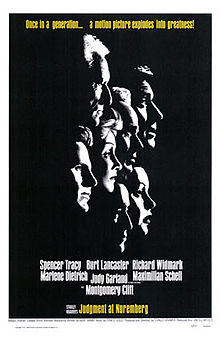
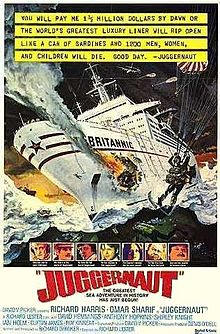
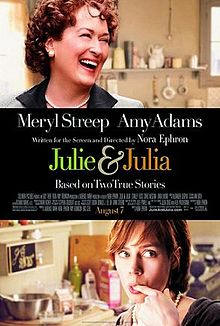
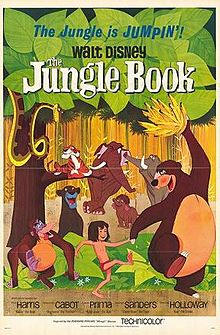
There are some good scenes here, some good writing, good acting. But it's all a bit slow, and a bit earnest. If you want to see a masterpiece about what was possibly the craziest war ever fought, try Stanley Kubrick's Paths of Glory. IMDb.com Judgement at Nuremberg (1961) In 1947 four German judges are themselves on trial for having enforced Nazi laws concerning eugenic sterilization and race. One is an unrepentant Nazi, two are party hacks who did what they were told, and one (Burt Lancaster) was a highly respected jurist. Spencer Tracy is the homespun country judge tapped to head the three-judge panel in the winding-down days of the Nuremberg war crimes trials. Richard Widmark is the passionate prosecutor who is trying to get some measure of justice for the horrors he saw at Dachau. Maximilian Schell is the equally passionate and very smart defense lawyer who wants to recapture some dignity and respect for the German people, while making the point that the judges had no choice but to follow the law, bad as it was. There is pressure to get the damn thing over with, and to acquit if possible, because America is going to need the German people in the coming Cold War, and we don’t want to offend them. Dachau? Water under the bridge. There are all the makings of a crackerjack courtroom drama here, and Stanley Kramer delivers on all fronts, taking over three hours to do it. I wouldn’t have cut a minute. The film was nominated for a truckload of Oscars, but this was the year of West Side Story, which almost took them all. Schell won for Best Actor, and it was well-deserved. The movie examines some very disturbing questions. So the Nazis made a law demanding the sterilization of “social undesirables?” (The feeble-minded, the insane, homosexuals, drunkards and layabouts? Ah, but so did the great Oliver Wendell Holmes! It was known as eugenics, and some otherwise sane people believed in it early last century. Gypsies and Jews? Well … America didn’t go that far, though many wouldn’t have minded, but we did conduct experiments on Negroes with syphilis.) You say the German people did nothing to stop the rise of the Nazis? And what did the Russians do? They signed a non-aggression pact. What did the west do when Hitler annexed Austria, the Sudetenland and then the rest of Czechoslovakia? Why, Neville Chamberlain signed the Munich Agreement and let him have it. And just what is the moral responsibility of a jurist when it comes to a law that provides no justice? Well, I believe it is to provide justice, but that isn’t easy or even immediately obvious. The people in this film wrestle with all these questions, and find few easy answers. It is so easy to be holier-than-thou when considering the German people from 1933 until 1945. The huge majority of them worshipped Adolf Hitler, there is no way to get them off the hook for that. As to the question of what did they know and when did they know it about the mass extermination of as many as 11 million people … I can believe that most of them didn’t know the details, but they must have heard the rumors, and they must have known that those cattle cars leaking shit and piss and blood and screams and the decaying bodies of Jewish infants were going somewhere, and they weren’t coming back. And then the question becomes, what were they supposed to do about it? And the answer, as it would have been for the huge majority of Americans or the citizens of any other country, is … nothing. We did nothing as the Japanese-Americans were shipped off to concentration camps. Did many Americans know, from their own personal experience, that those people were not being gassed and cremated? What would most of us have done if that had been the case, and we did know? Nothing. I’m sure of it. It is frightening to stand up to tyranny, and one of the most dangerous things you can do, as the government will squash you like an insect. Believe it. And I’m not being sanctimonious here. I have examined myself, as I think we all must in the face of the horrors of Auschwitz, and wondered what I would have done if my country went insane. I feel confident that I would not have been an SS soldier running a gas chamber, but that’s an easy one. Would I have hidden Anne Frank? Would I have joined an underground? Would I have thrown my body in front of a train? In all painful honesty, I can’t say that I would have done any of those things. I’ve never had that kind of moral test, and I hope I never have to face one. I fear I might fail it, that I might opt to stay silent and alive. After all, for eight years my country has been sliding toward totalitarianism and what have I done? In the trial, it is pointed out that Hitler came to power in a time of fear, which is always ripe ground for fascism. And we are in a time of fear, and this administration has used every opportunity to exploit it. “Good” citizens, American or German, are always eager to give up their rights, liberties, and freedom for a sense of (false) security … and how many times have you heard that word in the last eight years? All the moves toward fascism have been justified in the name of security … and we have, so far, eaten it up. How many times have you heard the word “freedom” perverted, as it emerged from that shithole George W. Bush uses for a mouth? We have so far lost the right of habeas corpus, much of the Fourth Amendment, and the Fifth, and they are hard at work on the First. If George W. McCain and Chatty Kathy get elected in November, he will appoint a fifth and maybe even a sixth toady to the Supreme Court and we will lose Roe v. Wade. And what are you doing about it? What have I done? Well, I’ve attended half a dozen pathetic anti-war marches. What should I do? Carry a sign in front of the White House? That will shake them to their very cores, won’t it? My only power is as a writer, and I have done what I can with that skill, and I’m doing it right now. But what would I do if there was a knock on the door in the middle of the night? It’s Homeland Security, and I am in violation of the new law making it a felony to offer aid and comfort to our ill-defined “enemies” (we are currently fighting war on a word—terror—as well as a country), through action or speech. And that is defined as writing or speaking anything derogatory about our great leaders. I can either shut the fuck up, or get on the cattle car. What would I do? Probably shut the fuck up. Anything to stay off that cattle car … IMDb.com Juggernaut (1974) I suppose there have always been disaster movies, but the real fad for them began in 1970 with Airport. (Wikipedia has a pretty exhaustive list, running to hundreds of films, and you’ll see that the vast majority of them were made in the 1970s and later.) They are almost invariably ponderous, with standard plug-in characters and situations, and most of the time they’re pretty stupid. Of all of them—and I’ve seen a ton of them—I can’t think of a one that has a trace or wit or style, except this one. It is one of Richard Lester’s rare non-comedies, and it sparkles with new ideas. It has his trademark sour lines for the “background” characters, those who clean up after the main people. (In The Three Musketeers 4 guys set down a sedan chair, huffing and puffing. “She’s gained weight.”) It has distinctive photography. Yeah, there is a standard element or two—the bratty kid who get in trouble and has to be rescued—but for the most part it avoids all that stuff. Richard Harris has his usual tendency to chew the scenery, but mostly keeps it under control. David Hemmings and all the supporting cast are excellent, including a very young Anthony Hopkins. SPOILER WARNING! Sadly, I have to tell you that the last two minutes suck, big-time. Here’s the situation: There are seven big bombs aboard a passenger liner. (The photography of this monster heaving in heavy seas is great! Also a scene where a Navy bomb squad has to parachute into a storm to board the ship.) The bombs are in 50-gallon drums, and they are way beyond diabolical, and utterly believable. There’s only one way to approach a situation like this. Seven men sit beside seven bombs, all in radio contact, watertight doors in place to limit any explosion. One man carefully describes what he is about to do. Then he does it. If the others don’t hear a big bang, they do what he did. Then the lead guy says what he’s going to do again, and the other six listen. This goes on until he screws up—ka-BOOM!!!—and now there are six. The new lead describes what he’s going to do, and then does it … What a way to earn a living, right? (You have to assume the bombs are identical; you have no choice, because if they aren’t, your situation is hopeless.) So … they have captured the mad bomber back in London, and it’s somebody Richard Harris knows and has worked with before. They’re talking on the radio. Harris has stripped the bomb down to one little tube with two wires coming out of it, a red one and a blue one. There is absolutely no way to know which wire, when cut, will set off the bomb, and which will defuse it. Odds of living: 50-50. So, “Which one shall I cut, old friend?” Old friend says, “Cut the blue wire.” Harris says “Cutting the blue wire.” Then he hesitates … and cuts the red wire. No explosion. But see, he didn’t tell his team he had changed his mind! Suppose the old friend had been telling the truth? Harris cuts the red wire—ka-BLOOEY!!!—and what does his team do? Why, all four of them (two bombs have already gone off) assume he did what he said he would do, which is cut the blue wire, and there was an explosion, so they cut the red wire, and all four bombs go off. The arrogance! The stupidity! He jeopardized the whole ship on his friggin’ hunch! Well, Richard Harris was perfect for that part, I guess. The man has always seemed to me to ooze arrogance. Cakes melting out in the rain in MacArthur Park. What a dumb song! IMDb.com Julia (France, 2008) Here’s the story of a woman who is such a train wreck, such a toxic waste dump of a human being, that I was surprised she survived through the credits, much less made it to the end of a 2½-hour movie. She gets involved in a hare-brained kidnapping scheme, pretty much making it up as she goes along. She is so awful, so unsympathetic that no one but the great Tilda Swinton could have carried me through to the end. She is fantastic, but even she couldn’t make me enjoy this movie, not for a cringing 144 minutes. Some say the director was influenced by John Cassavetes’ Gloria, a woman and child fleeing bad guys, but Gloria was trying to protect him. She never tied him up with duct tape or left him in the desert with a bottle of water, so I think that’s bunk. And Gloria was 123 minutes, which I thought was a tad too long. This film is epic length, and I might have liked it more if they’d trimmed 30 minutes. I guess I’m just not ready for the Lawrence of Arabia of dysfunction. IMDb.com Julia Misbehaves (1948) I have always loved the pairing of Greer Garson and Walter Pidgeon in Mrs. Miniver, the role Garson won the Oscar for. I hadn’t realized that they co-starred no less than eight times! This is the fifth of them. It is a mere trifle, nothing to compare to that wartime masterpiece above. Greer and Walter were married 20 years ago, but the harpy mother-in-law managed to break them up after a year. Greer went back to show business, leaving her infant daughter (a very young Elizabeth Taylor) with her father. Now the girl is grown up and to be married. Secretly, the girl sends Mom a wedding invitation. Greer shows up, very unwelcome, but the old romance begins to kindle again, with a subplot of Liz falling in love with Peter Lawford. It’s fun, and forgettable. IMDb.com Julie & Julia (2009) What a sweet little movie! It’s not going to bring about world peace, or solve global warming, or do anything about the oil shortage, but really, what movie is? Not all good movies have to be heavy, nor do they have to be joke-filled comedies. This movie has little in the way of actual plot, it’s more of a case of spending a pleasant two hours with some people you like. Two true stories, fifty years apart: Julia Child learning the art of French cooking in the early 1950s, and Julie Powell, who vows to cook every recipe in Julia’s book in one year, and write about it on her blog. That’s pretty much it. We jump back and forth between the stories. Nothing much is really at stake, there are no big dramatic moments. About the worst it gets is when Julie’s husband gets a little fed up (so to speak) and moves out for a day or two, and a brief emotional scene concerning Julia’s inability to have a child. Other than that, the only tears you will shed will be during a funny scene when Julia is chopping onions. But if you are like me, you will laugh a lot, and most of the rest of the time will be spent with a grin on your face. If you aren’t grinning, well, truck your insensitive, Attention Deficit Disorder ass down to any one of the stupid, cookie-cutter action movies playing in the same multiplex as this one, you pathetic fanboy, and don’t bother to come out, okay? The reviews for this one have been only so-so, and I understand why. It’s because many critics are just not prepared for a movie like this. They don’t know how to watch it, any more than an idiot fanboy does. The fanboy will ask: “Why isn’t anything exploding?” The critic will ask: “Where is the great tragedy?” They are about equally stupid questions to ask. I would enjoy seeing this movie again, and there haven’t been a lot lately that I could say that about. Many critics didn’t like Amy Adams as Julie. I knew nothing about Julie, but was a bit surprised to learn that she is strongly disliked by some other “food bloggers.” The reasons are varied: She was disrespectful of Julia Child in her writings. She wrote “fuck” a lot. She is a spoiled bitch. The whole thing was a stunt. (Oh, yeah? I’d like to see you try it.) She was just out to make money. (Hello??? Who was making money by blogging in 2002? Who would have dreamed it was possible?) I have concluded that most of the animus, from critics and bloggers alike—but especially from bloggers—is essentially jealousy (“Damn, I wish I’d thought of that!!”) and sour grapes. Screw ‘em. Julie, as portrayed here, is a bit self-involved and a bit of a whiner. Neither is a capital crime. Get over it. I thought Amy was just fine in the role, and damn brave to allow herself to be compared to Meryl Streep. One word about a bit of movie magic: Julia Child was 6’2” tall. Meryl Streep is 5’6”. Naturally you expect Meryl to nail Julia’s peculiar way of speaking—and she does—and her sometimes odd body language—and she does that, too. But height? Can Meryl play taller than she is? Yes, she can. Many cinematic tricks are used; I’m sure she was standing on boxes sometimes when her feet can’t be seen, and in some scenes she had to have been sitting on a pillow. And I don’t doubt that all of the extras and most of the bit parts were short people. I don’t quite know how they made her look taller than Stanley Tucci (5’8”) in side-by-side scenes. But part of it is just that she acts tall. We tall folks can see it in others, especially in very tall women, who tend to hunch down a bit, and either keep their elbows in or seem to have very little control of them. Meryl does a little of both here. It would certainly have been reasonable for screenwriter/director Nora Ephron to just ignore the height issue and pretend that Julia wasn’t tall—biographical performances need not rely on physical resemblance—but with Meryl in the part, she didn’t have to. IMDb.com Juliet of the Spirits (Giulietta degli spiriti) (Italy, 1965) Federico Fellini has never been among my very favorites directors, though one of his films, Nights of Cabiria (Le notti di Cabiria) is one my Top 25 of All Time list. He started off as a neo-realist, and then started shifting into his own unique brand of fantastic imagery. La Dolce Vita began the process, he jumped into it with both feet in his masterpiece, 8½, then added a riot of color and pumped the whole thing up to hitherto unseen levels in this movie. I can’t say I ever really liked any of them after that, though he was always interesting to look at. The world he shows here is peopled entirely by pompous or silly, sad or maniacally happy, but always, always by fashionable, pretentious, useless social parasites who create nothing but a sad aura about themselves. They spout either stupid philosophy or meaningless prattle, often at the same time. They have the money to indulge their every hedonistic whim, are continually searching for “answers” among the dregs of pre-New Age gurus and grotesques and coming up empty … which they never seem to notice. These people are much less interesting than they will ever know, and would not be interesting at all except that Fellini clothes them in the most outlandish, colorful, and impractical clothing the fashionably pretentious designers of Italy ever came up with. The budget for hats alone—some of them the size of the mainsails of a Spanish galleon—would probably bankrupt a studio today. Through this maelstrom of swirling color and witlessness stumbles poor little dowdy Giulietta Masina, Fellini’s wife and the star of my favorite of his films, see above. Her husband is cheating on her, and she begins to see ghosts and spirits from her past, as well as her present. She is always the shortest person in a scene, completely dominated by everyone else there, and she is always the least flashily dressed. Her face is sweet, but homely, unlike every other woman there, who could all walk right off the set and onto the cover of any fashion magazine. Hopelessly outclassed in every department. Masina has the difficult challenge of having very little to say, mostly just showing her reactions to the others around her, and she does a great job of it. There is not really any plot, as such. We know he’s cheating before the smarmy private detective confirms it. The mistress doesn’t even care enough about her to have a fight with her. She seems in danger of disappearing entirely. But in the end, she seems to find some internal strength, banishes the spirits, and walks off. A literal viewing would lead you to think she was going crazy, but this is Fellini, and you know nothing is literal here. It’s all symbolic, and too damn deep for me. Part of my problem with Federico is that his symbolism is not my symbolism. He was fascinated with the Catholic Church and with circuses. I like circuses well enough, but could care less about Papists and their rigmarole. That doesn’t mean, however, that much of his imagery doesn’t work for me. He is very surrealist here, and many scenes or individual frames remind me of Salvador Dali. He can conjure up the most appalling freaks, as in the individual I’m assuming was a hermaphrodite, telling her future. Creepy, disturbing, sickening. But fascinating. I can’t say I like this movie, would not recommend it to anyone except to say that this is one of those very few movies that might be worth your time just for the production design, which is stunningly good. A visual feast, and one whose images will probably haunt you. IMDb.com Junebug (2005) Let's start with "outsider art." Madeleine and George are recently married and live in Chicago. She deals in this stuff. You may have heard of it, it used to be called "primitive" art, and Grandma Moses is probably the most famous practitioner. (No, wait, it sez here that she's called a folk artist.) (There's also another term: naïve art. Henri Rousseau is an example.) Henry Darger was an outsider artist ... and as you can see, the labels can be confusing, but what we're talking about here is people who were not classically trained and, further, have their own view of the universe, often a quite mad one. In the outsider art world, true insanity is a plus, selling-wise. This is where the movie begins, and it unsettles me from the gitgo. And I find it hard to say exactly why. It is clear that Madeleine loves this stuff—and I am fascinated by a lot of it, too. And yet there is something faintly distasteful about these big-city nabobs oohing and aahing at stuff that is frequently on a kindergarten level of sophistication, selling art made from house paint on cardboard for fabulous prices. So what's my problem? It's fine with me if these hicks from up some forgotten holler get rich off their obsessions ... and yet it has a taste of that old Woody Allen joke: "My brother thinks he's a chicken. We thought about getting him help, but we need the eggs." Turns out George is from small-town Carolina, and the couple of city sophisticates go back to meet his family and also try to nail down an outsider artist who is far crazier than a bedbug. The family is a work of outsider art in itself. These people put the dys in dysfunctional. (I like stories about dysfunctional families, too, if they're treated in a certain way, which might be called putting the fun in dysfunctional. There's very little fun here.) I'm not going to get into it any further; it's too depressing. This is a film from that critically-praised genre that includes Me and You and Everyone We Know and Welcome To the Dollhouse, both movies that didn't work for me or Lee. The writing is impressive, and so is the acting, particularly Amy Adams, who got a Supporting Actress nomination and is actually better than the winner, Rachel Weisz. This is one of those Don't get me started movies.... IMDb.com The Jungle Book (1967) Saturday Night at the Toons. IMDb.com Juno (2007) The buzz on this one going in was so strong that I was half expecting a bit of a letdown. And to tell the truth, it did not capture me from the very first moments. I’ve been reading some of the message boards at the IMDb and Metacritic, and the main objection I’m seeing is that the two teenage girls were way too sophisticated in their dialogue. I felt that, a little, at first. But once it got rolling I forgot all about that and just settled into being delighted at Ellen Page’s performance. I also noticed something at Metacritic: The huge majority of posters who blasted the movie with a 0, a 1, or a 2, were male. Fans were of both sexes, but there seems to be a certain kind of male who is threatened by this girl, Juno, and also by the screenwriter, Diablo Cody, and they quite often bring up the fact that she used to be a stripper. For some reason, they really hate her for that. Is it for being a stripper in the first place, or for daring to make it in another business? I’m not sure. But they practically froth at the mouth when they mention her. I have the feeling these guys would feel the same about Hillary Clinton. Enough of that. The movie surprised me several times. These days, if you follow the business at all, you usually know how a movie will turn out, and I knew about this one, but I believe that if I hadn’t known that she would stick to her guns concerning the adoption of her baby, I would have been on the edge of my seat wondering if she’d “chicken out” at the last moment and condemn herself to a youth spent changing diapers and flipping burgers. That’s what you’d expect in a film like this, right? Abortion seems to be right out in American films (though I’m very interested in seeing 4 Months, 3 Weeks & 2 Days, a Romanian film which deals with it). Sweet little girl like Juno, she’ll see the baby, she’ll go awwwwwwwwww!!!!, she’ll tell the adoptive parents to go fuck themselves. But she doesn’t, and there is the real source of the Juno-hatred, I believe. It’s funny, but not funny-ha-ha. I mean, everybody endorses adoption, but they get all queasy at the idea of a girl giving up her baby. What is wrong with her? Let childless couples just go to China, for chrissake. They got plenty of babies over there. Aside from the simply stunning performance by Page, all the parts are wonderfully written, cast, and acted. They are not quite what you would expect them to be, and the plot doesn’t go where you expect it to go. Jennifer Garner made me feel the pain of a woman who feels she was born to be a mother … and can’t have children. Allison Janney turns in another fine supporting performance. Michael Cera’s dopey face and awkwardness make up for Juno’s eloquence. Olivia Thirlby is great as the best friend, who starts most sentences with “Dude …” And once more J.K. Simmons impresses me as one of the most solid character actors in the business. He was always good as the psychologist on “Law & Order,” and I understand he was unspeakably brutal and slimy in “Oz,” which we’ve never seen. It’s hard to imagine, he seems such a decent sort in the parts I’ve seen him in, but I’m sure he could pull it off. This movie is not going to knock the un-nominated Sweeney Todd off the first-place spot in my personal best-of-the-year, but it certainly deserves all the Oscar nominations it got. (Personal plea to Ellen Page: Dude, stop biting your nails! It causes me physical pain to see fingertips as mutilated as yours are.) IMDb.com Just Like Heaven (2005) Romantic ghost comedies have been a Hollywood staple since at least the 1930s. I tend to like them, if there is good writing and acting, and there is both in this. Sure, they’re corny, but so what? This one doesn’t rise to the level of Ghost, it doesn’t take itself quite that seriously and doesn’t have Whoopi Goldberg to lighten things up when it threatens to bog down. But we both had fun. IMDb.com
|