|
Movies we've seen © 2004-2013 by John Varley; all rights reserved |
U-V
|
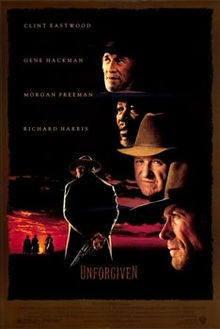
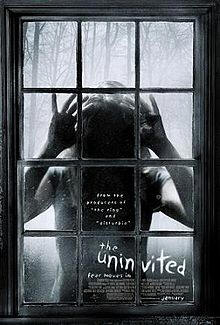
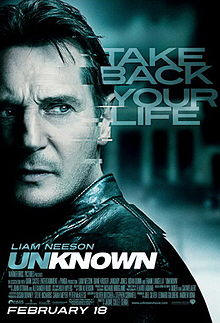
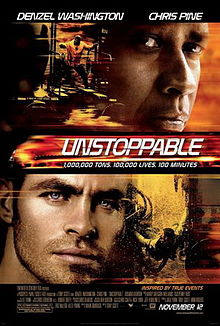
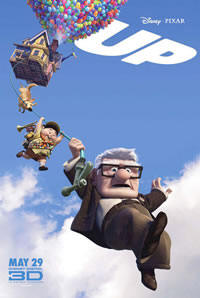
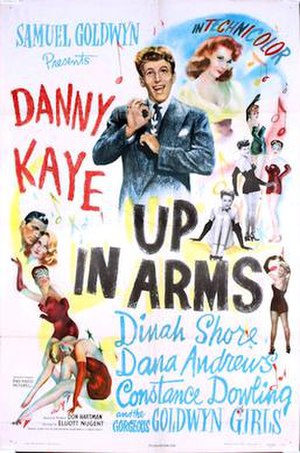
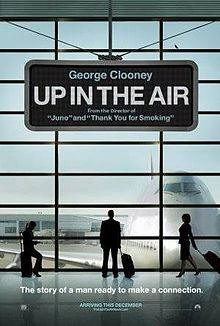
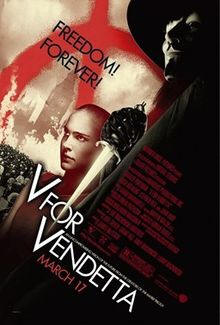
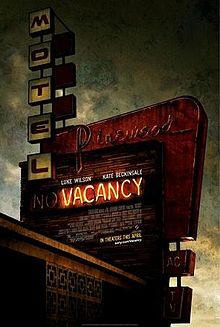
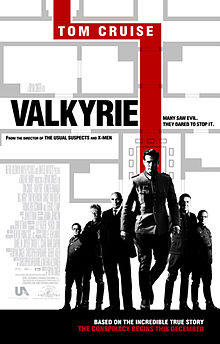
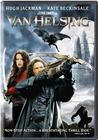
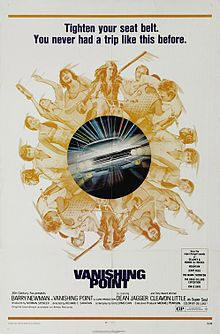
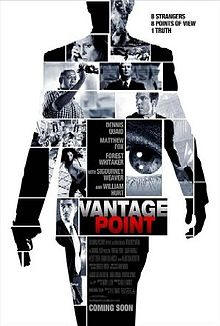
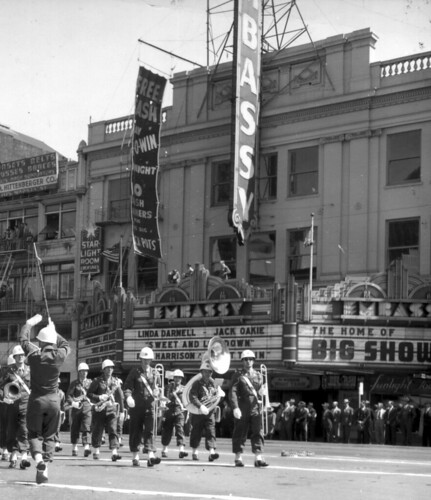
The Ugly Truth (2009) First feature At the Drive In with The Taking of Pelham 1 2 3. IMDb.com Ultraviolet (2006) VarleyYarn. IMDb.com Umberto D. (Italy, 1952) If I had to pick an Italian director as the "best," it would not be Fellini, but Vittorio de Sica, even though I've seen only a small fraction of De Sica's films and I've seen almost all of Fellini's. Federico was all about fantasy, even in his most realistic films. His metaphors were the church and the world of the theater. De Sica (at his best; I admit I haven't seen many of his films from the '60s, which I'm told were not very good) was all about the real world. The Bicycle Thief is on my Top 25 of all time list. Having said that ... I didn't like this quite as much as I expected to, given the reviews I've read. I don't know where I could have cut a single frame of The Bicycle Thief, but I thought Umberto D. could have used a trim here and there. We spent a lot of time watching him get in and out of bed. The end was heartbreaking, though. Recommended. IMDb.com Un Chien Andalou (France, 1928) Written and directed by Luis Bunuel and Salvador Dali. Roger Ebert has this to say in his excellent review: "In collaborating on the scenario, their method was to toss shocking images or events at one another. Both had to agree before a shot was included in the film. ‘No idea or image that might lend itself to a rational explanation of any kind would be accepted,’ Bunuel remembered. ‘We had to open all doors to the irrational and keep only those images that surprised us, without trying to explain why.’" It is a stunning short film, one every film student should see, though it may be hard to find. I haven’t seen it in almost 40 years, and many of the images still remain vivid. IMDb.com Unbreakable (2004) Double feature with The Village. IMDb.com Unconditional Love (2002) Excellent little gem starring Kathy Bates, who is never bad, and Rupert Everett. When her husband leaves her she takes off on a wild adventure, attending the funeral of a gay singer she worshipped. She gets involved with his lover ... and the movie gets a little wild here, but it kept me going. A great performance by one Meredith Eaton (4’ 3"), as a kick-ass midget. IMDb.com Under Siege (1992) Most action movies are so bad that I become grateful for one that makes at least a nod toward believability. The whole premise is preposterous, naturally, but that needn’t stop me enjoying it, if the hero uses his head instead of just his muscles. Unexpectedly, this one does okay in that regard. Some seriously screwy people hijack the USS Missouri on its way to permanent berthing in Pearl Harbor, and soon we’re in a nightmare scenario and only one man (and a plucky girl) standing between Honolulu and nuclear destruction by cruise missile. He’s a smart-ass cook who used to be a Navy Seal. Most of it was shot aboard the USS Alabama, a ship I have visited at its dock in Mobile. That, I think, is a big part of why it works. It’s a magnificent ship. Tommy Lee Jones should get some sort of special award for outrageous overacting as the head bad guy. Steven Seagal rates a special notice for acting at all. One doesn’t expect it of him. And Erika Eleniak rates praise for being a good sport about it all, and having a world-class set of cruise missiles. IMDb.com Under the Tuscan Sun (2003) Part one of a Diane Lane double feature, alphabetically. This is the better of the two. Not great, but watchable. IMDb.com Under the Yum Yum Tree (1963) You expect a bit of a cultural gap when you watch movies from the ‘30s and ‘40s, but seeing one from my own youth and realizing how long-gone—and unlamented—those days were is a bit of a shock. Think of It Happened One Night, with Clark Gable erecting “The Walls of Jericho” (a blanket on a rope stretched across the room) when he’s spending the night with Claudette Colbert, who he is not married to. Thirty years later, it was still scandalous for an unmarried man and woman to spend the night together, whether or not they actually do anything. Ten years after that, who the fuck cared? I haven’t watched any of those no-doubt awful Rock Hudson/Doris Day movies recently, and don’t intend to, but this one is amazing enough. I recall I thought it was damn good at the time. I was a sophomore in high school, and Jack Lemmon as a womanizing apartment building owner was a role any boy that age would have aspired to, I guess. Very naughty for its time, too: Carol Lynley and Dean Jones agree (at her insistence) to “test their compatibility” by renting an apartment and living together but not sleeping together. She is, basically, an idiot when it comes to human relations, to men in general. She never suspects that the landlord across the hall is doing everything in his power to sabotage the relationship and get into her pants. Naturally, Lynley’s virtue is intact at the end of the movie. Around the time this film was made it looked like Carol Lynley was going to be a major romantic star, but it somehow faded. She has continued to work, but mostly in television. The delight here is, of course, Jack Lemmon, as is the case in pretty much every movie I’ve seen him in, though Paul Lynde and Imogene Coca are also good. His character, Hogan, has an apartment furnished like a Turkish bordello, wears red socks and ascot ties. (Me and a couple friends liked him so much we started wearing ascots ourselves, the only ones in school who did. We took a pass on the red socks.) This is a guy that you just know reads his new issue of Playboy from cover to cover the day it arrives, looking for new ways to be a cool bachelor. We did that, too. Interesting trivia: Lemmon hated this movie, but was contractually obligated to make it. It was very successful, probably because guys like me took their dates to see it. He also insisted that his friend Edie Adams not only get a part, but had it expanded. She was in financial straits after the death of her husband, the great Ernie Kovacs. He drives a car that, after some research, I am pretty sure is a Ford Cougar Concept car. It had gull-wing doors, and looked like this. IMDb.com Underworld (2003) Underwhelming. IMDb.com Unfaithful (2002) Diane Lane again, being unfaithful to Richard Gere. Just didn’t quite work for me. Worked for me. IMDb.com Unfaithfully Yours (1948) I just discovered something of trivial interest. In 1948 George Orwell wrote his masterpiece 1984, picking the year by reversing the last two digits. In the same year Preston Sturges wrote, produced, and directed this ... and in 1984 it was remade with Dudley Moore in the Rex Harrison part! Go see this one. Avoid the re-make like the plague. Preston Sturges is one of my favorite directors. He was a prolific writer in the '30s, and directed his first film in 1940. Between then and 1944 he made an astonishing seven comedies, and all but one of them were fantastic: The Great McGinty, Christmas in July (only so-so, by Sturges's standards), The Lady Eve, Sullivan's Travels (my personal favorite), The Palm Beach Story, The Miracle of Morgan's Creek, and Hail the Conquering Hero. His career has been described as meteoric, and it was, and unfortunately a meteor flashes for only a brief time before it crashes. He got involved with Howard Hughes, and things started falling apart. He made an ill-advised drama, The Great Moment, and Harold Lloyd's last film, The Sin of Harold Diddlebock, then had one last flash of genius, this one, in '48. Rex Harrison dominates the film in a performance of bombastic swagger and comic genius. He's an orchestra conductor, brilliant, mercurial, temperamental, who brings total passion to everything he does. In the history of the world there has been no greater love than he feels for his younger wife. But when the worm of doubt invades his mind, like Othello, he's just as passionate in his anger. While conducting a concert, he plots his revenge against his imagined cuckolding during one movement (Rossini's Overture to Semiramide), his magnanimous forgiveness in the second (Tannhauser), and a daring game of Russian roulette with his rival in the third. He is at first ingenious, in the second magnanimous, and in the third fearless ... until he shoots himself in the head! Oops, let's don't do that! Each fantasy is introduced by a long dolly-in shot that starts back among the bass fiddles and closes in on his eye, until we swirl down the pupil and into his mind, where, of course, everything is about him, and he has a very high opinion of himself. (In 1948 this was a most difficult shot to accomplish, and it was groundbreaking.) Of course, he's egomaniacal, but that's part of the job description for leading an orchestra, I would think. This is all great fun, but the real fun begins when he decides on scenario #1, to kill his wife. The theme of Semiramide plays behind him as he tries to put his elaborate and ingenious plot into action ... and promptly, everything that can go wrong, does go wrong. The music stops and starts. Nothing goes according to plan. It's slapstick, and very well done. In the end, of course, everything turns out all right. The dialogue is sparkling and witty and rapid-fire, as in all the best screwball comedies. Sturges's people are never at a loss as to how to express themselves. As a writer, he's at his best exposing human folly, and this is one of his best scripts. As a director he is almost as good, and has the nerve to run through almost the entire Semiramide in rehearsal, which could have bogged the film down in lesser hands, but here is a fascinating to the themes of the movie and of the music itself. IMDb.com An Unfinished Life (2005) Sometimes I wonder about some of these big stars of my generation. Jane Fonda doesn't make a movie for 15 years, and then what does she pick? The fairly awful comedy Monster-in-Law. Barbra Streisand isn't around for years, then pops up in the cash-in sequel Meet the Fockers. What's the deal here? Robert Redford used to make movies he believed in. Not all of them were successful, but at least he was trying. Now, I'll concede 2004's The Clearing was a very good film, underrated and hardly seen. But before that, the last film he made that I can believe really mattered to him was The Horse Whisperer in 1998, and even that was rather clichèd. Bottom line, he's not making the transition from young hunk who wants to be taken seriously—and deserves to be!—to the elder statesman, like Paul Newman. Here he goes for rumpled and gruff ... but with an easily accessible heart of gold just waiting to be set thumping by a darling granddaughter he doesn't know about. The whole movie is by the numbers. You can't hate it, but you see everything coming. It's a celluloid salad, all the right poignant and/or frightening elements thrown in, a little salt and a lot of honey, shake well, serve earnestly. Lee was worried the bear would get him, but I wasn't; the bear was just a symbol. But she knew exactly when the asshole stalker boyfriend would show up, and bingo! Just in time for Redford to beat the shit out of him. The only really good thing here is Becca Gardner, who looks younger than her 15 years and is somebody to watch for. Very appealing. IMDb.com Unforgiven (Best Picture 1992) CONTAINS SPOILERS. There’s a lot of actors who could have made this movie work fairly well, as a routine action western. But only Clint Eastwood could have elevated it to the status of a classic, and that’s simply because he’s the last credible mythic western movie star, from the tail end of the golden age. He was no John Wayne, and that was a good thing, because Wayne was always pretty much the good guy, and the hard-faced, emotionless men Eastwood portrayed in those now-distant Italian spaghetti-and-serape epics was morally ambiguous, at best. Nuanced they were not, but powerful in the same way Dirty Harry was powerful. Now, in the maturity of his career, Clint is into much more important things. In Unforgiven he stands most of the western movie clichés on their heads, to great effect, and only he could have made them all resonate as well as they do. He’s getting old, for one thing. He has a lot of trouble getting on his horse, which is good for a laugh every time. He’s out of place, for another. The era of the outlaw is pretty much over, and here is William Munny, doing battle with pigs, trying to raise two children, trying to live up to the promises he made to the good woman who reformed him and then died. But you know, looking at Clint there in the pigshit, that he wasn’t made for this, and there’s no use him trying to make a go of it. He’s a hard man, and a killer, and he knows this about himself and finally gives in, saying it’s because he needs the money, but deep down he’s just fed up with swine. I was enjoying this movie well enough until about a third of the way through, when it went up to a whole new level with the arrival of “English Bob,” wonderfully played by Richard Harris as one of those Brits so insufferable you just want to gobsmack him. He’s a whiz with his pistols, and we’re all set up for a showdown, in the last reel, between him, Eastwood, and Sheriff “Little Bill,” a wonderful performance (as usual) from Gene Hackman. That’s just the way it has to play out, right, by all the rules of western movies? Wrong! Little Bill disarms English Bob with the help of 5 deputies, sucker-punches him, then kicks the shit out of him while he’s on the ground. Exit English Bob, never to be seen again. Little Bill then kicks the shit out of Eastwood, who is half dead with the flu from spending a night out in the rain, something that never seems to affect tough cowboys, much less gunslingers. Oh, and don’t forget the wannabe all-mouth Schofield Kid, who is so nearsighted as to be almost blind, and most especially don’t forget Morgan Freeman as Clint’s old friend, who just gives up and tries to go home. The final bloodbath, when it comes, is shocking, over very quickly, and as brutal as anything I’ve ever seen. Then Eastwood, our hero, shouts out into the street that he’s coming out, and if anybody shoots at him, he will kill them … and all their family and all their friends … and, I assume, their little dog, too. Wow. This was a new West I hadn’t really seen before, long before the calculated in-your-face brutality and obscenity of Deadwood. IMDb.com The Uninvited (1944) Ray Milland and sister Ruth Hussey in a haunted house in England. This movie doesn’t intend to scare the pants off of you, though there are some eerily disturbing scenes. What sets it apart is its good sense of humor, mostly in Ray Milland’s skeptical character who gradually comes to believe in the ghost, yet still can’t take it too seriously. IMDb.com The Uninvited (2009) A young woman, Anna (played by a young Australian actress named Emily Browning, who was Violet in the Lemony Snicket movie) witnesses her invalid mother killed in an explosion, tries to commit suicide, and spends some time on a mental ward. When she comes home she and her sister begin to suspect that Daddy’s new girlfriend, who used to be Mommy’s nurse, might have murdered their mother. … and that’s as far as I can go, since this is a surprise ending movie, and the surprise is good enough that I won’t reveal it. This is a re-make of the most successful horror movie ever made in Korea. Doing English versions of foreign films is usually a mistake, and I haven’t seen the original, but this one is not bad. It keeps the cheap GOTCHA!! scares to a minimum, and the revelation of the ending … well, it’s a complex situation and I’d have to see it again to check whether it stayed honest, but as far as I can recall, it did. When you know what is really happening, it does make sense. It’s a little slow, and by no means a must-see … but with that faint praise, I have to say it’s not a waste of your time. IMDb.com United 93 (2006) At 8:42 AM on September 11, 2001, United Flight 93 took off from Newark Airport headed for San Francisco. Aboard were 40 human beings (33 passengers, 7 crew) and four men who looked just like human beings but were actually monsters. Shortly afterward, shouting "Allahu akbar!" (which in the past has translated as "God is great!" but lately has often meant "God is an asshole, and I am a turd squeezed out of it!"), these monsters—and note their names, everybody, and spit when you hear them: Ziad Jarrah, Ahmed al-Haznawi, Ahmed al-Nami, Saeed al-Ghamdi—took over the plane, and 81 minutes later the plane crashed nose-down in a field in Pennsylvania. Shortly after that, the four came before Allah, expecting their dozen six-packs of virgins in Paradise. Allah spit in their faces and ordered them buried upside-down in boiling pigshit, there to spend eternity, immortal, unable to die. Djinni crap on their bare upturned feet. I intend to visit them when I die. Maybe with a feather. Hope they're all ticklish. All that last is conjecture, of course, and so is much of this movie, but every frame of it is plausible. Hell, it's way beyond plausible. No one will ever know exactly what went down in those 81 minutes, beyond the transcripts of the phone calls made by many passengers. We know the monsters knifed some people to death before the crash. We must presume they killed or mortally injured the pilots. And we know a group of passengers attempted to re-take the plane. One of the most harrowing scenes in a thoroughly harrowing movie is the depiction of the struggle in the cockpit. Those places are small. There's a hundred buttons you don't want to fuck with. Imagine five or six people in there, armed with table knives and forks and whatever else they can improvise, all trying to wrestle this Muslim fanatic bent on death away from the controls. I don't know if a SWAT team could have done it, but these people tried. All glory and honor to them. What is not conjecture is the scenes on the ground, in various civilian and military control rooms. Many of the people here are playing themselves, and it is a tribute to the director that I couldn't tell which ones they were. None of the actors seem like actors at all, and none of the real people rings a single false note. They are recreating what they did on that awful day, and are completely at ease with it. I can't praise this film too highly. Paul Greengrass and his production designers were obsessive about detail. It all looks exactly as if a documentary film crew was there to record it all, both on the ground and in the air. (I can attest to its accuracy; more about that in a moment.) I was worried that it would be in some way a cash-in on the misery and suffering of that day, but it never felt that way. It was done with the knowledge and approval of the families of the dead, and some of the supplementary material on the DVD shows some touching scenes. The actor playing one man broke down in tears when introduced to the man's mother. And oddly enough (I suppose because we're nearing the 5th anniversary), after we finished watching, Lee was channel-surfing and came across the rival production, the made-for-TV Flight 93. I watched it for five minutes or so and that was all I could stand without gagging. It was everything that United 93 was not, sloppy and saccharine and shamelessly tugging on the heartstrings. Yuck. Now, as to the accuracy ... In about 1980, courtesy of the MGM research department, I was a guest for a day at the Oakland Air Region Traffic Control Center (ARTCC). I was doing background for Millennium, which involves the collision of two jumbo jets at the beginning of the movie. I was more than a little nervous, as the cause of the collision was going to be computer failure and human error by an air traffic controller. Was this really something I wanted to talk about to the guys who actually did it? Not to worry. The director and all the ATCs were eager to point out that my thesis was not only plausible, but a disaster waiting to happen. I was shown everything in great detail. The computer running it all, I was informed, was made in the 1960s. It was technology more than 20 years out of date. It used tubes, if you can imagine that. You couldn't get them in the US anymore, nobody made them. They had to go to Poland when one burned out. The system crashed twice while I was there, once for 5 minutes, once for 30. When that happened they went to a backup system that was 1950s technology! These were the guys juggling thousands of planes every day, full of trusting, unaware passengers. It was a stressful job for inadequate pay, they were seriously overworked, burn-out was frequent, double shifts were common. They were pissed off about it, and wanting to get the word out any way they could, even through as humble a messenger as myself, hence the cooperation. Not long after that their union, PATCO, walked out. Ronald Reagan fired them all. Many see that as the beginning of the long decline of union power that is still going on. Now here's the point of all that: The ARTCC depicted in this film is identical in all ways to the one I visited in 1980. I was stunned! I knew that replacement and upgrading of computers and monitoring screens had been proceeding slowly (some were saying, not at all) ... but it is flabbergasting in these days of laptops with 200 gigabyte hard drives and high resolution flat screens that the FAA is still using the same shit they were using in 1965! I don't know what kind of computers were running the show, behind the scenes, but I'd bet you that they are far less powerful than the machine you are reading this on. This is what they're talking about when they mention our degrading national infrastructure, not just bridges and highways and sewers, and nobody's doing much about it, and it's fucking criminal. Enough of that. Go see this movie. It will be hard to watch, but we all must remember. IMDb.com The United States of Leland (2003) A 16-year-old psychopath up and stabs an autistic boy to death one day. He offers no explanation, and we see him in juvie hall, and the people whose lives he affected by the murder. He was ignored by his father, played by Kevin Spacey in a real snooze of a performance. Nothing much happens, and I wonder why I was supposed to care about any of these people, particularly Leland. Screw this movie. IMDb.com Unknown (2011) Here’s an adequate thriller. The story is puzzling and hangs together reasonably well, Liam Neeson is always fun to watch, and it doesn’t strain the bounds of credibility … too much. For a while I’ve meant to make a list of Things You Have to Accept If You Want to Enjoy a Modern Action Movie. It would save me a lot of time, I could insert a link to it in most action movies. For now, I’ll only mention one: The Fistfight. By fistfight, I mean any fight where guns, knives, or swords aren’t used. (That will be next on the list: The Useless Automatic Rifle.) In a Fistfight, two men whale away at each other with fists or handy objects like bats, steel rebar, or 2-by-4s. They land punches that lift opponents off their feet or hurl them through walls, and they land them over and over again. After a fight that would put a real person in the hospital and have him hobbling around for weeks, the victor gets up, wipes off a little bit of blood on his cheek, and shows no other signs of wear at all. We all know it’s bullshit … but there it is. Accept it, or stop going to the movies. IMDb.com Unknown Pleasures (China, 2002) The director is a cinematographer, and this film looks great. But it’s about disaffected Chinese youth wasting their lives, and a little of that goes a long way with me. IMDb.com Unleashed (Danny the Dog) (2005) Luc Besson, who wrote this, is a highly-overrated Frenchman who made one film I liked (The Professional), and lot of crap (The Messenger, The Fifth Element, La Femme Nikita, The Big Blue). Oh, yeah, all those films were interesting to look at, but they had one failing I just can’t abide: They were dumb. Really dumb. Besson’s reputation has kept me away from two other films that I suspect are dumb, too: The Transporter, and Crimson Rivers. And I have to remember something next time, too. Roger Ebert doesn’t mind if a picture is stupid, if the action is huge and overblown. I rented this on the strength of his thumb, which was pointing up, as well as those of a lot of other reviewers who support the Besson cult. I suppose the only way one can approach a movie like this is like grand opera, or Broadway musicals. True, no one in real life sings their words, like Carmen, and nobody breaks into song and dance like the Jets in West Side Story. Well ... I just happen to like those theatrical conceits. I don’t have to believe them. But when a story gets as gritty and bloody as this, I find that belief is important. I’m told that I should view the silly and boring fights as choreography, and of course it’s easy to see that real skill and art is involved. I just don’t like it. In fact, it leads me to wonder what has happened to our culture, and other deep thoughts like that. I’m not being holier-than-thou here; I liked Kill Bill. But I loathed Sin City. A razor’s edge of difference, maybe, but as important as the distinction between erotica and pornography, in my book. It’s funny when Elmer Fudd shoots Daffy Duck, without fatal effects. It’s just plain stupid then two men whale at each other for five minutes with fists and hard objects, and both emerge unscathed. It is stupid when one man takes on 50 guys, and wins. Ask any martial arts expert in the world. One against three ... one is going down, every time. In a real, serious fight with people who know what they’re doing, it might take a bit of time before any real engagement happens, but once it starts it will be over in seconds, and one man will be dead. One scene here summed up the idiocy of the whole genre. Bob Hoskins, who has absorbed enough punishment to pulverize a blue whale, is conked over the head with a flowerpot and promptly goes to sleep. Too bad, because the concept was good. A man is raised pretty much as a dog, trained as a killer (I don’t know how he got the training, given how they were treating him, but never mind), and unleashed to kill or maim the enemies of the Big Boss. He gets away, and has to learn how to be human. You think of The Wild Child, and operant conditioning like in A Clockwork Orange. But halfway through our hero is tossed into a concrete combat pit against 4 fighters with weapons for a fight to the death ... with an audience of hundreds of slavering rich people. Do commercial fights to the death really occur on this sorry planet? Probably. In the heart of Glasgow, with an audience of effete thrillseekers? Naw. This type of movie takes place in an alternate universe where there can be a 30-minute shootout and building-destroying fight, bodies littering the pavement ... and never a siren. Plenty of time to play a long, slow scene later. Cops don’t exist. And Danny the Dog is a bow-wow. IMDb.com The Unsinkable Molly Brown (1964) This movie has always had a special place in my heart, because I saw it during its initial run at Radio City Music Hall, the only time I have ever been there. Me and a friend, Phil Richey, both of us aged 17, had driven from SE Texas to NYC in a 1951 Hudson Wasp (“Three Teenagers Go to New York” our local paper said when we got back), to see the World’s Fair. I’m still amazed that we managed to do all the things we did, with as little time and little money as we had. We saw an off-off-Broadway play from the last row of the balcony, certainly the cheapest seats in New York, starring Paul Newman and Joanne Woodward. We spent time at the Museum of Natural History, and climbed to the top of the Statue of Liberty (and the Washington Monument on the way home, when you could still do that). And we stood in line for at least an hour at Radio City, where we also were in the audience for “Jeopardy,” “To Tell the Truth,” and one other TV show. All this while driving an hour each way every day from East Orange, New Jersey, where we were staying with Phil’s uncle, to Newark, then taking the PATH train through the tunnel to the site where they were building the—sigh—World Trade Center towers. Oh, yeah, and four full days visiting every pavilion at the World’s Fair, living on a diet of mostly Belgian waffles covered with whipped cream and strawberries. Oh lord, to have that youthful energy back. A special place in my heart … but that’s just because of the circumstances. The movie itself isn’t all that good, and it’s the fault of two people, in my opinion: Debbie Reynolds and Meredith Willson. Willson is at fault because he took a woman who had a totally fascinating real life, threw most of it away, and manufactured a lot of romantic bullshit and flat-out lies. Molly bobbing down a river in a cradle, like Moses? Bullshit. (This was probably the idea of the screenwriter.) Molly returning to her one true love, J.J. Brown? Bullshit. They remained friends for all his life, but they legally separated. Burning up $300,000 in cash? Never happened. Big gold mine, likewise. Brown was an engineer, and made his fortune designing mining equipment. There are many other things that are highly dubious, such as her rejection by Denver society. She did survive the sinking of the Titanic, so he didn’t get it all wrong. Normally I wouldn’t care much, but her real life was so damn interesting, and so utterly different. She was self-made and self-educated and became knowledgeable about the arts, and fluent in French, German, and Russian. (“I’m gonna learn to read and write” indeed!) She was an early suffragist, and worked in soup kitchens for the poor. She helped found the Denver Women’s Club, dedicated to women’s education and philanthropy. She worked with destitute children, and helped establish the first juvenile court system in America. What a real life! Wasn’t there a musical in there, Meredith? The second bad thing is Debbie Reynolds, though she got an Oscar nomination for this. It’s either her fault for doing it, or the director’s fault for encouraging her or letting her get away with it … but the damn woman simply shouts all the first verses of these lovely songs. (All too few of them, really; they only used five of the songs from the stage version.) I’M GONNA LEARN TO READ AND WRITE!!!! I’M GONNA SEE WHAT THERE IS TO SEE!!!! And if you come from nowhere …” the last part actually sung, in Debbie’s very good singing voice. I got to where I wanted to cover my ears whenever she opened her mouth. Most of her dialogue and acting are just as exaggerated, and annoying. Good things: Harve Presnell’s subdued performance and terrific singing voice. A lot of lively choreography by Peter Gennaro. Great outdoor scenes of Presnell singing against a huge backdrop. This movie could have been so much better with a more three-dimensional Molly and a lot more music. IMDb.com Unstoppable (2011) Denzel Washington is the veteran engineer who has to attempt to stop a runaway train when someone else’s carelessness lets it get up a head of steam in the yard. He’s accompanied by the obligatory rookie (Chris Pine) who has to be shown his by-the-book ways aren’t enough out here in the real world. There is the usual corporate malfeasance as the suits at headquarters try to figure out the best way to limit their liability exposure as the seconds tick away, endangering even more people. Denzel and hotshot are helped by the only cool, sane head in the control room, Rosario Dawson. If this sounds like a bad review, it’s not. All that above, though fairly standard, is really beside the point, and you won’t have much time to worry about any of it except afterward. While you’re watching, it’s utterly involving. I mean, this sucker jumps out of the gate within five minutes and just keeps accelerating from there. It is relentless, unstoppable, nail-biting tension from start to finish, as harrowing a ride as I’ve seen since Speed, and even better than that, because it is something so few action pictures are today: smart. The screenwriter, Mark Bomback, spent some time learning how railroads really work, and it shows. Of course, you have to finesse a few things to set it all up and keep it running, but so what? Once we’re rolling it all feels real. I recommend this one highly. IMDb.com Up (2009) It sometimes strikes me as odd that in these reviews, I often devote pages and pages to films I hated, and like amounts to films that were only so-so but which sparked off a tirade on one thing or another … and then I often have little to say about the really, really, really good movies. I guess it’s a case of, when something is that good, what can I say? This one is like that; Pixar have topped themselves again. I could rhapsodize about the incredible color palette. I could tell you of the hair-raising adventures, but that would spoil it for you. I could point out that having an elderly man as the central character had most pundits calling it either incredibly daring, or foolish, or scratching their heads—will the kids go see this? You just don’t do that! But it all works gloriously. And judging from the box office, the kids did go see it. In the first ten minutes I was wiping away tears, and ten minutes later I was laughing very hard. This is a very funny movie, and a very touching one. But I’m going to single out just one of many, many aspects that made it special: The dogs. How many talking-dog movies have you seen? If you love animation, like I do, it’s at least dozens, from Lady and the Tramp to Bolt. But how many animated movies have you seen where the talking dogs act like dogs? I haven’t come up with one. The ingenious thing about this story is that the mad scientist has invented a collar that translates a dog’s thoughts into human speech, so the animators can have it both ways. These are smart dogs, well-trained to be obedient to their masters … but when somebody shouts “Squirrel!” they all are completely distracted. “Where? Where? Where?” They can’t resist a thrown tennis ball, either. It is hilarious to hear the things running through their minds, because they are all things that, if you’ve ever owned a dog, you know are what a dog does think. Most of the dogs are big and scary: Dobermans, Rottweilers, bulldogs, etc. But the star of the show is a goofy golden retriever named Dug, an underachiever whose dream in life is to do good for his master. He’s my favorite movie character so far this year. Wait till you see him imprisoned in the infamous Cone of Shame … IMDb.com Up and Down (Horem pádem) (Czech Republic, 2004) Two guys are filling a truck with gas, and discussing what they’d eat and what they wouldn’t eat. Mice are discussed, and rats, and horses. One says he went to Thailand and bought something that smelled real good being deep fried. Couldn’t tell what it was, but he was eating and liking it, and the vendor opened his box and dipped something in batter, and it was a bat. “I nearly vomited!” Pause. “What did it taste like?” And Lee, sitting beside me on the couch, says, “Like chicken!” And the guy says, “Like Colonel Saunders Kentucky fried chicken.” A little moment like that right up front can make all the difference. It’s Pulp Fiction dialogue, and we know this is going to be a quirky film. The guys are smuggling people in their truck. They stop in the middle of nowhere on a dark road, and in the angry chaos of unloading, an infant is left behind in a box. I figure this will be like Tokyo Godfathers, where these tough guys learn some humanity by caring for the baby. But this movie never goes where you expect. They sell the baby to one of those crazy, barren women who take kids out of hospitals in their desperation. And then ... We meet an odd family, learn about their problems. This story intertwines with the first, sort of, but plot is not hugely important here. What matters is characters, and the actors nail them. There is a theme running though it all, that of displaced persons, politically, economically, and emotionally. But the director is not out to make statements, he just wants you to see these people, and he does a wonderful job of it. IMDb.com Up in Arms (1944) At this late date many people probably have no idea how big Danny Kaye was in the late ‘40s and 1950s. His movies were huge hits. His musical style was distinctly his own. He was a one-man show, with everybody else in the films basically bouncing off his enormous energy and movement. Most of what he did was uniquely his own thing, from his rubber face to his tongue-twisting patter songs. Then, just as the ‘60s started, he fell out of fashion. One day we loved him, the next day he was dated, old-fashioned. I’m a huge fan, but like everyone else, he had great works and not-so-great ones. This one, I’m afraid, falls in the latter category. Possibly it’s because it really was his first, he was still feeling his way … but that doesn’t really work, as it was a big hit when it was new. This is the one that, too me, is badly dated in a way that none of his immortal classics like The Court Jester or The Inspector General never will be. But first, what I liked about it. We can get that out of the way quickly. He plays a character who is such a hypochondriac that he turns it into a communicable disease. A man can get on an elevator with him, feeling chipper, happy, in perfect health, and get off convinced he’s about to die. It’s funny to watch him interact with people and bring them down, convince them they have only minutes to live if they don’t get help. Now, on to the bad news. There are three major musical numbers, and the first two suck. He does his one-man show in the cavernous lobby of a movie theater, surrounded by people standing around passively, looking like department store dummies. It is a satire on the musical movie they are about to see, and it falls flat. There is such a thing as too much rubber-faced schtick. Ditto for the next one, on a troop ship, where he pantomimes the process of being drafted and trained, singing nonsense words. Working too hard, Danny. At last we get a nicely staged number with Dinah Shore and the Goldwyn Girls. Maybe it works better because he shares the spotlight, something I sense he was always a little reluctant to do. Now on to my real beef. I have to say, first, that I’m trying not to be Mr. Sourpuss. I know it’s a comedy, I know it exists on a different plane of reality. But the reality, for me, is that war isn’t funny. At least, it’s not funny in a Hollywood glamorous, Technicolor, Goldwyn Girls way. The idea here is that these men are shipping out to war in the Pacific. And all the nurses are drop-dead gorgeous, dressed in the latest styles, hair coifed to within an inch of its life. And all the soldiers are basically just overgrown boys who like to speak like children or pretend they’re girls for a laugh. It was an article of faith in Hollywood movies of the day, and for an awfully long time later, that all soldiers and sailors were just overgrown boys. Even a movie as serious as Stalag 17 had them, in the persons of Harvey Lembeck and Robert Strauss, camping it up and about as welcome as a whoopee cushion in an electric chair. Dammit, it’s just not right to be so light-hearted about all these men so soon to meet real Japs instead of the comic-book ones here, thousand of them to die with the sands of Iwo Jima in their mouths. After that, after my disbelief has been un-suspended, as it were, I just keep noticing things that are stupid, and no longer want to cut them some slack. I’ll give just one example, and then Mr. Sourpuss will shut up. Another article of faith in Hollywood—in drama in general, I guess, going back at least to Shakespeare—is that if a girl just puts her hair up in a hat, she can easily pass for a man. Okay, I can swallow that … but if you’re trying to pass, wouldn’t it be a good idea not to wear tomato-red lipstick and a ton of eye shadow? And might you not want cinch in the belt of your coveralls so tightly that your boobs and ass stand out like depth charges? Apparently neither of those things occurred to Constance Dowling, trying to pass herself off as just another gob. Plot? Oh, yeah, there was a plot, wasn’t there? But it’s not really worth my time. I’ll just say that Dana Andrews spends most of his time looking a little stunned, as if he’s asking himself if he arrived at the wrong sound stage. IMDb.com Up in the Air (2009) Second feature At the Drive In with Shutter Island. IMDb.com The UP Series (UK) This is a VarleyYarn, March 16, 2005. IMDb.com The Upside of Anger (2005) A woman’s husband has just walked out on her and her four daughters. She’s pissed at him and drinks a lot. A washed-up ballplayer neighbor who also drinks a lot comforts her, and they become lovers. There are domestic squabbles with the kids. There is a big surprise at the end, which a lot of critics didn’t like, but I did. I experienced my usual trouble feeling sorry for these rich, beautiful people in a neighborhood of Detroit that I never saw during the summer of ’65, when I worked there and drove all through that armpit of a town, from Dearborn to Hamtramck. But the writing is good and so is the acting, and the daughters are so gorgeous it was worth watching just for them (Erika Christensen, Keri Russell, Alicia Witt, and Evan Rachel Wood). Kevin Costner is at his best, laid back and easy to watch. Why does he bother with those overblown pieces of crap like Waterworld and The Postman? He can be funny and wise. But this piece was obviously written for the stunningly great Joan Allen, and she chews it up. I couldn't get past how much I despised the narcissistic toxic mother, whose nurturing never got beyond fixing great meals in a House Beautiful kitchen to die for. IMDb.com Uptown Girls (2003) A 22-year-old who has never grown up meets an 8-year-old who has never been a child. The adult is in love with an empty-headed geek who plays insipid “rock” music. The kid’s dad is in a coma. Then ... oh, screw it. You know the drill. We rented this because we like Dakota Fanning a lot, and figured that even if the movie sucked she’d be okay. Well, she was ... but I’d forgotten she was also in The Cat in the Hat, and that’s where I draw the line. We should have drawn it here, too. Just excruciatingly bad, bad, bad. IMDb.com Ushpizin (Israel, 2004) Every once in a while a movie comes along that I am entirely incapable of evaluating, simply because I can’t set aside my prejudice. I try my best, but I just can’t. In this case it is not anti-Semitism, it is my revulsion for religious fanaticism in any form, practiced by any people. In this case, it’s Jews. And my feeling is that these people—ultra-orthodox Hasidics in Jerusalem—are seriously fucked up. If that makes me intolerant, so be it. I’m working on a theorem tentatively called Varley’s Funny Hat Rule. It still needs some ironing out, but it goes something like this: When a group of people start identifying themselves by wearing funny hats, it’s time for a change. The various sects of orthodox Jews have so many kinds of funny hats you can’t tell the players without a scorecard. (The funny hats in this movie look like fuzzy wagon wheels.) Well, they’ve had 4000 (5000?) years to develop their traditions, no one should be surprised. I remember an excellent Korean historical film in which there were dozens of types of very funny hats. The Pope wears a funny hat, and so do cardinals. Tibetan Buddhists wear funny hats, and select a child to be Dalai Lama when the old one dies. Bullshit. Shinto priests wear funny hats. Shriners wear funny hats, and everybody knows what assholes they are. Mormons are new on the religion scene, they wear funny underwear, but one day it’ll evolve into funny hats. (Scientologists don’t wear funny hats—I told you the Rule needs work—and they are as fucked up as any religion in the world … but give them time. In a century, if they’re still around, they’ll be wearing space helmets that protect them from the Emperor Xenu.) I still can’t figure out why Rapturist Baptists and Evangelicals don’t wear funny hats. Maybe they make up for it by speaking in tongues. I’m reminded of two excellent works. In Mervyn Peake’s Gormenghast trilogy, Lord Sepulchrave, the seventy-seventh Earl of Groan, leads a life so circumscribed by centuries of tradition that he literally doesn’t have a free minute, every day of the year is ritualized for something or other, much of it long forgotten. I look at the Middle East and I see the same thing. Is there a city in Iraq or Iran that isn’t “holy?” How many times have you heard it? “Bombs went off today in the Holy City of Cameldung near the shrine of the martyr Ali Babbler during the annual pilgrimage where the devout coat themselves in camel dung during the holy month of Ramalamadingdong …” Too much history. Too many holy days, holy sites, holy pilgrimages, holy rituals. Ah, I hear you say, but what about Fiddler on the Roof? In the opening number the villagers of Anatevka joyously bellow out their love of “Tradition!” while Tevye explains it all. (“Why do we wear these prayer shawls and funny hats?” Shrug. “I dunno. But it’s a tradition!”) (My point, exactly. He doesn’t know, he just does it.) But if you examine the plot, it is a succession of stories of how Tevye learns to break with tradition, first by allowing a daughter to marry a man Tevye didn’t choose, then letting the second daughter become political and then … only hinted at, he resists, and resists strongly … the third daughter becoming involved with a—gasp!—goyim! Because, in the end, that’s what the funny hats are for, isn’t it? To set us apart. We Do Not Mix. Jew doesn’t marry gentile, white does not marry black, Greek does not marry Turk. The Jews believe they are God’s Chosen People, and that is one of the most poisonous ideas ever to haunt us from our tribal past. At base, get down to the nitty-gritty, most religions make this distinction between Them, the unwashed, unbaptized, unfaithful, and Us, the elect, the saved, the chosen. The Jews just say it right out front, and it’s caused them unbelievable amounts of trouble (that, and Christian bigotry because they “killed Christ”). But tradition, ritual … those can be comforts, can’t they? I don’t deny it, as long as it’s kept to a reasonable level. It’s the people whose lives are totally dominated by their religion that I despise. Yes, it goes beyond feeling sorry for them. I used to, but as I’ve aged I’ve grown less and less tolerant of their bigoted, insular behavior. The Catholics crawling twenty miles on their bloody knees to some pissant shrine or another. Suffering is good for you! God likes it? (Why? Dunno.) The guys in black coats at the Wailing Wall, davening endlessly as they hold their books. Christians who can’t wipe their asses without offering a prayer. Gee, quite a rant for a small little movie that most people liked, huh? So what did I think about the movie? As I said, I couldn’t see the movie beyond all the bullshit. I learned later that the director and star, Shuli Rand, is an actor who suddenly got religion—a virulent case of it—and got out of the business for 7 years until his rabbi said it was okay to write, direct, and act. What he has produced is a story about a couple during the Holy Days of Succotash (or something like that), where observant Jews live in plywood boxes for a week. What fun! (Why? Well, they said something about why, but I didn’t get it.) The woman has been barren. No son! Oy vey! The man, Moshe, was a bad man before he … you guessed it, found a rabbi to follow. Visitors arrive, complications ensue, Moshe is tested, by God, one assumes, Moshe prays, his wife prays … and the wife gets pregnant through the power of prayer. See what I mean? What’s the Hebrew word for bullshit? IMDb.com V For Vendetta (2005) The best thing I can say about this movie—and I'm not really damning with faint praise—is that it's head and shoulders above any other adaptation of a graphic novel I've ever seen. I have nothing to say about its faithfulness to the source material (the author has disowned the movie) as I have not seen it ... indeed, I've never managed to finish any graphic novel. They're not my milieu. But as an independent work of art, it has many things going for it. The biggest plus is that there are actual ideas here, and villains who don't need any super powers beyond the heel of a boot and the crunch of a truncheon. Fascists, in other words. Bad guys who are all too real. That would be enough, but it also examines terrorism, which takes some balls in this day and age, when we're at "war" with it. What's a terrorist? It means different things depending on who's got the sticks of dynamite and who's got the aircraft carriers, cruise missiles, and F-14s. It can even mean different things at different times. If you had asked Menachem Begin, who ordered the bombing of a hotel full of people (the King David) in 1946 as head of the Irgun, he would have described himself as a freedom fighter. Later, he would call identical acts by the Palestinians "terrorism." Which is morally worse, car bombs or cluster bombs? You decide. The director doesn't pull his punches, either. As surely as Adenoid Hynkel in Chaplin's The Great Dictator is Adolph Hitler, the regime depicted in this movie is the Bush administration. There are many graphic images evoking Abu Ghraib, among many other post-9/11 atrocities done in the name of keeping us safe. The Fearless Leader's dialogue could have been cribbed from a GWB speech, with its talk of "faith" when it means repression and intolerance. All dissidents and deviants are rounded up and executed, including homosexuals. Police have unlimited powers, and are mostly thugs. Secret abductions, trials, and summary executions are the norm. Can you say "extraordinary rendition?" Can you say "Guantanamo Bay?" It was also gutsy to use Guy Fawkes and the Gunpowder Plot as the central trope of the movie. 400 years later, British children are still burning the man in effigy. Whoa! That's getting in your face! That's asking you to ask yourself some hard questions. Is it a good thing to blow up the Old Bailey if there is no justice in it anymore? It is ethical to blow up Parliament if the laws being enacted in there are fascistic? My answer is yes. You decide. Would it be ethical to blow up the Supreme Court and Congress in 2007? My answer: Not yet, but stick around until 2009 and ask me again. Let's see who steals the election this time. Now the downside. It's too long, and in the end, too cartoonish. (Sorry, graphic novelish.) I don't have an affinity for characters who have super powers, whether obtained in a lab fire at a sinister government laboratory or by being from Planet Krypton or getting bit by a mutant spider. This is an adolescent boy's fantasy, even if the super powers are just being superhumanly good at throwing knives and kung foolishness. It undercuts the serious message to have the evils opposed by this man who is able to frustrate the tools of totalitarianism so easily, who appears instantly when he's needed, who wins all his fights without breaking a sweat. That's why, in the end, graphic novels are all just comic books. IMDb.com Vacancy (2007) VarleyYarn. IMDb.com Valentín (Argentina ... Actually, an incredible international hodge-podge nations: The Netherlands, Spain, Italy, and France, but it’s in Spanish and set in Buenos Aires in 1969, 2002) This is a little story that you should avoid like the plague if your favorite directors are Ingmar Bergman, Todd Solondz, or Lars Von Trier. If you are like me and Lee, though, and enjoy a quiet little fable about a cross-eyed 8-year-old boy with Coke-bottle glasses who wants to be an astronaut, from a broken family with a terrible father and an abused mother, living with his not-so-nice grandmother who dies ... well, you see where I’m going. It’s sweet. The boy is adorable, and a great little actor. The child narrates it, but from the perspective of an older man telling his story, and in fact the director says it is autobiographical. There is heartbreaking stuff and funny stuff. Particularly good is the interaction between Valentín and a gorgeous woman who is his father’s latest girlfriend, who Valentín desperately wants to be his new mother. He wants it so bad that he makes a bad mistake and, not realizing what he’s doing, lets her see what a shitbag his dad is, and she naturally dumps him. But she doesn’t dump Valentín, and even becomes his friend. You can see that, if they’d been contemporaries, she’d have married him in a heartbeat. Sad, how accidents of birth can put the right person forever out of reach. IMDb.com Valkyrie (2008) This movie faces the same problem that was handled so brilliantly in The Day of the Jackal (the original, not the putrid Bruce Willis re-make): How do you build tension in an assassination attempt that you know, going into the theater, is going to fail? Jackal did it by the meticulous, step-by-step planning, creating, and execution of the Jackal’s ingenious plan. By the time the deadly shot is fired, you’re on the edge of your seat, even though you know he’s going to miss, somehow. In Valkyrie, we know Hitler will survive the plot by Colonel Claus von Stauffenberg (and, it begins to seem, half of the German High Command), will fail, and if you know as much real history (as opposed to Frederick Forsyth fictional history) as I do, you even know how it will fail. So the writer here was banking on us not knowing much about the aftermath of the failed plot, and thus the attempt itself happens with at least a half hour still to go. Myself, I didn’t know all the details of the political aspect of the plot, I just knew that Stauffenberg tried to kill the motherfucker and failed, and was himself executed. And all this is interesting, but not as compelling as it should be. It’s not a bad film, and it looks great, but it didn’t really get me going. The cast is great, though, from Tom Cruise to Bill Nighy and Kenneth Branagh and Tom Wilkinson and Terrence Stamp … and I was right! That was Eddie Izzard in that German general’s uniform at the Wolf’s Lair! IMDb.com The Valley of Decision (1945) Gregory Peck and Greer Garson in a severely shortened version of what sounds like an epic book. The novel spanned four generations, with Garson figuring in about 75 years of service to the Scott family, steel mill operators in Pittsburgh. She falls in love with the oldest son, Peck, but for a variety of reasons they are unable to consummate their love. This is the story the movie tells, beginning in the 1880s or so, and at the end only about twenty years have passed. It might have made a good TV miniseries, but the movie falls short. IMDb.com Van Helsing (2004) If ever there was an object lesson proving that eye-popping special effects are not enough to make a movie, this is it. Gorgeous to look at, and hollow at the core. Stupid. Pointless. And long. We were at the drive-in and I slept through it. IMDb.com The Vanishing (1993) What an odd story there is here. The director, George Sluizer, made a film in Dutch and French in 1988 called Spoorloos. It was odd, and intriguing, and I liked it. Then in 1993 he re-made it, in English, with Jeff Bridges ... and it’s a piece of shit. He turned it into a routine thriller ... actually, dumber than usual. The ending is stupid, everything about it sucks. Why? Because American audiences are dumb, and won’t allow an unhappy ending? That’s certainly the perception. And maybe it’s right. IMDb.com Vanishing Point (1971) After seeing The Driver for the first time, I just had to check this one out again. I saw it for the first and last time when it was only a few years old, in the Embassy Theater on Market Street in San Francisco, where you could see three second-run feature films for not very much money and get a Depression-era spinning-wheel game called Ten-O-Win into the bargain! I remember I was very impressed, but that’s always worrisome, isn’t it? Will it hold up, all these years later? Unlike most films I saw that many years ago, I remembered virtually everything about this movie … for the simple reason that there was not a lot to remember. I mean, most of it is a car moving very fast. There are short stops for odd adventures along the way, but mostly it’s about speed, both in the physical and chemical sense. Good news: I liked it even more this time. Here it is, in all its simplistic glory: Barry Newman is Kowalski,, a man who makes his living driving cars to places where their owners want them but are too lazy to drive themselves. (There were always stories in the ‘60s hippie communities of companies where you could drive a fancy car cross-country and actually get paid for it. I was dubious, but I guess they existed. Maybe still do.) He pulls into Denver, sleepless, and immediately wants another car to … anywhere. The car agency guy has a 1970 Dodge Challenger R/T with a 426 hemi engine (and doesn’t just reading that make your right foot twitch on an imaginary accelerator?), certainly one of the top four or five muscle cars of the muscle car era. He gets in, drives off with that monster engine growling, buys some speed from some bikers, and makes a bet that he can get the car to Frisco in 15 hours. Now, in most movies this would be the important thing: the 15 hours. Like the infinitely inferior Cannonball Run or Smokey and the Bandit. Not here. When a motorcycle cop tries to stop him, he runs the cop into a ditch without apparent thought. And the chase is on. We get short flashbacks of him racing a dirt bike, wiping out in a stock car race, being a cop, smooching on the beach with his girlfriend. We gradually learn that he was thrown off the police force (we assume for stopping another cop from raping a girl), earned the Medal of Honor in Vietnam … and that his girlfriend was killed in a surfing accident. Just a few little tantalizing details, enough to know that this is probably a man who doesn’t really give a shit for anything anymore except driving. Real fast. He has no destination, and no life. Soon the cops from three states are after him. He shakes them off easily, simply because he’s a better driver and prepared to take any risk. There is no sense of urgency to beat the 15 hours (which is hardly mentioned again), or to do anything at all other than move! During the drive he is encouraged and abetted by a blind black radio DJ (Cleavon Little) who turns him into something of a folk hero of the wide, trackless desert. Along the way he meets the underrated and almost unknown (these days) Severn Darden, and the legendary Dean Jagger. And that’s it. You just know it will end in tears, but I’m not going to tell you exactly how. There have been many deep philosophical assessments of this film over the years, existentialist, nihilist, you name it. It is cited as emblematic of the attitude of the time, and we do see several rather idealized hippies. I don’t really care to analyze it, I prefer just to sit back and appreciate the purity of it all. There are no horseshit messages, no goals (they remade it in 1997 with Kowalski driving to be with his wife, who was in labor, and I’m glad I didn’t see that one, as I’m afraid I’d have had to seek out the screenwriter and put a major hurtin’ on him). Some of the people he meets along the way, and the DJ, have “deep” things to say, mostly bumper sticker philosophy, and Kowalski seems totally uninterested in all of them. We learn just enough about him to give us the (probably erroneous) feeling that we understand him a little. The rest is up to us. It takes lot of guts to make a movie that way. There are so many things to like here. The awesome, totally non-SFX stunt driving. The amazing composition of the shots, the beauty of the vast desert that makes a human so small and vulnerable. There are many shots from so far away that the Challenger is just a tiny white speck. You have to look for it. Two addenda: No review of Vanishing Point could be complete without a few words about the lovely Gilda Tester. (Who?) Well, she may be the only actress ever to appear in the credits of a movie as “Nude motorcycle rider.” This was a bit of a mind-stretching scene in 1971, the sight of this bronzed young lady riding through the desert completely naked. Hell, it’s mind-stretching today. She is entirely nude in all her scenes, and you don’t see that very often, either. No explanation is deemed to be necessary, and she seems totally without modesty. (Those crazy hippies!) She asks him if he wants to “have some fun.” (Free love!) He declines. (He just wants to drive!) She takes this without offense. I had to mention her because, aside from the fact that that image has been riding enjoyably around in my head (and, I suspect, the heads of a lot of other guys) for 37 years, there is an irony about her life. Her career as an actress was short, only three films, and I deduce from their descriptions that her chief asset was her lack of concern about exposing her body. I’d bet money there were nude scenes in the other two films. But the sweet irony is that she did have a career in Hollywood, right up to the present day … in the costume department! And the only costume I’ve ever seen her in was a pair of sandals! Next: The DVD I rented had the American release on one side, and the British on the other. Not knowing the difference, I chose the American version. Then, because we found out that the difference was a scene left on the cutting room floor but restored for the Brits, which had an early role for the enchanting Charlotte Rampling, we looked at that one. (Her scene is very near the end of the film.) My advice: Don’t! Whoever cut it was right. She is a hitchhiker he picks up at night. She doesn’t talk much. He talks. He tells a little about himself. San Francisco, his destination, is “home.” Too much information! It spoils the mood of the film, and even worse, he seems to connect with her. At least, they kiss, and presumably more. In the morning, she’s gone. Hallucination of his drug-soaked brain? I don’t know or care, but I do know this scene does not belong in this movie. If you must see it to enjoy a scene of Rampling before she got really famous (it looks like she made her breakout film, The Damned, at about the same time), watch the American cut first, then skip to her scene on the flip side. If you don’t … don’t say I didn’t warn you. IMDb.com Vanity Fair (2004) This is one of those classics that I managed to avoid in high school. I haven’t even read the Classics Comix or the Cliffs Notes version, so I came into it knowing nothing at all except the name Becky Sharp. I am informed that the novel is “funny and quietly savage” (Roger Ebert). This film version by Mira Nair is great to look at and has some funny stuff, but it’s basically about a lot of people I didn’t like very much, except for Becky. She does what she has to, but she has a heart. It’s all about class conflict, which isn’t high on my list of interests. And it’s her heart that gets Becky into trouble, marrying a useless fool and gambler. If she’d followed her head more she was smart enough to have cut the legs out from under any of the retarded aristos around her, and ended up the richest woman in London. Like I said, I have no idea how faithful this adaptation is to the novel, but it all seemed sort of pointless, and too long. IMDb.com Vantage Point (2008) How would you go about assassinating POTUS? Security around the great man (or whatever jack-off currently occupies the office) was already extremely high before 9/11, and now it’s reached surreal levels. I’ve given it some thought (hypothetically, of course, in story terms), and have concluded that it would either have to be something insanely complex, or something very, very simple. Under simple, we would include things like a really good stand-off weapon, a ground-to-ground missile fired from a few miles away and remotely piloted (I know, this is simple? What I mean is, one or two people could do it) that would just vaporize all the elaborate precautions. I’m pretty sure the days of the lone gunman in a window are long gone. The other option is what we see in Vantage Point, a conspiracy of incredible complexity, involving at least a dozen people, some of them on the inside, all operating together with split-second timing to bamboozle, mislead, and decoy, and willing to do things like create a distraction by throwing a powerful bomb into a crowd. Trouble is, I don’t believe in such conspiracies. Your typical political or religious malcontent is capable of slicing a woman’s throat with a box cutter and flying a plane into a building, but otherwise could fuck up a two-car funeral. In my opinion, there ain’t no Joker out there, no Moriarty, no criminal mastermind of any kind. I simply have never seen any evidence of him. Osama? Don’t make me laugh. All that pig-fucker did was provide the dough and point the idiot martyrs in the right direction. If he points enough of them, sooner or later one of them will be successful. So I don’t really believe in elaborate setups like we see in this movie, but I don’t believe in elaborate jewel heists and bank robberies, either, and I still enjoy Topkapi and The Thomas Crown Affair. And this movie is quite enjoyable up until the last 15 minutes, when it tips over the edge from improbable to ludicrous. It’s been compared (unfavorably) to Rashomon, Kurosawa’s masterpiece of a story told by different narrators and how differently each can perceive events. I think it’s more like Run Lola Run (Lola rennt) or He Love Me, He Loves Me Not (À la folie... pas du tout) in that it backs up every ten minutes and lets you see the action from another perspective, but they are all real, uninfluenced by the POV character. This way you get to see the big action several times … I lost track, but I think it was 8 repetitions. The action is frenetic but logical as we learn more and more each time through … but it faltered badly at the end, going way overboard. I have little patience with bringing in a small child to ramp up the tension, especially one so dumb she runs out into heavy traffic not once but twice, and stands stock-still staring stupidly as an ambulance bears down on her. And I do not believe the sub-human mass murderer driving the ambulance would swerve to avoid her. Mom and Francine: Don’t see this one. Way too much flash cutting and jerkycam. IMDb.com Venus Beauty Institute (France, 1999) We rented this one mostly because of Audrey Tautou. She is very good, as usual, but she has a minor part. The star is Nathalie Baye, who is outstanding. The story leaves a bit to be desired, but I’d recommend it just for her performance. IMDb.com Vera Drake (2004) Sometimes I wish I didn’t follow the movie biz so closely. By watching the news, Ebert & Roeper, and reading reviews I usually know a lot about a movie before I see it, sometimes more than I’d really like to know. I wish I hadn’t known Vera Drake was a housekeeper who, to help out poor girls in trouble, also performs abortions. That way the scene where she casually pulls out her syringes and cheese grater and soap and tells the girl to lie down and take off her knickers would have been a lot more shocking. The scene still has an impact, but it would have been nice if it had been a surprise. That said, the film is excellent, if a bit slow at times. Every cast member is memorable, I can’t single anyone out. And imagine my surprise when I looked up Imelda Staunton at the IMDb and discovered that she’s 49 and quite the babe. She works a lot, so I must have seen her in several movies, but I never recognized her. It’s the best make-down job I’ve seen since Charlize Theron in Monster. Naturally the film has been attacked as a pro-abortion polemic, and there is certainly no doubt where Mike Leigh, the director, stands on the issue, and I stand right beside him. I don’t think there’s a real heavy political message, but Leigh does point out that, in 1950, a rich girl could spend 100 guineas, see a bullshit psychologist, and have the procedure done quickly and with no fuss or stigma or lawbreaking. 100 guineas was a lot of money, so poor girls went to people like Vera or, more often, someone not nearly so nice. And if the abortion-is-murder crowd gets its way, it will have only one effect: poor women will have to resort to the back alley and the coat hanger again, and risk imprisonment if they go to the hospital with complications, while any woman who can afford a plane ticket to a civilized country will continue to have abortion on demand, just like they always have. IMDb.com Veronica Guerin (2003) This lady was incredibly brave, and she paid for it, but the film lacked something for me. The ending was overdone, too. Nothing really new or interesting here. IMDb.com A Very Long Engagement (Un long dimanche de fiançailles) (France, 2004) The French title translates literally (the only way I can translate, with an online program) as “A Long Sunday of Engagements.” I wonder if an idiomatic translation might be something like our expression “A month of Sundays”? This is the second collaboration between director Jean-Pierre Jeunet, who is one of the most exciting guys working today, and Audrey Tautou, maybe my favorite actress. The first was Le Fabuleux destin d'Amélie Poulain (Amelie). I was more charmed by that movie than anything else I saw that year ... hell, in many years, and it was partly his audacious directing technique and irresistible story and partly her amazing presence. This is much, much darker ... and yet manages to be hilarious, challenging, and stunningly beautiful. In World War I, after a few years at the front, many soldiers came to believe that it would be a lot better to get home alive, even if pieces of you were missing. To that end, they would sometimes blow off their own hands or feet. But in the French Army, that wasn’t a ticket home if they caught you at it. It was a death sentence. They would either execute you or send you out into no-man’s land and not let you back in the trenches. (WWI was waged by generals who were total, criminally incompetent idiots, on both sides. If I’d been alive and had it in my power on November 12, 1918, I would have rounded up all the generals, every blithering degenerate man, lined them up against a wall and gut-shot them with a small-caliber weapon, with bullets smeared with dogshit. Then I would have hung around to watch them die, no matter how long it took. The longer, the better. Men like Lord Kitchener, Pershing, Ludendorff, Haig, Foch, Grand Duke Nikolai, Hindenberg, Tirpitz, von Spee, Petain, Castlenau, Manoury, Sarrail. Names that you should spit after you say them.) AVLE begins with 5 of these poor schmucks, one of whom is actually innocent. They are sent out to die. Then we meet the fiancée of one of them, Mathilde, in 1920. She refuses to believe he is dead, and sets out to track him down. (This could be dangerous if he is alive, because he would then be sentenced to hard labor.) (The French Army apparently never discovered the concept of forgiveness. See Paths of Glory.) No way I’m going to get into the plot. It is very complicated, and I’m not sure I understood every nuance of it. But I’ll gladly see it again, because with Jeunet, it’s the way the story is told as much as the story itself. There is omniscient narration, there are lovely process shots, every character is interesting, there is flashy camera work that enhances the story instead of distracting from it and, wonder of wonders, there are some wonderful special effects that are used for a real purpose. The battle scenes are quite gory, but I sure don’t know how to portray WWI without showing people getting blown up. Audrey is her wonderful self. Jodie Foster puts in a brief appearance, speaking French. I can find no faults with this movie. The DVD has
a “Making Of” that is one of the best I’ve ever seen. Instead of a
lot of fatuous interviews, it shows you the real behind-the-scenes
process, the nuts and bolts that are so fascinating. How
did they get that shot? ... Oh, I see. That is so
cool! Jeunet does something he probably learned from
Frank Capra, which is going around
to each and every extra that will be walking through a scene and
telling them what they are supposed to be doing. “You’re going to
meet your lover. You just came from the bank where they turned down
your loan. You two are planning your holiday this summer ... no,
this winter. You’re going skiing.” Believe it or not, this obsessive
attention to detail is the difference between a movie that works and
one that doesn’t. Vicky Christina Barcelona (2008) Woody Allen’s films present me with a bit of a problem. He writes movies that are basically all talk … but such talk! He writes dialogue as good as anyone working in films. Actors wait for Woody to call, and superstars are eager to work for scale, sometimes without even seeing a script. And you can see why. These are the kind of parts actors would kill to get. His characters are smart, educated, caring, sophisticated. So what’s not to like? Well, they are usually pretty narcissistic. And they are wealthy. Not fabulously wealthy, but quite comfortable. Money is never an issue in a Woody Allen film. I cannot, off-hand, recall a scene in any Woody Allen film when a single character gave a single thought to paying bills. There is usually little attention paid to jobs. Many of them are dabblers in this and that—though they would not think of themselves that way, they would say they are “finding themselves.” Allen’s films are all about relationships, and agonizing over them. And the reason for this is, these people are so comfortable that relationships are all they have to worry about, so they obsess over them. Most of them suffer from Woody’s famous anhedonia. They’ve never really learned to enjoy life; if there is no problem with their current relationship, they’ll invent one. I’m not putting Woody down over this. He is so far removed from what sounds like a lower-middle-class childhood that he’s probably a bit like George W Bush, who once admitted (or was it bragging?) that “I don’t know how poor people think.” (And why should he? The only poor people he ever met were when he was shaking hands with rednecks on the campaign trail and promising them they could keep their guns.) And I sure don’t expect Woody to start writing about junkies or working people trying to balance the budget. But the result is that, over the years, his once-wide audience (back when he wrote laugh-out-loud funny stuff), has been whittled away to a small group of Ivy League-educated, New Yorker-reading, summer house in the Hamptons, gallery-going, cocktail-partying, in analysis, liberal Manhattanites, or their equivalents in Los Angeles. That’s the only places his movies do reliable box office. (Maybe also in San Francisco, Portland, Chicago, and Dallas. But to the same type of people.) Okay, there’s nothing wrong with that, and I’m glad he’s there to provide an alternative movie-going experience to those of us who feel we will just puke if they have to see another superhero movie. But, though usually I enjoy his movies while I’m watching them, they also usually leave me feeling a bit unfulfilled … not unlike his characters. After all that long-winded introduction, I’ll say that this is one of his better ones. The title really translates to Vicky and Christina in Barcelona. It tells of two friends who are summering with other friends—in their palatial villa; Woody’s characters always have friends like that—and become involved with a handsome artist who is still involved with his mercurial ex-wife. The dialog is all you expect, and the performances are universally excellent. Barcelona has never looked prettier. We get to visit most of Gaudi’s famous buildings there, which alone is worth the price of a ticket. So I guess your reaction to this film will be pretty much dictated by how much you like the Woody Allen brand name. IMDb.com Victim (UK, 1961) Some people today apparently find the treatment of homosexuality in this film rather timid, and Dirk Bogarde’s lifelong refusal to “come out” a betrayal. They should remember that, until 1967, it was illegal in England, as it was in most US states and Canada. This was not an unenforced law. Men regularly went to prison for it. Thus, 90% of blackmail cases in the UK were related to gay sex. This film was incredibly bold for its time, exposing the pathetic situation of gays as it tracks down a ring of lowlifes who take compromising pictures and then make the men pay over and over and over. The barrister played by Bogarde is a repressed homosexual, married, prominent, about to have a large career advancement. But when a young man comes to him for help, he turns the guy down. Later the kid hangs himself in his cell. The lawyer decides to do something about it, knowing that it will wreck his career by association, and possibly his marriage, too. Life imitates art: Bogarde’s career was a leading man was so over, after this. People wouldn’t return his phone calls. Not because they necessarily perceived him as gay, but because he had made a film that showed gays in a sympathetic light. That’s how virulent this shit was. But I’m happy to say he got the last laugh. From that point he took on far meatier roles than he had before, in much more serious films, and ended up a highly respected actor instead of what he might have been: The Rock Hudson of the UK. Right on, Dirk! IMDb.com Victory Through Air Power (1943) Saturday Night at the Toons! IMDb.com View From the Top (2003) Might have worked if it had been set in the ‘60s, which is what the airline hostesses costumes look like, but I couldn’t buy it as present-day. And besides, it was pretty dumb. IMDb.com The Village / Catwoman (2004) We saw these at the drive-in. Lee and I will go see just about anything at the drive-in. It’s $6 each, we can bring our own food, and I can smoke. Some of my fondest memories are of going to the drive-in. (No, not that; my girlfriend’s father, who would have frightened Stalin, would never let her go.) At the Don Theater in Port Arthur, and another place in Beaumont whose name I can’t recall, they often had dusk-to-dawn nights, 4 or even 5 features for the same price they usually charged for the standard double. As soon as I got my drivers license (age 14 in Texas) Phil and Calvin and Jan and I, and sometimes Chris or Floyd, would pile into my dad’s old baby blue ’53 Hudson Hornet with the vast interior. Sometimes a couple of us would get in the trunk to save a little money for popcorn and hot dogs. There was plenty of room and we never got caught. These D-to-Ds were usually themed. There was Edgar Allan Poe night: The House of Usher, The Pit and the Pendulum, Tales of Terror, The Raven. Big Friggin’ Japanese Monster night: Godzilla vs. The Giant Moth/Monster Zero/King Kong/The Monster of the Month; Rodan; Gammera; The Mysterians. Swimsuit night: Dr. Goldfoot and the Bikini Machine, all the Frankie and Annette movies with Harvey Lembeck as Eric von Zipper: Beach Blanket Bingo, Bikini Beach. Trashy White People night: Peyton Place, Parrish, Summer and Smoke, God’s Little Acre. We’d go see anything, but it was mostly primitive, silly, b&w sci-fi and horror. The Thing. The Attack of the Killer Shrews. Them! I Was a Teenage Werewolf. Jesse James vs. Frankenstein’s Daughter. Abbott & Costello Meet The Mummy. So The Village and Catwoman seemed like the perfect 21st century summer double feature to me. I had few or no expectations for either one. And Catwoman, which has been getting really sucky reviews, was the second feature. We could leave, like we did with White Chicks. M. Night Shabadabadoo (or whatever) has had an interesting career. He made two small films no one has ever heard of, then the monster smash hit The Sixth Sense, with Bruce Willis in his best role in some time. I loved it. I was totally taken in, like just about everybody else. Then he made Unbreakable, again with Bruce. I remember it as okay, but frankly I can no longer recall what the big "surprise" was, so it must have been at least unsatisfying. Then he made the perfectly awful, really stunningly bad mega-hit Signs, one of the worst movies I’ve ever seen. Now comes The Village, and the only good thing I can say about it is that it’s not quite as awful as Signs. I’m even tempted to give away the pathetic, totally unbelievable "surprise" ending so you won’t go see it out of sheer curiosity ... but I won’t. It’s not even worth the time it would take to outline it. Let me just say that the idea of a blind woman running through an uneven, branch-strewn forest without her cane and never falling down was just beyond ludicrous. We hated it. So take the Catwoman review with a grain of salt. We’d driven in hoping to like The Village, and prepared to hate Catwoman. And we stayed to the end. Now, I am not recommending it, precisely. The plot is pretty ridiculous (but hey, Spiderman’s plot isn’t?), and there is zero chemistry between Benjamin Bratt and Halle Berry. Yet it’s a pretty good drive-in movie. Halle Berry’s moves are incredibly catlike; she is sexy as hell. There are some laughs, like her chowing down on canned tuna or peeling the raw fish from the rice when she’s eating sushi, and hissing when dogs bark at her. (I’d have gone further, maybe a giant catbox in the bathroom, a huge scratching post or torn-up upholstery in the living room. When she was first brought back to life by Mungojerry or Rumpleteaser or whichever mysterious jellicle cat it was, she started to cough. A big hairball coming up would have been funny.) But what I enjoyed most was that she liked being a superhero. She reveled in it, didn’t have any angst like Spiderman, wasn’t out to avenge something like Batman. She wasn’t a do-gooder stiff like Superman. She just dug it. Wouldn’t you? IMDb.com & IMDb.com Village of the Damned (UK, 1960) In the ‘50s and ‘60s John Wyndham made a living writing books that were usually apocalyptic, but apocalyptic in surprising ways. No nuclear war for him. He wrote things like The Day of the Triffids, a very unusual alien invasion. I read all his books, and loved them. Triffids was made into a decent movie, but this one, based on his book The Midwich Cuckoos, was made into a horror masterpiece. Here is an even more unusual invasion. One day in the little town of Midwich, every single person and animal ups and passes out. This lasts about four hours. Luckily, no one is hurt other than scrapes and bruises, and no fire starts, even though an iron burns right through a dress on the ironing board. The military becomes aware of it and sends in troops, including an airplane which they foolishly direct right over the town, killing the pilot. Then everyone awakes, and they remember nothing of the episode. A few months later it becomes clear that a dozen women are pregnant, including several virgins. (Which is why MGM passed on the project. They thought it was too “disturbing.”) Seven months later twelve large children are born, all blondes, all with eyes that are somehow disturbing. (This is such a great detail. The cuckoo is a bird that lays its eggs in other birds’ nests, and the chick is big enough to throw out the other birds and is raised by the mama bird, who probably thinks “Where did this big galoot come from?”) The kids grow rapidly. At the age of three they look like they are twelve or so, and are super-geniuses with a hive mind. What one knows, the others know. Even worse, they can read our minds, and force us to do stuff we probably wouldn’t want to do, such as drive a car into a brick wall, blow your own head off with a shotgun, or set fire to yourself. You do not want to fuck with these kids. I won’t say more about the story, but only about the way they did it. In this era, the Brits were miles ahead of us in spooky stories. This one was made on a shoestring, with only one special effect, and it’s one that has haunted people for years. When the children are taking over your mind, their eyes glow. That’s it. They never smile, they are emotionless, and they are all blonde and dress alike. They are so goddam creepy they give you the shivers. This is how to scare someone, with simplicity and art, rather than gore. Naturally there was eventually an American remake, and naturally it stunk up the theaters. John Carpenter can be good at some things, but subtlety is not one of them. You guessed it. In the original the man blows his head off with a shotgun like this: He looks stunned, he moves the barrel of the gun under his chin, cut to his finger on the trigger, cut to three people watching, sound of a shotgun blast, the people react. Not a drop of blood to be seen. Carpenter? Well, you just have to show the head being blown off, don’t you? Americans make ghoul movies for ghouls who enjoy that sort of stuff. It doesn’t scare me, it makes me frown in disgust. In the remake, someone passes out while barbecuing, and roasts himself. Carpenter, of course, invented that, and lingered on it. Full disclosure: I didn’t see the remake, and I don’t intend to. Sometimes reading a description is enough. No one liked the remake, and just about everyone liked the original. Which is the way it is 95% of the time, right? IMDb.com Virginia City (1940) … is the birthplace of “Mark Twain,” as this was the first place Sam Clemens used his famous pseudonym in 1863. He would have been resident there during the time this film portrays, which is 1864. It’s a real swashbuckler cowboys and Indians action picture, but without the Indians. Standing in for them, even to the point of enacting the famous cliché scene of the savages a-whoopin’ and a-hollerin’ around a circled wagon train, getting picked off like a shooting gallery, are a huge gang of Mexican banditos, headed by … wait for it …Humphrey Bogart (fourth billing!) sporting a pencil-line mustache and a terrible Mexican accent. He should have won the Oscar for Best Mis-Casting of 1940. The story is about Errol Flynn as a Union spy and Randolph Scott as a Confederate officer, and a big shipment of gold. Abe Lincoln wants it for the North, and Jeff Davis desperately needs it to fund another year of losing the war. The solution is a lot of espionage and trickery and a cockamamie plan to ship all five million dollars of gold bars by wagon train all the way from Nevada to Galveston, then by blockade runner to Richmond. No way it could have worked, but they gave it the old Southern try. Flynn is as dashing as always, Scott is stolid and honorable, and Miriam Hopkins is a tiny Southern belle who falls in love with the Union spy. There are a lot of shoot-outs (with anachronistic six-shooters that wouldn’t be available until 1870), and most of the shooters use this weird technique of sort of throwing the gun toward the target, as if to give the bullet more velocity. Very bad shooting style, almost impossible to aim that way, but that’s okay because they seldom hit anything. Right at the beginning you can spot Ward Bond, uncredited, as a Confederate sergeant, and both Abe Lincoln and Jeff Davis have small roles, only you never see Abe’s face, just the shadow of his profile, just like they usually treat Jesus in movies. IMDb.com Visions of Light (1992) The person most responsible for what you see up on the silver screen in a darkened theater is not the writer, nor the director, nor the set designer, nor the producer. That person is the cinematographer. Film is a visual medium first, a story-telling medium second. Plot is not strictly necessary, but light is, and the structuring and shaping of that light is the most important job in movie-making. Just ask Marlene Dietrich or Greta Garbo (if you have a good psychic at hand); those ladies knew that the light on their faces had to come from the proper angle, and be at least 10% brighter than the light on anyone else. Choice of cameraman was always their first consideration in a movie. Some old black & white actresses went so far as to marry their cameramen. Some directors were also cameramen (or started out that way), like Stanley Kubrick, but most are not, and the wise ones know that the choice of the right person to run the camera is the difference between an ordinary film and a masterpiece. The look of The Godfather was achieved by Gordon Willis, not Francis Ford Coppola, and while it would have been a cracking good story no matter who was running the camera, I firmly believe it would not be the memorable classic it is without that look, without that light that Willis captured. This movie is the best I’ve ever seen at making you look at the light. IMDb.com The Visitor (2008) This is the second feature written and directed by the actor Thomas McCarthy, the first being the excellent The Station Agent, which made Peter Dinklage into a much bigger (so to speak) star than he was before. Let’s hope it happens to the star of this one, Richard Jenkins. You probably don’t know his name—I didn’t, either—but you probably do know his face, as he’s been doing good work in movies and TV for over 30 years. (He was the ghost father in “Six Feet Under.”) He’s one of those absolutely reliable character actors that Hollywood couldn’t get along without. Click on some of his credits in the IMDb and you’ll see him listed, over and over, in third position, right behind the marquee names. This is pretty much his first lead role in a major motion picture, and he’s unlikely to get a lot more because he’s not glamorous, only very, very talented. In this one he’s an emotionally shut-down college professor, teaching one class while not writing a book. His wife was a piano virtuoso and about his last contact with any real feeling is trying to learn the piano, which he’s bad at. He goes to a conference in New York, where he’s had a seldom-used apartment (no doubt rent-controlled) for 25 years, and finds a couple staying in it. They are as surprised as he is, as they thought they were renting it. Turns out it was a scam, and they were the victims. Tarek is a drummer from Syria, Danai is a craftswoman from Senegal. They leave, full of apologies … but he obeys an impulse, follows them, and invites them to stay a night while they get themselves together. That stretches out … and little by little, they get to know each other and he begins to come out of his shell. He begins to learn drumming from Tarek, and he’s a bit better at that. At least he really seems to like it. It’s a small, simple story, which takes a bit of a twist for a third act when Tarek is arrested and faced with deportation. His mother arrives from Detroit, and there is the possibility of romance. Like The Station Agent, this one relies on the acting to make you care about it, and all four principals are outstanding. We liked it a lot. IMDb.com 2008 OSCAR WATCH: This is the third nominated performance we’ve seen, and Richard Jenkins holds his own against the more flamboyant parts by Sean Penn and Mickey Rourke. He doesn’t have a chance in hell of winning, of course, but from now on he can include “Oscar Nominated Actor” on his resume. I’ll bet he’s delighted just to be on the ballot. I would be. Vitus (2006) Pronounced VEE-tus, is a Swiss boy who we first see at age 6, and later at age 12. He is a prodigy in more ways than one … actually too many ways to be strictly believable, but this is a feel-good movie, and if I like the people, plausibility doesn’t matter so much to me. He lives with his parents in Geneva, where he annoys his teachers by being a lot smarter than they are. But his intellectual talents, which are considerable, pale beside his accomplishments at the piano. His mother is pushy without being too horrible about it, but his real interests lie elsewhere. He wants to be an ordinary boy, and comes up with a difficult but brilliant scheme to seem like one. We enjoyed this movie. Both the boys who play Vitus are real piano prodigies, so we actually see their hands on the keys as they perform some pieces so difficult I don’t even like to think about them, culminating in Beethoven’s “Emperor” concerto. IMDb.com Volver (Spain, 2006) Means "to return." The main plot points here are murder and incest, and possibly resurrection. For a while it seems like Hitchcock, maybe The Trouble With Harry, about comic exploits disposing of a body. There is even an echo of Chinatown ("She's my sister! She's my daughter!) But it's not about any of those things. It's mostly about women and their relationships. It is very funny at times, and quite sad at others. Men hardly appear, except to be disposed of, or as irrelevant pests. That's fine with me; it's interesting to see a gay man's take on women, and all these characters are finely drawn. Like all Pedro Almodóvar's films it wanders around, but it's always worth following. And yet, in the end, it didn't quite all connect for me. Well worth watching, but not as good as I'd hoped. Must say a word about Penelope Cruz. She has to be one of the most beautiful women in the world. Those eyes! And those ... other parts! And she is a great actress, one who I think will age well, as Sophia Loren did. In fact, she reminds me of Loren, though their body types are quite different. Something in her bearing, perhaps, in the movements of her head and hands. I had forgotten that she was once involved with Tom Cruise, then I remembered hoping they'd be married so they could be Tom and Penelope Cruise-Cruz. But she dodged a bullet. I figure she realized before the rest of us that, though he's handsome and smart and a good actor and probably a ton of fun to be with, that he's crazy as a fuckin' bedbug. Poor Katie Holmes. IMDb.com
|