|
Movies we've seen © 2004-2013 by John Varley; all rights reserved |
I
|
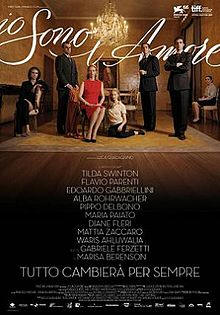
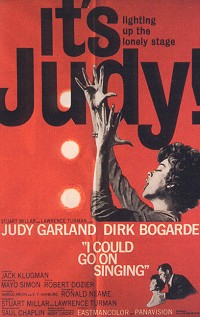
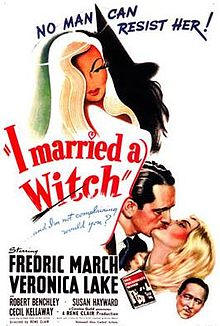
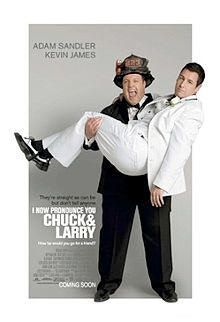
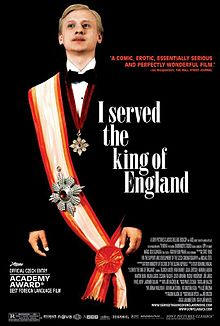
I Am a Fugitive from a Chain Gang (1932) I can’t imagine how I managed to go this long without seeing this film. Now that I have seen it, I can say that it is simply one of the most important films ever made, and one of the best. Films of social protest were not common in 1932, and would not be common again for many years, as the terrible Hays Code would not have allowed most of this movie to be shown, particularly the ending. It was the almost universal practice to tack on a “Hollywood ending” even to the most tragic story. You almost expect that, in Romeo and Juliet, the star-crossed lovers would survive and live happily ever after. Evil could not be shown to triumph in the end, especially if it was evil perpetrated by the state (in this case, Georgia, though the state is never named). And here it triumphs. Oh, does it ever. Paul Muni is a WWI veteran who strikes out to make a new life in construction when he finds no satisfaction in his factory job, shuffling papers, after his experiences in the trenches. But there’s no work. (There’s a whole ‘nother story there, of how shamefully America treated its returning vets.) He is down and out, and gets tangled up in a robbery for $5. Not his fault, but he is convicted, and sentenced to ten years at hard labor. From there we see the horrors of the Georgia chain gang system (many of them reprised in Cool Hand Luke, but without the chains). It is brutal, it is dehumanizing, it can easily be fatal, and there is little hope for escape. But it can be done, and after planning and waiting for two years, Paul hits the bushes and, after many close calls, gets away. In a series of quick, short scenes, we see him rise through the ranks of a construction company, until he has an office and is a respected citizen. But his wife, who has forced him to marry her by threatening to reveal that he is an escaped convict, finally does turn him in. He fights extradition, and stirs up considerable sympathy in Illinois and other states. The authorities are all set to refuse the governor of Georgia, when an offer is made. Return for 90 days of easy labor as a trusty, and at the end of that time we will pardon you. Your record will be clear. Well, I smelled a rat right off, but he goes back … into an even worse rat-hole than he left. Time after time they deny his release. (Almost all of this is true!) Fed up, on the edge of insanity, he escapes again. Up to this point the movie has been riveting, appalling, horrifying, but the true genius of the script and direction happens in the very last scene. He has been at large for a year, and one night he emerges from the darkness and meets his girlfriend. He is a shadow of a man, with eyes that never stop moving, gaunt, dirty, paranoid. He tells her he can never see her again, he must remain a creature of the night. As he backs away, as he is swallowed up in the shadows, she asks him how he gets by. Invisible by now, he utters one of the most haunting final lines of any movie, ever. It comes from a totally black screen: “I steal.” I’m getting goosebumps again. This monstrous system has taken a man who never did wrong, who with his second chance was leading an exemplary life, who was doing a lot of good, and turned him into a wraith who must prey on society simply to survive. This film was banned in Georgia. Georgia officials sued Warner Brothers (unsuccessfully, hooray!). The producer and director were told that if they ever set foot in Georgia, they would get a taste of the chain gang themselves. As if you needed another reason not to visit that cracker shit-hole. Most important of all, it led to a movement to abolish the worst excesses of the prison systems across the country. Several governors issued pardons to Robert Elliot Burns, the man who wrote the book this was based on, a direct slap in the face to the governor of Georgia. As long as he stayed in New Jersey, he was safe from the motherfuckers. IMDb.com I Am Love (Io sono l'amore) (2009, Italy) Tilda Swinton learned to speak Russian-accented Italian to do this film, which is impressive. It’s the story of a wealthy clan that begins with the old man appointing his successors at a family dinner. It is well-acted and looks gorgeous, and didn’t really involve me. It was interesting to me because it was the first time I’d seen Marisa Berenson in a long time, though I see she has worked steadily through the years, seldom in anything I’ve seen. She is best known for her roles in Cabaret and Barry Lyndon. IMDb.com I Capture the Castle (2003) One of those quirky British movies I find irresistible. Movies like this are seldom made by the Hollywood sausage machine. If you want something a bit different, this is a good one. IMDb.com I Could Go on Singing (UK/USA, 1963) I yield to no one in my admiration of the late, great, John D. MacDonald. I know several people who love his writing as much as I do, but none more. And I’ve never heard of another writer who doesn’t admire him. I have read every book he ever wrote … except two. One is Weep For Me, his second book, that until recently had never been re-printed, as all his other books (save one) have been. I’m pretty sure it was because he wasn’t proud of it. It’s always been hard to find, and expensive, and I decided I could do without. The other was the novelization of this movie, the only time he did that. So far as I can tell, this one has never been re-printed. I used to have a copy on my shelf, but I never got around to reading it, since I knew JDM didn’t like it, either. But when I saw it listed at Turner Classic Movies, I thought I’d take a look. The movie itself didn’t get good reviews, either, but I thought, Judy Garland, how bad could it be? Answer: Not as bad as I’d feared. The story is pretty hackneyed. Judy is a big singing star (surprise!) who had an affair with Dirk Bogarde, M.D., when they were younger. Result: young Matt, now around 12, living at one of those fancy British boarding schools. She had agreed to give him up when he was an infant as she couldn’t fit him into her busy concert schedule. Now she wants to see him again. Just once, she pleads, and I’ll go away. I promise. But one thing leads to another, and soon they are larking about all over London. Matt discovers she is his mother, and stern father dissuades him from flying off to Paris with her. She sings a song. Heartbreakingly. The end. Not going to set the world on fire, but … it’s Garland, okay? This was her last movie, though she did do a one-woman concert a few years later, as rather mercilessly chronicled in William Goldman’s wonderful book The Season. Then she was dead. So this is the last we have of her. Is her voice in top-notch shape? No. But with Judy, on her worst day she was still one of the best. I don’t think anyone, ever, could sell a song as well as Judy Garland, though Liza Minnelli tried. By the time she got to the end of a song, she was wrenching her soul right out of her chest and holding it out there in her hands. She does four numbers here, all of them alone on a huge stage, and she grows from a tiny, lost figure, until you figure she’s going to need a bigger stage. Again, these are not the best songs she ever sang (the best one is “By Myself,” by Howard Dietz and Arthur Schwartz, which Fred Astaire did in The Band Wagon), but even with sub-par material and at the very end of her career, she is something to behold. Really, this is a case of a movie being well worth seeing just for those 20 minutes or so. I’m glad I saw it. IMDb.com I ♥ Huckabees (2004) A total disaster by the director of the wonderful Three Kings. He also directed Flirting With Disaster, which we liked a lot. This time he flirted too much. It ês Dustin Hoffman and Lily Tomlin as “existential detectives,” a promising idea, and the ubiquitous Jude Law, so I stuck it out to the end, hoping to strike a ♦, but ended up with only crude oil. The movie has no ♥, and very little brain, despite endless jabber about existence. Somebody should have ♠ this bow-wow, or ♣ed it to death before it even left the litter. IMDb.com I Married a Witch (1942) Thorne Smith drank himself to death before he could finish the book this is based on. It was completed by Norman H. Matson. Smith’s trademark fantasy stories (he was best known for creating the Topper books) were considered quite racy in the ‘30s, and are pretty tame now, but still a lot of fun. This one was directed by Rene Clair and stars Fredric March and Veronica Lake. Sometimes I wish I didn’t know some of the things I know. One of those facts is the tragic story of Veronica Lake, who I always liked in the movies. She had one of the worst downfalls of any screen star, ever, due to alcoholism and mental illness. (Actually, her story would make a pretty good, sad movie.) She ended up penniless in New York, working as a waitress, before coming into a little money and starring in and self-producing Flesh Feast, one of the worst movies ever made. It was her last screen appearance, and a sorry way to end a career. On the other hand, sometimes it’s fun to learn of Hollywood dish, like this paragraph I can’t resist quoting from Wikipedia: Joel McCrea was originally slated to play the male lead, but declined because he did not want to work with Veronica Lake again, after not getting along with her on Sullivan's Travels. March and Lake also had problems, beginning with March's pre-production comment that Lake was "a brainless little blonde sexpot, void of any acting ability," to which Lake retaliated by calling March a "pompous poseur." Things did not get much better during filming, as Lake was prone to playing practical jokes on March, like hiding a 40-pound weight under her dress for a scene in which March had to carry her, or pushing her foot repeatedly into his groin during the filming of a from-the-waist-up shot. IMDb.com I Now Pronounce You Chuck and Larry (2007) Second feature at the drive in with The Bourne Ultimatum. IMDb.com I, Robot (2004) Everything about this ho-hum thriller goes for the safe and totally predictable and awesomely boring. We are way, way past the point where seeing thousands and thousands of robots on the attack is mind-blowing. But the heck with it. It’s what we know how to do. Let’s see, a film about robots ... I know! They run amok! There’s some flaw in the programming ... or, wait, no, it’s a big corporation trying to screw everybody and something goes wrong! And let’s have a big computer in it, and that computer uses ... uses cold, emotionless logic to explain her actions. (Let’s call the computer VIKI! Remember Hal in 2001? Like that!) Dr. Susan Calvin is one of the most famous characters in classic SF. But she’s short, tubby, and ugly, and too damn smart! Let’s make her a babe, and lots dumber than Will Smith, can’t have a woman smarter than Will in the movie, it says so right here in his contract. So let’s make her emotionless, too. She can say things like “that isn’t rational,” or maybe even “that doesn’t compute.” Sort of like Mr. Spock, only dumb. And Asimov invented those Laws of Robotics, he must have been plenty smart, but face it, he wasn’t a man of action. His stories don’t have any violence in them, they’re sort of ... cerebral. (Sorry, didn’t mean to use a dirty word.) They always involved some sort of ... well, thinking about stuff, and working out a problem that way. Offhand, I can’t recall a single scene he ever wrote where trucks and cars crash in big tunnels with bullets flying. Will’s gotta carry a big gun, he’s done with the Tommy Lee Jones Men in Black shit, where it was funny who had the bigger gun. Will’s got to have the biggest gun, and he’s got to fire it a lot. Will Smith can snooze his way through a standard smart-ass Will Smith part. He could phone it in by now. How about ... a cop! And this cop ... has an attitude! And, and ... he’s the only one who sees the danger of robots! “You’re off the case, Will! Hand me your badge!” There’s a scene you haven’t seen enough times, right? The sad thing is, there was the potential here for something at least a little bit interesting. When Asimov came up with the “positronic brain” (an example of what every science fiction writer will instantly recognize as “a device that does what I say it can do, even if I have not a clue in the world how it does it”), he and everyone else were unaware of any of the real problems that face fantastically complex computers. Nobody knew what a computer virus was. Nobody had envisioned computer warfare. And I know, there’s been plenty of that sort of stuff in movies, usually handled stupidly, but maybe some exploration of the Three Laws vs. computer hackers? No. Too intelligent. Come on Will! Fire your big gun, dude! IMDb.com I Served the King of England (Obsluhoval jsem anglického krále) (Czech Republic, 2006) Sometimes I see a film and enjoy myself quite a lot … and afterward just don’t know what to say about it. I’m not even sure I understood what it was doing. This one is like that. It concerns a little go-getter in Czechoslovakia in the pre-war years. He aspires to get rich, gets a Nazi girlfriend, there is a war, he gets rich, then the communists make it a crime to be rich and he goes to jail for 15 years. We move back and forth between his youth and his life after his release from prison. He is pretty much apolitical, he never seems to really react to his girl’s Nazism, and the film doesn’t seem to be making much of a political statement, either. It merely observes, and I guess that’s where the fun is. Our little hero is a waiter in fancy restaurants, where he can observe the behavior of the dirty rotten filthy stinking rich. One thing he learns is that if you drop a handful of small change on the floor, billionaires will get down on their knees to gather it in. Which, I guess, is the reason why they’re billionaires and I, who would not bend over to pick up anything less than a Kennedy half, am not. It is lovely to look at, and I had a good time but, like I said, I’d have a hard time telling you just why. IMDb.com I’ll Sleep When I’m Dead (2003) Dark, grim revenge story that gets off to a good start and then doesn’t know where to go. I hate it when that happens. IMDb.com I’m Not Scared (Io non ho paura) (Italy/Spain, 2003) Maybe the title resonates better in Italian, but I found it incomprehensible when I tried to fit it with the story that unfolded. A 10-year-old boy in a tiny town—hardly a town at all, just half a dozen crumbling buildings—in southern Italy in 1978 (which, I learn, was the hottest summer on record) discovers a boy his age living at the bottom of a well. (Another thing I discovered at the IMDb is that 1978 was the peak year for kidnappings in Italy, with over 600 of them. Some were political, most were just scumbags looking for a big payoff. Many children were killed when the random wasn’t paid.) At first the boy treats his discovery as sort of a pet, bringing him food and water. He’s been badly mistreated, seems to have lost his mind there in the darkness. The kid has been chained down there, but at some point the chain is gone. The two go for a run in the wheat fields that surround the town, but he has to go back because they have no idea what to do or where to go, and they don’t want the kidnappers to find out the boy has been free. At some point the boy discovers his father and mother and, seemingly, the whole village are the kidnappers. They watch a tearful appeal from the mother on the TV. They argue about what to do with the boy … and I can’t tell you more than that. It’s a very disturbing movie, with mostly non-actors. The central moral question is simple: What do you do when you discover that all the adults you know are sub-human slime, who should spend the rest of their lives in prison? It’s not an easy question for a boy that age. I mean, if he was five years older I’d condemn him for not running to the police as soon as he found the boy in the well. But it’s not so simple for a child. The film is lovely to look at, and thought provoking, and I’m glad I saw it, but I can’t say I enjoyed it very much. IMDb.com I’m Not There (2007) About halfway through this “rumination on the life of Bob Dylan,” I asked myself, what would be the point of making a standard biopic about the former Mr. Zimmerman? I mean, it would be largely guesswork. No one has worked harder to be obscure in all aspects of his life, to be incoherent and stumbling in interviews to the point that we wonder, could this disheveled, muttering homunculus really have written all that amazing stuff? (Maybe Joan Baez wrote those songs, huh?) I guess that maybe 50 years from now someone might make a straight bio, like the recent ones of Ray Charles and Johnny Cash, but it would be purely for educational purposes. All it could do is recite events, and aside from the infamous Showdown at Newport his life doesn’t seem to have been all that dramatic, film-wise. It wouldn’t tell you anything about Dylan, because he refuses to really tell us anything about himself. And why not? If you’ve seen the horror of the adulation, and then the angry rejection, of all the people who wanted to pound him into a mold of their own expectations, as shown so brilliantly in Don’t Look Back, how could you fault him for mumbling non sequiturs, for endlessly putting on all the earnest interviewers who can only relate to a genius by finding the right pigeonhole for him so they can write a newspaper article or a doctoral dissertation? (I can hear Dylan chortling at that idea.) So now we have this cinematic meditation, approved by Dylan—that is, he gave the okay to use his own performances of his songs in it. I have no idea if he read the script. And, to me, it’s about a third of a great movie. I suspect it’s a different movie to every viewer, because it’s stream of consciousness and makes little attempt to make sense, like Dylan himself. We have six people playing “Dylan,” (though none of them are named that).
So the only parts that worked for me were #1 and #5. Some of the others had things to recommend them, but ultimately pretty much wasted my time. (The film is 2 hours and 15 minutes long, and might have worked better at 90 minutes.) But the part that works the best, and is worth seeing the whole movie just for these nuggets of brilliance, is #5. It is absolutely uncanny. She even does her own singing, and though it is just a little bit higher pitched than Dylan, it doesn’t matter, because she has his nasal enunciation. I’m still glad (and amazed) that Tilda Swinton won the Best Supporting Oscar last year, but it was a close one, my friends, it was a close one. IMDb.com I’ve Loved You So Long (Il y a longtemps que je t'aime) (France, 2008) Two women meet awkwardly in an airport in France. It’s obvious they haven’t seen each other for a long time. Soon we discover they’re sisters, and the older one is going to be living with the younger one and her family for a short time. It’s obvious she’s just gotten out of some sort of institution. Prison, or the looney bin? Prison. She has done fifteen years, for murder. … and that’s about all I can tell you, as the discovery of who she murdered is a real shocker. For the rest of the movie you wonder, how in the world could she have done this and still be a good person? Because she seems good, we want her to be good, but the nature of her crime … it would be impossible to like her unless there is something we don’t know. And there is, of course, and it’s pretty shattering. Bring a handkerchief. I have learned that Kristen Scott Thomas, who I would have said is about as British as an actress can be, though she is fluent in French and speaks French in this movie … actually thinks of herself as more French than English, as she has lived more of her life in Paris—since she was 19—than in England. Just think of her in Four Weddings and a Funeral, or The English Patient. But she’s made quite a few movies in French. It must be nice to be able to have a career in two countries. IMDb.com Ice Age: Dawn of the Dinosaurs (2009) Second feature At the Drive In with Aliens in the Attic. IMDb.com The Ice Harvest (2005) Directed by Harold Ramis, who co-wrote and directed the staggeringly good Groundhog Day, screenplay by Robert Benton, starring Billy Bob, John Cusack, and Oliver Platt ... how bad can it be? Not too bad, but not very good, either. It's not a caper where everything goes wrong; these guys have already stolen $2,000,000 in the first scene. Then things go wrong, of the sort that happen when you're dealing with low-life scum. The thieves are in over their heads, there are betrayals surprises and some good scenes and good performances ... but I couldn't help comparing it to another movie about the ultra-sleazy side of life, a much better movie also starring John Cusack: The Grifters. See that one and leave this alone. IMDb.com Ice Princess (2005) Hollywood churns out about a dozen sports movies a year, and the most you can expect of most of them is a mild rush of euphoria when the underdog wins. They take the same basic plot, file off the serial numbers, and make the same movie whether the sport is football, baseball, golf, tennis, arm wrestling, badminton, ping-pong, or barrel jumping. I think it’s time for a curling movie, myself. I can just see the tense final scene, the guys walking down the ice, frantically sweeping and scratching, sweeping and scratching, until ... YESSSSS!!! He shoots! He scores! A rousing rendition of “O Canada ...” Tears, hugs, big mugs of Molson ... This was obviously made for teenagers and skating maniacs. It is possible to make a film that appeals to adults as well as teens, but this doesn’t bother to try. Everything about it is pedestrian. You can anticipate three scenes ahead, and chant along with the dialogue before it’s read by very bad actors. But that pales after a while, so we bailed out about 40 minutes into it. IMDb.com Identity (2003) Seems to be a rather bloody variant of the English drawing room mystery, with 10 characters stranded by a storm at night in an isolated motel. Then they start dying gruesomely. Can’t say much more, but all is not what it seems, and the ending will leave you looking back over the whole thing in a different light. It worked for me. IMDb.com The Ides of March (2011) I’ve always known politics is a dirty game, but I’ve seldom seen it played as dirty as this. And in this movie it’s the Democrats, fighting it out in the Ohio primary! No telling what the Republicans were doing. It would have been so much easier for director George Clooney to have this be Republicans doing all these shenanigans, but I think it has more of an impact this way. Hell, for us liberals, the Dems are supposed to be the good guys. Ryan Gosling is in charge of media matters for Pennsylvania governor George Clooney, who almost has the nomination wrapped up. But nothing is ever sure in an election, and new factors arise, mostly a Republican blitz (this has been done in the past by both parties) urging registered Repubs to vote for the candidate they’d most like to run against in the open primary. A good argument against open primaries. That’s dirty, from either party. Gosling professes idealism, he is burning with the desire to see Clooney elected … but when his moral mettle is tested, he doesn’t have any, and Clooney doesn’t have much. It’s discouraging, since the positions Clooney stakes out are pretty much what he—as a man, not a character—seems to believe in, pretty much what I believe in myself, and he’s saying such a politically ideal progressive candidate would do pretty much anything, make any compromise, to get elected. And I think he’s right. IMDb.com Idiocracy (2006) I was wondering why many of my favorite SF movies lately are comedies, or even more to the point, parodies. In fact, just about all of them. It’s been a long time since there has been a “serious” SF movie that I could take seriously. What’s going on here? I recall that the two SF movies that rocked me the most were 2001: A Space Odyssey, and Star Wars. One obsessively realistic, and one nothing but pulp nonsense … but fun! I got over Star Wars after the first film; the rest kept the nonsense and though they were great to look at, I just didn’t care. I never, not for a millisecond, took any of the many incarnations of Star Trek seriously. Back to the Future was a comedy, though not a parody. A Clockwork Orange worked as real SF, though it was largely satirical and was quite a while ago. Miracle Mile was near-future, apocalyptic SF, and worked well and played fair, and so did Deep Impact, more or less. Terminator was time-travel SF, and worked, but it was a rockem-sockem action pic, mostly. Frankly, I can’t think of an outer-space or time-travel movie in the last 20 years that I’ve both believed and enjoyed. Not one. I’ve developed a theory, and it may be an odd one, since I make a living writing this stuff, and it is this: True, hard outer-space or time-travel stories work better on the page than on the screen. Take my own private disaster, Millennium (please!). The short story it was based on, “Air Raid,” was a trifle, a kick in the gut and then over and out, and worked pretty well, I think. It was nominated for a Hugo. The novel I made from that worked okay, too, I was able to sustain my suspension of disbelief so vital to a story like that. But when it got onto the screen, it looked ludicrous … and I’m not talking about critics (who almost to a man and woman ignored it), but to myself … and I wrote it! Take another example of serious SF translated to the screen: Barry Longyear’s Enemy Mine. The story worked very well, but when it came to the big revelation in the movie, audiences laughed. Was it just that they weren’t sophisticated enough for “serious” themes in an outer space story? (And if so, what’s the point of making big budget space films that ask deep questions, if all the audience wants is more Star Wars?) I heard Barry bemoan that the director and screenwriter fucked it up, but I was watching, and I thought the scene was handled fairly well. But it didn’t work for me, either, and I knew what was coming and had liked the source material. Would they laugh at The Dispossessed, one of our iconic books when we talk about serious SF? I think they would, and I’m wondering if it’s the fault of the big screen. I know this is a radical notion and I’m not saying it’s true, but I keep thinking about it. If it’s true, then no amount of great screenwriting—not even Bill Goldman or the ghost of Paddy Chayefsky—would rescue a proposed HBO series of my Gaean Trilogy from looking foolish. (Which is not to say I wouldn’t happily sell them, if we can come to terms with the guy who wants to do them.) But Red Thunder and Red Lightning would translate well, I think, because they’re light-hearted, if not exactly comedies. More in the vein of Back to the Future. It’s a puzzle. But the fact is that the SF movies that I’ve enjoyed the most, with the fewest reservations, in the last 20 years or so have been comedies or parodies: Bill & Ted’s Excellent Adventure, Galaxy Quest, Tremors, Sean of the Dead, Morons From Outer Space. Which is a very long-winded and not particularly relevant way of getting around to this film, Idiocracy, which I thought was very funny, and is SF, no matter how you may hate the way it sends up SF conventions. The premise was stolen (I don’t know if it was conscious or not) from a classic 1951 short story by Cyril M. Kornbluth: “The Marching Morons.” Basically, smart people had small families or none at all, while the teeming idiot masses reproduced like bunnies. A time traveler (two of them, in the movie) is sent 500 years into the future, where everybody is stupid. And I mean everybody; in the Kornbluth story there was an intelligent elite behind the scenes that kept things running, but here there’s nobody. And I mean really, really stupid. Dumb as a box of rocks? A box of rocks would invent calculus in the time it would take one of these people to figure out how to fling a booger. And that’s where the fun comes in. If you want plot logic, go elsewhere. What’s keeping things running, given the level of destruction these people wreak on their surroundings all the time? Well … machines, I guess, built by the last generation that had any brains. But figuring out things like that is not the point of this movie. Forget about worrying about it. The point is satire, and big laffs! The creators—the same dudes who made “Beavis and Butthead,” which I am not a fan of, and which caused a long internal debate before I rented it—have taken everything awful and tacky about our world that makes you wonder every day if our civilization really is falling apart, and amplified it 1000 times. Ubiquitous commercials. People are named after products; the lawyer for our hero is called Frito Lexus. Trails are like “Let’s Make a Deal!” Executions take place at monster truck rallies. The president is an ex-porn star and professional wrestler. The Secretary of State is 14. The Costco looks like it covers 50 square miles, and has a law school. Stuff like that. Maybe this isn’t your cup of tea, but it sure is mine. And yes, the acting sometimes leaves something to be desired, but this movie isn’t as bad as the distributor apparently thought, when they essentially killed it by releasing it in only 6 theaters in small markets, then dropping it. Why? Nobody seems to know. IMDb.com Ikiru (1952) See Top 25 Favorite Movies. IMDb.com The Illusionist (2006) This is one of those movies where even a spoiler warning wouldn't do much good, because I wouldn't want to be discussing the ending, but the marvelous set-up, and by doing that I'd be clueing you in to more than I want to. About all I can say about the plot is that the title of the film gives you a warning, and that it then proceeds to bamboozle you with that most useful of the magician's tools: misdirection. You think you're seeing one thing because that's what the magician wants you to see, but ... and that's almost too much right there. The film is beautifully staged, and I must mention the music by Philip Glass, my favorite avant-garde composer (actually maybe the only such that I actually like), which adds a lot to every scene. The only weak part of the movie is Edward Norton, who is one of the best actors working today but who is wrong for this part. Someone with a bit more passion would have helped sustain interest during the long buildup to the final payoff, which is superb. IMDb.com The Illusionist (France, 2010) When Jacques Tati died in 1982 he had directed only 5 feature films in a career spanning more than 40 years as actor, writer, producer and director. But he left behind this screenplay, written in the 1950s, that he never tried to produce because of some disputes with his family that I don’t want to get into. Eventually his daughter gave it to Sylvain Chomet, the incredibly inventive man behind The Triplets of Belleville. The result is as if Tati had returned from the grave, in animated form. Some people just don’t get Tati. His humor is so gentle, so subdued, that if you are looking for big jokes you should look elsewhere. But he created a screen character that I think is as unforgettable as Chaplin’s Little Tramp. Like all his films, this is a small bit of whimsy, and at the same time very poignant. Highly recommended. IMDb.com The Imaginarium of Dr. Parnassus (2009) What’s the deal with Terry Gilliam? If I was a believer, I’d almost think God was out to get him. He has had more trouble getting his films made and distributed than anyone I can think of. The story of the legal fight over Brazil is legend in Hollywood. The Adventures of Baron Munchausen was hardly released at all due to a regime change at Columbia, so that the new guys actively killed everything they hadn’t had a hand in. He was halfway into pre-production of The Man Who Killed Don Quixote when all his sets were wiped out by a flood of Biblical proportions, and then all his investors fled. (The only good thing to come out of that was an excellent little documentary about the disaster, Lost in La Mancha. But it’s in pre-production again, with Robert Duvall as Quixote.) And now this. One of his stars dies in the middle of filming. I would not be surprised in the least to hear that Gilliam had been swallowed by a whale, or had a plague of frogs and locusts invade his home. But this time he came out okay. The way they dealt with the death of Heath Ledger was that every time his character entered the magical world of Doctor Parnassus, where your imagination becomes reality, he was played by a different actor, who at first registers that his face has changed, and then simply accepts it and moves on. This works remarkably well. The actors are Johnny Depp, Jude Law, and Colin Farrell. (All three donated their salaries on the film to Ledger’s daughter, Matilda, who is 4½ . Bravo, guys.) People’s reaction to Terry Gilliam’s films depend largely on how important plot is to them. Plot has always been Gilliam’s weakness. I have a friend for whom plot is pretty much everything, and he can’t stand Gilliam. For myself, I like a good plot that makes sense, but if the movie can show me something visually that I’ve never seen before, I can excuse a lot of plot holes. I can be okay with a nonsensical plot. Gilliam’s visuals are so good, so startling, so unique, that the rest of the film has to be an utter mess, like Tideland or, not quite as bad, The Brothers Grimm, for me to not like it. So I loved Time Bandits, Brazil, and The Adventures of Baron Munchausen, and liked Twelve Monkeys quite a lot, in spite of the fact that they often didn’t make a lot of sense. This film is of that caliber and beyond, and as an added bonus, I thought the story was pretty good, too. Like many other Gilliam films, it’s about a traveling troupe of entertainers. They live in a huge, shoddy, horse-drawn wagon that is larger on the inside than on the outside. They are in modern London, but they are dressed for an earlier age. They put on a silly show on the street, and hardly anybody comes. Doctor Parnassus (Christopher Plummer) is over a thousand years old and has the ability to send people through a “mirror” (actually just two sheets of Mylar) and into a world of their own imagination. And this, of course, is where the movie really shines. These worlds are incredible. And let me say once again what a pleasure it is to see high-powered CGI SFX put to some actual creative use to produce a world that delights, instead of the endless, dreary, repetitive darkness of the comic book movies we get today. Have to add a word about the Doctor’s daughter, a newcomer named Lily Cole. Her heart-shaped, child-like face, with wide eyes and tiny mouth, is utterly entrancing, and she acts well, too. And she’s almost as tall as Uma Thurman. She is currently at work as Alice in Phantasmagoria: The Visions of Lewis Carroll, directed by … gasp! … Marilyn Manson. I hope it’s worth seeing. I think she could be a big star. IMDb.com Imagine Me and You (2005) The Beatles sang: “Do you believe in a love at first sight?” “Yes I’m certain that it happens all the time.” This movie is about love at first sight. Does it happen, or is it wishful thinking? Well, it’s never happened to me, but it happens to a woman in this film who is, literally walking down the aisle to get married, glimpses a person and instantly falls madly in love. Trouble is, this person is another woman. No indication is given that she has ever had a homosexual thought; it simply happens, a thunderbolt from the blue. The other woman is, luckily or unluckily, depending on your point of view, a lesbian. The new bride still has a high regard for her husband, who is decent and still loves her. But as Woody Allen said when marrying his stepdaughter, “The heart has its own ways.” Or something like that. This is a premise for an interesting movie, but this movie isn’t it. Everybody’s too pretty. There aren’t enough witty lines, and what there are don’t come off. Every scene seems clichéd. All I really concluded from this film is that British yuppie scum are just as boring as American yuppie scum. IMDb.com Imaginary Heroes (2004) A beloved son commits suicide, and a family tries to deal with it, mostly pretty badly. We’ve seen this family before, and done better, in both The Ice Storm and Ordinary People. This movie is all over the place, can’t decide what it wants to be, and I’d have given up on it but for its emotional center: Sigourney Weaver. The lady is getting better and better. The right part in a movie people actually go to see and she’ll be up there getting an Oscar one of these days. Sorry to say, one outstanding performance can’t rescue a movie ... but it can make it watchable. IMDb.com IMAX Space Station 3D (2002) There’s a few of these out on DVD now. I remember seeing IMAX NASCAR 3D on the shelves. I didn’t see much point to it. Neither film is 3D on DVD, and even the biggest HDTV with the coolest home stereo isn’t going to give you 1/100 of the IMAX experience. On the other hand, this is the International Space Station, and I’d probably watch grain 8MM black and white footage if that’s all there was. And it’s only 45 minutes. Having seen it now, I wish it were longer, and most of all, I’d like to see it on the IMAX screen. A Google search tell me the closest place to me that it’s playing is Houston, at the Johnson Space Center, but with IMAX they can come around again. The movie shows the whole thing, inside and out, from the first module launched, all the assembly, crew activities inside. But I have a feeling the money shots are two close-ups: A shuttle lift-off and a Proton lift-off. Man, that would be something on the IMAX screen! IMDb.com Imitation of Life (1934) Lawsy mercy, honey chile! Ain’t it be some kinda miracle, de way colored folks has come a long way fum de way dey wuz always behavin’ in de movin’ pitchers back in de t’irties and how we sees ‘em now? Why, I do declare, it wuz dat way in de fo’ties, too, and even de fi’ties and sum into de sixties, I swan! If I continue in that lame dialect any longer I’ll throw up. But nobody thought a thing about it back then. It was a movie standard for the Pullman porter, the shoeshine boy, the maid, and any black street urchin the white people encountered. Of course there were black dialects, still are, but everything about how they were shown back then was wrong, wrong. Even worse was the attitudes on display. Here we have Louise Beavers who gets hired on as a maid to Claudette Colbert, who can’t really afford her, but Louise (playing “Delilah”) is just as pleased as can be to come to work for no wages, just room and board. She is just like all black mammies in cinema back then: A heart big as all outdoors, ultra loyal, pig ignorant, and living only to make her employers happy. Pretty much like a dog that can talk. The funny thing is, this was an extremely progressive film for its time. They just weren’t making movies about race relations in 1934. All the black people were tucked comfortably away in stereotyped roles, a line of dialogue here and there, never a hint of discontent over their position in society. Now here we have Louise and Claudette going into business selling Louise’s killer pancakes. First a small store, then marketing the mix (can anyone say Aunt Jemima?), then great wealth. Louise don’t want to bother her haid wit’ all dat business stuff. She jus’ wanna stay with Miss Colbert and take care o’ de chilluns. But the chilluns is where the real story is. Colbert has a child, Jesse, and Beavers has a child, Peola. They are the same age, and grew up together since they were toddlers. Peola is pale enough to “pass” for white (played by Fredi Washington, who throughout her life adamantly refused to pass, though it would have been easy for her). She hates being labeled as Negro. And who could blame her? She sees the differences in how she is treated and how spoiled little Jesse is treated. We were a long, long way from “Black is beautiful.” Black was a cross to bear, a social stigma, a fucking skin disease like leprosy that kept you down in the gutter. You know, so much has changed for the better, but one thing we still have has always bothered me. One drop of black blood, one great-great-grandparent, means you are Negro! This used to be enshrined in law in many if not most states. I don’t know how the census treats race these days, but they ask you, don’t they? (I might be technically Negro; I don’t have a clue who my great-great-grandparents were, but one side of the family is from Alabama. Who knows?) This idea establishes African blood as a taint, a stigma. Look at it the other way. If an African-American has one drop of white blood, from way back in the 19th century, does that make him white? You know damn well it doesn’t. Yet race is such a strong concept in our society that for a pale Negro to name himself white, to pass, is completely taboo … in the black community. You’re denying your people, your heritage. It’s the same with Jews. You can’t stop being a Jew, you were born that way, though it’s often easier to pass as gentile. I look at myself: German on my mother’s side, English and a little bit of French on my father’s side. But no one expects me to wear lederhosen and invade Poland, take tea breaks, or like Jerry Lewis movies. I do not identify with any of my heritage, and I’m totally cool with it. African-Americans largely have no choice in the matter. And, of course, today most take considerable pride in being black. But it’s still something that is defined for them, no matter how pale they are. Okay, back to the movie. It’s easy to see what’s coming, though it tripped me up once. Peola disowns her mother, says she’s going away and never wants to see her again. Delilah’s heart breaks, she just fades away, first describing the big send-off she wants, complete with white horses and bands. (She knows how to spend some of that money she’s earned.) Peola shows up at the funeral, heartbroken, contrite. Meanwhile, Jesse has come home from school and develops a crush on Colbert’s ichthyologist fiancée. (Now there’s a profession you don’t often see in the movies. And he’s very handsome, too, with a profile like Barrymore.) Oh, heck: SPOILER WARNING: I expected him to be a cad, to go for the younger girl. But he is steadfast … and Colbert rejects him. Reason? Because if they married, it would estrange her from Jesse. He points out it’s a schoolgirl romance—which it certainly is, and shame on her—but Colbert won’t be budged. So the theme of the movie, other than the horrors of race relationships, is that mothers will do anything for their chilluns, even if they are spoiled little brats. Which sucks, in my opinion. Colbert doesn’t deserve her fishy lover if she will sacrifice her love, and his, for that little bitch. IMDb.com The Impossible (2010) That’s what I would have said if you told me this story, and I didn’t know it was true. A family of five, tourists in Thailand on December 26, 2004 when the biggest tsunami we had ever seen up to that time hit the resort hotel they were staying in … and they all survived. When you see what it was like to be thrown into that maelstrom and whirled about with tons and tons of lethal trash, you’d think that any one person would have had about the same chance of survival as a mouse in a blender. But they all made it. The mother was severely injured, but the others escaped with only bruises and scrapes. The special effects are stunning, staggering, frightening. I don’t know when I’ve been riveted to my seat as long and intensely as I was here. It’s a mixture of real water and CGI and big models. Naomi Watts (who got an Oscar nomination) and Tom Holland, the boy playing her son, spent five weeks either underwater or half-submerged. It must have been awful. But there is a story problem. We follow the boy and his mother for a while in the aftermath, then we switch to the father and two younger sons. So we know they’re all alive, and the only real problem they have—other than the operation the mother needs—is how long will it take them to find each other. This is overplayed a bit, and the reunion was dragged out too long for my taste. Here, the chief enjoyment is the awesome spectacle of the wave, and the overwhelming sense of sorrow to see what was left behind, and the thousands and thousands of people waiting for medical care from a completely overburdened Thai medical system. No reflection on them; American hospitals would have broken down, too. One thing all the European and American survivors agree on is the heroic efforts of the Thais, rescue workers, medical staff, and ordinary people, to give help. Many of these people had lost everything they owned, and large parts of their families, but they never stopped to count the cost until all the survivors of whatever race had been found and helped. My hat is off to them. IMDb.com Impostor (2001) Yet another big movie made from a Philip K. Dick short story. It’s 2079 and Earth has been at war with invaders from Alpha Centauri for a few decades. The Centaurians have a technology whereby they can kill someone and put all his memories into a cloned body indistinguishable from the real one without elaborate tests. So the replicant thinks he’s the original. Through some hocus-pocus an extremely powerful bomb can come together through nanotechnology, and assassinate Earth’s leaders. So the replicant’s job is to get close. How he’s supposed to do that without realizing he’s a walking bomb was never clear to me. There are those who have postulated that if humanity were faced with an alien invasion we’d all come together, forget our differences, and all sing kumbayah together as we fought off the enemy. Maybe, but even if it united us under one government, I believe strongly that that government would be fascist in nature. Fascism thrives in bad times, whether war—on “terror” or anything else—or economic calamities. Just look around you, at our Constitution which now is as shredded at the flag at Fort McHenry. That’s the case here. Gary Sinise, an important scientist, is brutally arrested, brutally questioned, and is about to be brutally murdered solely on the say-so of an agent of Homeland Security … er, a clandestine government agency, who believes he is a replicant. Gary escapes, and the rest of the movie is a chase. I’m afraid I saw the “surprise” ending coming a mile away, though there was a bit of a double whammy that I hadn’t anticipated. Still, it wasn’t enough to rescue this rather pointless effort. I will say that the sets and production design were quite good, in places. So what else is new? IMDb.com In a Lonely Place (1950) Classic film noir directed by Nicholas Ray. Humphrey Bogart is a troubled screenwriter who is suspected of murdering a hatcheck girl. Gloria Grahame is his next-door neighbor who corroborates his alibi. She’s telling the truth, and they fall in love, but she is troubled by his violent nature. His temper is uncontrollable. She begins to think he may have murdered the girl after all. And when he finds out about her doubts and her plans to leave him, he comes within an inch of strangling her, saved at the last moment by a phone call. That pretty much puts an end to the relationship. It’s interesting to observe that, in 1950, it was probably meant as a tragic ending. Not to me, not in 2011. She got very lucky. He would have killed her eventually—he still may, he’s that crazy—and I was happy to see her rid of the maniac. IMDb.com In America (2002) One of the all-time greats. The acting of the children is wonderful. In fact, everything about it is wonderful. We just saw it again on DVD, and was even better the second time. Couldn’t recommend it more highly. IMDb.com In Bruges (2008) First, let’s get something absolutely clear: though it says nothing about it on the box, this is a foreign language movie. Some intelligible English is spoken, here and there, mostly by Belgians, but all of Colin Farrell’s dialogue is in Irish. Not Gaelic, but in an Irish accent so thick, so impenetrable, that I’d wager there’s plenty of people in Dublin who wouldn’t understand it. Five minutes in, I realized I’d understood almost nothing he’d had to say, and very little of what his buddy, Brendan Gleeson, said. But (praise the wonks who developed it), we live in the age of the DVD, and if those shiny little disks had done nothing else of worth they would have justified themselves with just that little button on the remote that says SUBTITLES. Most DVDs have them, sometimes in multiple languages. What I ordered up was English for the Hearing Impaired, so we got a lot of titles saying things like (Clears throat) or (♫ Music playing ♫), but that’s okay. Now, Colin would mutter and swallow a few wretched syllables, and an acre of print would appear on the screen! Lord, he couldn’t have said all that, could be? Apparently so. Now, on to the movie itself. I’d best insert a half-hearted SPOILER ALERT here, because I’m going to discuss a few plot secrets … but they are secrets that are revealed fairly early in the movie, and you’ve probably heard of them. (I will not discuss the ending, which was a bit of a surprise.) Ken, the old hand (Brendan Gleeson), and Ray, the new guy in the business (Colin Farrell) are hit men who have botched an assassination and have been sent to Bruges to “cool off.” Ray is pretty upset, unable to enjoy the sights of Bruges that Ken is reveling in. He probably wouldn’t have liked it even if he weren’t in a funk. He’s a simple Irish lad who can’t give a shit about a vial of the true blood of Christ. He was just trying to better himself in a new line of work, and now this happens … And what happened? Well, he starts his really, really bad day by gunning down a priest in the confessional, just as he has confessed that he has been paid to do the hit on the priest. The holy man staggers into the church, Ray still filling him full of lead from behind, but one of the bullets passes through the priest and then the head of a little boy kneeling at the altar. (Back up for just a minute, read those last two sentences. Have you ever come across a situation where so many cardinal sins have been committed in such a short space of time? Most of them by one bullet? Let me get this straight: He fires into the confessional booth, during the holy rite itself. He murders the priest in the church. For money. He kills the little boy, an innocent bystander! While he is at his prayers, doing his penance! (“Try to do better at maths,” is one of the poignant goals expressed on the blood-stained paper in the kid’s hands.) To improve on that score of sins you’d have had to have the Pope standing between the priest and the boy, and the bullet kills all three, and then Ray would have to take a crap in the baptismal font and piss in the holy water on the way out.) Okay, enough black levity from me. Black humor is what this movie is all about, and it’s very good at it. It also manages to convey a real sense of Ray’s suicidal remorse. All through the story some demented Irish criminal sense of morals dictate the action, and leads to some scenes that are so funny you want to cry. Because the reason Ken is in Bruges, of course, is to kill his friend Ray for being such a spectacular fuckup. Because killing kids is right out, even to the vicious psychopathic family man Harry Waters (Ralph Fiennes). This all comes together quite nicely as one of those films that is continually startling you with good, though occasionally insane, writing, and top-notch acting, and a plot that turns you around every ten minutes. You might be reminded of some of the goofier dialogue in Pulp Fiction, before Tarantino apparently decided to devote himself entirely to bad drive-in movie and Hong Kong chopsocky ripoffs. Plus, whatever that low-brow Ray thinks, Bruges looks like a place I could spend a few weeks in. IMDb.com In Country (1989) There are some great war movies that concentrate on combat. Saving Private Ryan, Paths of Glory (the first part), Full Metal Jacket (the second part), and Platoon come to mind. But the ones I prefer are those that concentrate on the home front, and/or the aftermath: Mrs. Miniver, Coming Home, The Best Years of Our Lives, Born on the Fourth of July. My never having served, never having been shot at, may be one reason for that. I’m never quite sure they’ve gotten it right. But there’s also the fact that combat strikes me as somehow … easier. In film terms, I mean. Blood spilling, people getting blown up, the intensity of violent action. Any competent writer can write that, any decent director can direct it, actors can scream their lines. The hard stuff is more subtle. This is one of the best. The wonderful Emily Lloyd is just graduating high school, and wondering about her father, who died in Nam before she was born. She’s living with her uncle, Bruce Willis (in what I think is his finest, most understated performance), who, like so many, never really came back from Southeast Asia. He left an important part of himself behind. All the vets in this movie are damaged, but none in the standard Hollywood way. There are no Rambos, just men trying to put it behind them, seldom talking about it to outsiders, hoping to forget, knowing they can’t. I won’t say more, except to mention that if the final scene at The Wall in Washington doesn’t tear your heart out, you don’t have a heart. And it does it honestly, never working too hard to jerk the tears. Quietly, with calm understatement. A word about Emily Lloyd. You would never guess she’s a Brit, she gets the Kentucky accent down perfectly. I had seen her in Wish You Were Here and been greatly impressed, and after this, I was sure she was going places. But she didn’t. I now learn that she suffers from Obsessive Compulsive Disorder, and it almost stopped her career completely. Then she had some bad luck in casting. I still hope to see her again, and wish her well. But if she never does another major role again, this one will do. IMDb.com In Good Company (2004) You know this is going to be fairly standard stuff from the start, but I like Dennis Quaid and love Scarlett Johannson, so we took a look. And for the first two acts it was damn good, transcending the material because of smart writing and top-notch acting. A loathsome young yuppie played very well by Topher Grace (Topher?) is promoted way beyond his capabilities over a man twice his age. But he has the grace (Grace?) to realize he is a loathsome yuppie, and wants better for himself. The digs at corporate sociopathy are very good at first. (Were corporations always this heartless and stupid, or is it recent development?) Then the whole thing collapses at the end in an attempt to make everybody feel good. Every cliché in the book is dragged in except boy-gets-girl. It just sort of lies there and dies. IMDb.com In Her Shoes (2005) I liked this movie almost in spite of myself. The first half hour is a bit hard to take, as two sisters who share nothing but parents and the same shoe size clash repeatedly. Cameron Diaz is beautiful, lazy, a drunk, a thief, a liar, an illiterate, a slob, and keeps stealing her sister's shoes. What's not to like? Toni Collette is a pretty Aussie (though you'd never guess in this movie) with a slightly large ass who keeps playing plain fat girls. She's the responsible one here. I didn't like either of them at first. Then the movie gets more detailed, and I ended up liking them both. But only because they'd changed. Shirley MacLaine is the catalyst, and she's as good as usual. But what I want to talk about is shoes. Everybody needs them, but only women seem to obsess about them, and I have never understood it. Not only that, they wear shoes that are guaranteed to destroy their feet by the time they're 30, if not before. Maybe it's because men don't have many options (thank god!) in accessorizing. Pick out a tie, and that's about it. Since I don't wear a tie, I'm even more baffled. Here, Toni has a closet full of shoes she never wears. She buys them as a treat for herself, shoe-shops when she feels bad about herself. Then Cameron says to her ... it's because it's the only part of you that doesn't gain weight. An aha! moment for me! It's true! Except at the extreme outer limits of morbid obesity, the feet don't get fat! No matter how your weight may fluctuate, you can always wear your shoes. That's probably not the real reason so many women obsess about shoes, but at least it's one that makes sense. IMDb.com In My Country (2004) Shortly after Nelson Mandela got out of jail he and the government set up the Truth and Reconciliation Commission to do an extraordinary thing: They allowed many of the criminals of the previous regime to get off scot-free if they admitted what they had done, apologized to the victims and survivors, and could show they were “only following orders.” There is a great documentary to made about this (and maybe it’s already been made, but I haven’t heard of it), and a great fiction movie, too, like Hotel Rwanda ... but this isn’t it. This really isn’t it. I could hardly believe it was made by John Boorman, of Deliverance and Hope and Glory. The direction is sloppy, the script trashy and utterly predictable, the acting is amateurish. Even the cinematography is boring and sleep-inducing. A crying shame, because so much could have been done. Juliette Binoche is an Afrikaner, Samuel L Jackson is a black American reporter covering the tribunals. He isn’t inclined to forgive, she thinks the TRC is the only hope for the country. The film indicates that she is the true African, in that she was born there and knows far more about Africa than he ever will. But she will never know what it’s like to be black. There has to be a way to come at this material edgewise, without slapping you in the face with it all like a lecture, which is as far as this film ever goes. As an American, a westerner, and a man who was raised “Christian,” I find it hard to forgive, especially atrocities like those committed under white apartheid rule. “An eye for an eye,” that’s what I was brought up to believe. Not “love thy enemy as thyself.” Christians get to pick and choose that way, and the former has always made more sense to me. But I know in my gut that it’s the wrong way to go, at least some of the time. Maybe most of the time. I don’t think anyone would have forgiven Hitler. But should we forgive Tookie Williams? (My vote: NO. But I could be wrong.) The lack of forgiveness leads to a relentless cycle of revenge, which is what I and just about everyone else expected when the white government fell in South Africa. I was wrong, wrong, wrong (though only time will tell; there are still many problems to confront), and Nelson Mandela is a much wiser man than I am. But I knew that a long time ago. IMDb.com In the Cut (2003) Directed by Jane Campion, who won a screenplay Oscar for The Piano in 1993, which was a good movie. This, however, is basically a stupid potboiler that makes no sense. IMDb.com In the Electric Mist (2008) This is the second of the 17 Dave Robicheaux book by James Lee Burke to be made into a film, after Heaven’s Prisoners, which was based on the second book, and starred Alec Baldwin as Dave. In this one, it’s Tommy Lee Jones, who is a better choice. I guess it’s better to have them made into movies rather than risk a truly awful television series, like “Spenser for Hire,” but neither of these movies satisfy. In the Electric Mist With Confederate Dead was the seventh book in the series, and my least favorite up to that point. I just didn’t care for all the magical realism of Confederate soldiers appearing to Dave, led by Texas General John Bell Hood (played by Levon Helm). In the movie it is implied that Dave’s lemonade was doped by bad-guy “Baby Feet” Balboni (John Goodman), but then at the end we see Dave in a history book, standing with Hood and his men. Sort of like the last, dumb scene in The Shining. Gee, how weird, huh? I can almost hear the Theremin music playing. Part of the problem seems to be that, in the books, Dave knows he’s a violent man, and tries to fight it, and loathes himself when he finds he’d gone down that road yet again. In this movie, he seems to like it about as much as most heroes of violent movies, which is to say, maybe a mite too much. I know, it’s hard to portray that sort of internal dialogue, which is why it’s not always a good idea to make a movie from a first-person novel. But the fact is that the books are good because of James Lee Burke’s sense of place (his Texas and Montana novels are not nearly as good as his Louisiana novels, in my opinion, maybe because he doesn’t know them so well), and the fascination of the character of Dave. One other thing that makes them so good is the character of Dave’s best friend, Cletus Purcell. To call the man a loose cannon is quite the understatement. In one of these books he drives one of those gigantic earthmovers right through a gangster’s mansion, just rips that sucker apart, all to steal a floppy disc and to conceal the fact that he stole it. He is always doing things like that, and getting in big trouble. And he’s not in either of these movies. I can’t recall for sure, but it’s hard for me to believe that he doesn’t put in an appearance in either of these books. So why isn’t he here? I always saw him played by John Goodman … who is in this movie, but in the wrong role. The producers must have felt the same way I do. Despite being helmed (in Variety-speak) by Bernard Tavernier, a serious and well-respected director, this movie went straight to DVD. IMDb.com In the Good Old Summertime (1949) Hollywood’s second take on the play Parfumerie by Miklós László, the first being The Shop Around the Corner. This time it’s a musical set in Chicago. (Oddly enough, it takes place almost entirely in the good old winter time.) It’s not bad, but it can’t really compete with the original. However, it has the singing of Judy Garland, which makes up for any shortcomings. When I haven’t seen one of her movies for a while, I am always freshly astonished at the power of her voice. If the world gets a voice like that every 50 years, it is a lucky world indeed. It also features one of Hollywood’s great character actors, Mr. S.Z. “Cuddles” Sakall. I wondered what sort of a man would want himself to be listed as Cuddles in the credits of a film. According to Wiki, not Cuddles himself, it seems. He didn’t like it. Which makes it sort of nasty, in my book, to list him that way, even if it was what everybody called him. He’s most famous as Carl the headwaiter in Casablanca. The film is accompanied by two little Technicolor time capsules: “Chicago the Beautiful,” and “Night Life in Chicago.” These are examples of a thing that is now as extinct as the wooly mammoth: the travelogue. I remember seeing some of the last of these, when they played with a cartoon and a newsreel. They are pretty lame, but provide a fascinating look into the times and places where they were made. These were by the king of the travelogue, James A. FitzPatrick, “The Voice of the Globe.” The IMDb lists 207 documentaries under his name, most of them under 10 minutes long. He made them for MGM under the label of “Fitzpatrick Traveltalks” and for Paramount as “VistaVision Visits.” I’m glad somebody’s saving them. Think what they’ll look like in 100 years. Buster Keaton is here, too, sadly. He plays the boss’s incompetent nephew. What a come-down for one of the great comic actors of all time, to get 6th billing in a bit part. IMDb.com In the Loop (2009) Here is a script that was nominated for an Oscar, and had no less than four writers, plus the director, which is usually a disaster. But this time it seems to have meant that they used the best stuff each of them wrote. I doubt that any group of humans have ever been as articulate and funny and wicked and literate and obscene as the people shown here ... but in a better world people’s dialogue would be that sharp. It's like “The West Wing” on steroids, only everybody here is either cravenly out for him- or herself, or incompetent, working way above their pay grade. It’s about how we bumble into war sometimes, and we don’t even have a clear idea why, it just all sort of snowballs. It is satirical in the same way Wag the Dog was, so it didn’t make much money. As George S. Kaufman said, “Satire is what closes on Saturday night.” Most people can’t handle satire. I laughed and laughed and laughed, in the sort of appalled way you laugh at Dr. Strangelove: or How I Stopped Worrying and Love the Bomb. You laugh and at the same time you wish you weren’t laughing, because this is serious stuff, dammit, people are going to die because of the ineptitude of these brilliant, mouthy, narcissistic people. But if you get satire, you laugh anyway. I couldn’t recommend this more highly. One of the best movies of the year. IMDb.com In the Valley of Elah (2007) I can be a very easy audience for a movie. If the acting is good, the script is interesting, and the situation provocative, I tend not to ask a lot of questions as I’m going along. The acting here is very good, especially Tommy Lee Jones, who was Oscar-nominated, and Charlize Theron, who I didn’t even recognize until I looked at the sleeve and saw her name. (We all know she can go ugly, as in Monster, but she’s also able to go plain, which might be even harder. Here she is a pretty girl, but not stunning; put her on a runway in a nice dress with her hair and make-up done and she’ll blow any other model, actress, or whatever right off the red carpet.) So the movie kept me going right up until the final frames … But later I had a lot of doubts. Jones is a Vietnam vet, who learns his soldier son is AWOL, and then dead. He wants some answers. As the story progresses we learn something about the “good” son’s 18 months of service in Iraq. It ain’t pretty. The war has changed him. Jones doesn’t go into any histrionics over this, though in his tired old eyes we can see that it’s hard for him to contemplate the changes his son has gone through. And I don’t buy it. I don’t know what he did or saw in Nam, but even if he was one of the “good” soldiers over there, he must have heard the stories. Hell, I’ve heard them, and I wasn’t even there. I’m not picking on American troops, Nam vets, or Iraq vets here. This sort of dehumanization is common to all armies, in all wars. Some soldiers are able to cope with it and retain their humanity, but some come back mentally damaged. Some find themselves committing atrocities they couldn’t have imagined a year ago. Bright-eyed, bushy-tailed, patriotic, gung-ho boys (and girls, now) go into combat and soon they see things that deaden their emotions. Maybe they do things that, later, they have a hard time accepting … and it can be wholly innocent, not like My Lai. You fire into a hootch or a shack in Iraq, and then find that you’ve blown a baby to pieces. What do you do? You go crazy, or you get hard. Sergeant Jones would know that. He would have known that before his son went off to war. So his gesture at the end, hanging the flag upside-down, the signal that the country is in distress, seems odd to me. I happen to believe the country is in considerable distress with this evil and unnecessary war, but it’s always in distress in wartime. American boys are always doing awful things in combat, just like the soldiers of every other country. It comes with the territory. If Jones got through his service in Nam with his patriotism and army spirit intact, then he was pretty naïve. I don’t think he would be. So this movie, while interesting as a whodunit, failed for me as the anti-war effort it was obviously intended to be. IMDb.com In This World (2002) How would you go from an Afghanistan refugee camp to London to begin a new life ... with nothing but a few forged papers and a little bit of money your family has scrimped together? With great difficulty, that’s how. This is the story of a 16-year-old and his uncle who set out to do just that, and it is mostly real, though some scenes had to have been staged. Engrossing and heartbreaking. IMDb.com In Which We Serve (1942) … is the story of a ship, a destroyer in His Majesty’s Royal Navy from shortly before the war to somewhere in 1942. In the first 15 minutes we see her built from the keel up, launched, fighting in her last combat engagement, and sunk. The rest of the movie is the recollections of a few men clinging to a life raft as the goddam Nazis strafe them every few minutes. This is a very effective way to tell the story, as we see the quiet heroism of the men at war, and the quiet heroism of the women on the home front. It was written, scored, and co-directed (with David Lean) by its star, Noel Coward. In fact, Mr. Coward’s name shows up so often in the credits that I thought they might name the ship the HMS Coward … but somehow, that doesn’t sound like a great name for a warship, does it? When you watch a film like this or Mrs. Miniver, made as it was all happening, or a later one like Hope And Glory, which show the hardships the British people endured when Hitler made Piccadilly Circus one of the war’s front lines, I’m always reminded of what an incredibly easy time of it we Americans have had in our wars. If you don’t count Pearl Harbor, there has been no combat on our shores since 1865. Sure, we sacrificed big-time during World War II, even a bit on the home front—gas rationing, rubber and steel drives—lost many lives (actually, a fairly small number compared to China, the Soviet Union, Poland, and many other countries). but after Pearl Harbor no civilians were bombed. Not once. Our families never cowered in basements or tube stations, no incendiaries fried our children in their beds. The war in Vietnam took a terrible toll on our soldiers, but we civilians slept safe every night, never had to listen for the sound of Viet Cong helicopters in the night. As for our recent wars … other than a bunch of money (most of it going to war profiteers like KBR and Blackwater) and the blood and bones of the mostly poor young men and women who make up our military, we have been asked to sacrifice nothing. What was George W. Bush’s advice to us, the way we could do something to help the effort for his war of choice in Iraq? Go shopping. Spend money. Gee, Monkey Boy, do I have to? So we are attacked on 9/11, and what is our response? We squealed like the spoiled pigs we are: Keep us safe, Mr. Bush! Fight ‘em over there so we don’t have to fight ‘em over here! Here, tear up the Constitution, bomb civilians, torture prisoners. Do anything, Mr. Bush, but don’t let them scare us like that again! My fellow citizens, if Al Qaeda, the Taliban, the Afghans, Sunni or Shiites Iraqis had been able to drop one single bomb on us, if one remotely-controlled Predator drone had penetrated our shores, both of these wars would have been over in ten minutes. We would have been begging for surrender terms. We have become a nation of cowards, a fat, spoiled, degenerate nation of indulgence, and it makes me sick. We have fallen so far from the people who endured the Civil War, fighting for a cause (yes, the cause of the South was evil, but it was a cause), who stopped the evils of Hitler and Tojo in their tracks. We have become a people who go to war to keep the price of gas down at the pump, so we can feed our monstrous vehicles, and so long as all the damage is done far away from here. We will suck up every drop of oil, no matter what the cost, and then throw a tantrum because it’s all gone. Sometimes I’m ashamed to be an American. Enough. My movie reviews often veer off into rage. I’m not going to stop doing it. You don’t like it, don’t read them. I love this little movie. It is a sharp departure for Noel Coward, who previously had chronicled the foolishness of the British upper classes with frothy, witty little plays. There’s nothing frothy about this movie. He is very good at portraying the stiff-upper-lip Captain of the destroyer. And once more I must sing the praises of the IMDb. No telling what you’ll learn if you browse through the Trivia section on a movie. Here, I spotted a rather familiar name in the end credits: John Varley! All I know about him is that he played very small parts in half a dozen movies, and stopped as I was being born, in 1947. Also, there was a small but important part played by someone who looked a little familiar. I mean, could that be little Dickie Attenborough in that sailor hat? Naw, I don’t think so, and his absence in the end credits seemed to confirm it. But wait! It was! The IMDb says his role was uncredited through an oversight. It was his very first screen appearance! And by golly, here’s another familiar name: Michael Anderson. He was the First Assistant Director, and then was dragooned into playing a small part. Now, that’s a pretty common name … could it be …? Yes! It is my friend Michael Anderson, director of Around the World in 80 Days, The Dam Busters, Orca, and … wait for it … Millennium! I spent a fun 6 months at his side in Toronto, doing re-writes, and I’m happy to see that he’s still alive, at 89. In fact, he has a movie coming out this very month, September 2009. Bravo, Michael! IMDb.com Incendies (Canada, 2010) In an unnamed Middle Eastern country—based on Lebanon—a woman dies and in her will tells her son and daughter that they must find their father and brother. Which is a surprise to them, since they didn’t know they had a brother. They don’t know much about their childhood, in fact, and little about their mother’s life. The brother isn’t interested, but the daughter sets out on the path of discovery. Much of the story is told in flashbacks to the mother’s life, which is extraordinary and heartbreaking. She is a young woman during the Christian-Muslim fighting in Lebanon, and witnesses atrocities almost impossible to believe, but quite common in those days. All in the name of religion. She spends a lot of time in prison, where she is tortured and raped, and gives birth to twins, the two we saw earlier. But what of the elder brother? She was kicked out of her Christian village for being pregnant. Her lover was killed by her brother in an "honor killing,” and he almost kills her, too. (Those who would do an honor killing are animals, Christian or Muslim, and have no more concept of honor than a garden slug.) There is much discovery, and much horror, and the denouement, though extremely unlikely statistically, is theoretically possible, and totally shattering. It’s a hard film to watch, but well worth your time. The acting is universally great, especially Lubna Azabal as the mother. I thought this was a French film (the title means “scorched”) as it is in the French language, but it is Canadian. It was nominated for the Oscar. I haven’t seen the winning film, but this one would have been a worthy winner. And I have to say, it was nice to see a film about that part of the world that had very little to do with Jews or the State of Israel. There are other hatreds there, too. IMDb.com Inception (2010) I’ve complained before about simple-minded and scientifically awful and just plain stupid science fiction films, which just happens to be about 95% of them, but sometimes a movie can be just too clever for its own good. This one concerns a sort of “Mission Impossible” team that is using a technology whereby one’s dreams can be invaded and manipulated such that someone can be tricked into revealing information he doesn’t want to reveal. Or, in the case of this special mission, to lead someone into changing his mind about something and never realizing he has been played. Very quickly we are into a dream-within-a-dream-within-a-dream scenario (I counted five levels, but I could have missed one) that seems to be logically thought out and that stays consistent within the parameters we have been told. But that means that the movie must proceed at such a breakneck pace that I never had a chance to really care about anybody in it. By the end the action was proceeding in five locations at five different time scales in four different dream locales plus one that might be real, which was at least one too many. It must be said that the special effects were dazzling, and included some scenes that I hadn’t seen before, but the fairly prosaic fights and explosions took away from, instead of added to, the sense of wonder. I’ll give them an A for effort, but a C for execution. Still, if you like mind games, you’ll probably enjoy this. IMDb.com Incident at Loch Ness (2004) Think This Is Spinal Tap meets The Blair Witch Project meets The Art of the Fart. Only you don’t understand it’s a joke at first, unless you’ve read about it. For the first half hour it all seems reasonable enough. The great Werner Herzog is planning to make a documentary, not about Nessie, but about the belief people have in chimeras like that. At the same time, a film crew is following him around, making a documentary about him. Everybody plays himself, these are all real people. Things only gradually begin to smell, and then they get stranger, and goofier still, and by the time Nessie was battering the boat and the craven producer was abandoning ship and leaving everyone to their fates I was laughing a lot. You can’t really pinpoint the place where you are sure this is a spoof ... and it’s actually a lot more complicated than a spoof, anyway. I read a few reviews. The critic for the Globe and Mail was incensed that she was initially taken in. Lighten up, idiot! The New York Times thought it tried to segue into real horror at the end. You missed the point, lamebrain! The movie was at its funniest precisely when it looked most like Blair Witch, that vastly overrated bit of hokum. You thought he was trying to scare you? Get over yourself! This movie is about reality shows, and Hollywood bullshit, and about five levels of deadpan looniness, and it all worked for me. I recommend it highly. IMDb.com Incident at Oglala (1992) Michael Apted has a serious bee in his bonnet over the Leonard Peltier case. First he made Thunderheart, which wasn't about the shootout on the reservation where two FBI agents were killed, but mentioned it, and explored the tensions between two tribal factions and the government, and now this, a documentary that explores the facts of the case. And does a damn good job of it. All the evidence against Peltier is, at the very least, suspect, and more likely actually fabricated. All the witnesses against him are either incompetent or clearly lying, probably intimidated by threats from the government. It is crystal clear that Peltier never got a fair trial, and that the rage that still simmers within the FBI against the slaughter of their men comes from an impulse that really has to be expressed as "Well, we may not have nailed the right son of a bitch, but this one will do." The movie hits on all cylinders for 75 minutes ... then suddenly reveals that at least two people claim that Peltier is innocent ... because they know who the real killer is. He is identified only as Mister X, and he has apparently admitted that he did the killing—and you can't sell it to me as self-defense. The shootout was self-defense when it began, but it ended with somebody walking up to the wounded agents and blowing their heads off at close range with a high-powered rifle. One of the people who claims to know the identity of Mister X is Peltier himself. Now, you can make a good case, especially in the context of the '70s with the government's neglect of the Rez and their support of a band of Indian thugs who were robbing their own people, that the FBI was an occupying army, and I am very sympathetic to that idea. However, even in war, you do not execute wounded soldiers from the other side. Uh-uh. We've put Marines on trial for doing that in Iraq. So it comes down to this. Two murders were committed. We either have the culprit in jail (highly unlikely), or he's walking around, a free man. (It seems to me it's probably this Jimmy Eagle who the agents were chasing in the first place. The film is silent on Eagle's whereabouts.) Peltier says he knows who the killer is ... but it is against his principles, against his culture, against a long list of crazy reasons for him to name the guilty man. So, you know what? Fuck you, Leonard Peltier. Shield the murdering bastard all you want, and enjoy yourself in prison. I guess if you won't finger the guilty party, you'll just have to do. IMDb.com An Inconvenient Truth (2006) Lee tells me this film was offered free of charge to a school district or districts, and was turned down. Let something like this in the door, was the reasoning, and we'll have to start showing all kinds of other stuff, and you may not like that stuff. Sadly, I have to agree, though the content of the film is something that everyone should be shown, including students. There is no reasoned opposition to the facts presented here. The disgraceful handful of "scientists" who dispute them are being well paid to do so. The planet is warming up; believe it. The consequences of this warming are certainly debatable, as are the steps needed to deal with it, and the pace of the solutions and many other aspects. That is the political process, and this is a political film, which is why it should not be shown in public schools. But the reason this critical issue is political is simple and shameful. The current administration, bought and paid for by the mega-corporations who care only for the next quarter's bottom line, has denied scientific findings it doesn't like more than anyone since the days of Stalin's Lysenkoism in the Soviet Union. They have called global warming "a great hoax." The media have fallen in line, somehow buying the line that it hasn't been proven. It has been proven, my friends, as surely as evolution, gravitation, and the moral and intellectual bankruptcy of neo-con Republicans. As a film, it works very well, considering it is basically just a long lecture. But one of the things done to make it less daunting, to break up what might become monotonous, is personal asides from Al Gore that often resemble a campaign commercial. As a man who ran for president and who might run again, I would have to oppose showing this for free to public school students, or else Pat Robertson might ask for equal time ... and be justified in doing so. What I would like to see is a re-edit, removing Al Gore and using someone else to present the facts. Again, sadly, because here we see a passionate Gore that I don't recall seeing in the 2000 campaign. Where was he hiding his charisma? Did he only find it after he got cheated out of the White House? IMDb.com The Incredibles (2004) Everything I expected it to be, and even a bit more. One of the more adult-themed feature-length animations I’ve ever seen, except maybe The Triplets of Belleville. The animation is everything you’ve come to expect, and the story is even better than Finding Nemo, in my opinion. Of course, that’s from an older viewer. It has more to do with family/work conflicts than with actual "super-heroes." Also, it is scathing in its view of how anybody who is “special” is made to pay, how individuality is so often weeded out and crushed. And the very, very sad fact that no good deed will go unpunished if you let lawyers take over your society. The music was reminiscent of the John Barry and Henry Mancini scores of the '60s and '70s. One other thing worth noting is that during the closing credits they used what looked like computer-era “pencil tests” behind the endless crawl of names: just simple shapes and primary colors of action we’d already seen. IMDb.com Indiana Jones and the Kingdom of the Crystal Skull (2008) What is all this negativism? Why are some people trashing this? As far as I’m concerned, it’s a little better than Indiana Jones and the Temple of Doom, and maybe not quite as good as Indiana Jones and the Last Crusade, but close. Could Indy survive being hurled a mile inside a refrigerator? Hell, no … but he’s Indy. Could he survive going over even one of the three waterfalls he goes over? Not on your life … but he’s Indy. We expect him to come out unscathed. The fun here is in the sheer exuberance of the (real, mostly) stunt work. The chase through the college is very funny (and just how many vintage cars are in that sequence, including a cherry Hudson?), and the truck chase through the jungle had me on the edge of my seat. Cate Blanchett … well, the lady can do anything, can’t she? She is terrific as the cartoon communist (and looks terrific in that uniform, with that haircut; I wanted her to tie me up and whip me, and I’m not into S&M), with the Pottsylvanian, Natasha Fatale accent. True, the plot was complicated (you come to an Indy movie for the freakin’ plot?), and the ending was weak, as was Last Crusade, and a little overblown with the CGI effects, but who cares? I certainly didn’t. It was also grand to see the return of Karen Allen, who got into a beef with Spielberg and was not invited back to the sequels. There is some buzz that Shia LaBeouf is being groomed to take over the franchise. Oh, please! The dude is good, and may deserve his own, smart-ass adventure series, and I wouldn’t even care if he’s presented as Indy’s son … but it wouldn’t be an Indy movie. Only Harrison Ford can be Indy, end of story. I don’t care if they bring him back at age 85, in a wheelchair or an iron lung. I’ll go see it. IMDb.com Indiana Jones and the Last Crusade (1989) Not a lot more to say about this one. Spielberg and Lucas came to bat three times, and they hit three homers. Who cares if two of them went into the stands and one went clear out of the park? The intro action scene with River Phoenix as the young Indy was great, and explained the hat, the jacket, the whip, and his fear of snakes. Sean Connery was excellent as Jones Sr. No need to explain the Scottish accent. The fight aboard the weird tank was as good as the truck chase in Raiders. Only the very end was a little bit of a letdown … but not much. The old knight, watching the bad guy drink from the Grail, get old, turn to dust, blow away. And he says, deadpan, “He chose poorly.” Gotta love it. IMDb.com Indiana Jones and the Temple of Doom (1984) Movie series usually follow a predictable pattern. The first one wows you, the second may capture some of the thrill of the first, and subsequent numbers are usually … by the numbers. It’s the peril of sequels. The power of sequels seems to be that most people don’t notice too much, or don’t care. Why else would people flock to The Mummy: Tomb of the Dragon Emperor? As I’m sure they will, later this year. (Well, I don’t understand that one at all, because the first one wasn’t that good.) The exceptions are almost as rare as ideas in the head of George W. Bush. I’m searching for examples, and have come up with only three. The Back to the Future trilogy held up until the end. The Lord of the Rings actually got better at the end. And this one held up for three installments. Which is not to say it’s perfect. The second of a series is virtually always the weakest. (Only exception I can think of: The Godfather, Part II.) Even the above have the second act problem; BTTF II and The Two Towers were the weakest. We all know why this happens. Part Two is connecting material, taking what was established in the first one and leading you into the resolution in Part III. That’s for stories that were planned as trilogies, though. The Indiana Jones series are stand-alone movies. You don’t need to know anything about the first one to understand the second and third, each is an independent adventure, complete in itself. (So is the original Back to the Future, but its success enabled Robert Zemeckis to go on, as is often the case.) Yet Indiana Jones and the Temple of Doom is the weakest of the three, and it’s for another reason entirely. When something like Raiders or Star Wars or the original Pirates of the Caribbean redefines what it’s like to have a good time at the cinema, the creative people do their best to recreate the magic of #1 … but it can’t be done. (At least in my opinion. I know many people think The Empire Strikes Back was better than Star Wars, but I don’t.) Even if you get it 95% right—maybe even if you get it 100% right—you can’t lose your virginity twice. The joys of Part II are the joys of comfortable familiarity; if they keep the magic, that’s an extra bonus that you should not expect. I say all this not to demean The Temple of Doom, only to point out that if it had been better than a masterpiece like Raiders, it would have been like the Second Coming. Raiders was an A++++. Doom was merely an A+. Someone said that, after hitting the bullseye, the creators of this series—Spielberg, Lucas, the screenwriters—wavered a bit on the second and third shots, just missing the dead center. In Doom they took it a little too seriously, with too much blood and intensity, too much gross-out. (I liked the dinner where nothing was edible, didn’t like ripping out the beating heart.) Recognizing their mistake, they over-compensated with The Last Crusade, going a little too much for light-hearted humor. I’ll have to see about that, but that’s how I remember it at the moment, almost twenty years after I saw Crusade, and I do agree with the assessment of this one. I have one other (very minor) carp, just as those are minor. I thought the escape in the mine cars was a little too contrived, a little too transparent in its attempt to set up a later tie-in; i.e., a roller coaster ride at a theme park. (Just like the cuddly little Ewoks were obviously designed to sell Star Wars teddy bears.) We never did get that ride, though of course we did get an Indiana Jones ride, and it’s still one of the most technically advanced rides in Disneyland, better than a roller coaster. IMDb.com Indigènes (2006, Algerian-French) This movie was released in America under the perfectly awful title of Days of Glory. Unless you take that as supremely ironic, it’s hard to think of a worse title, as there is nothing of glory in it, not for France, and not for the ever-suffering infantry, which in this case is North Africans from Algeria and Tunisia and Morocco, Muslims in French colonial countries who were hoodwinked into fighting to free the “motherland” from Nazi occupation. Most of these men had never even been to France. The French title translates as “Natives,” and that is how these men are treated, in the worst sense of the word. There were basically three types of men in the French army of liberation: “Real” Frenchmen (white, born in France), pieds-noirs (white Arabic-speaking Frenchmen born in Africa), and wogs. The name says it all: Brown or black-skinned Muslims. (In our army at the time, black men were seldom allowed to carry a weapon into actual combat, though there were exceptions such as the Tuskegee Airmen who flew P-51s with distinction. Black soldiers tended to be truck drivers and potato peelers.) The French handled the race and religion problem differently. If there was an impossible hill to be taken … send in the wogs! There were separate messes for French and African soldiers, and guess who got the best food. Frenchmen were allowed rest leave at home, as their hometowns were re-taken. Africans … well, we don’t have enough ships to take you back, you see. (“You had enough ships to get us here,” one African points out.) It goes on and on like that. This film is in the long tradition of following a group of grunts through their day-to-day experiences, from boredom to battles. The first one I recall is The Victors, which may have been the first movie I ever saw that not only didn’t glorify war, it made it look … well, awful. It was real, in other words. (It isn’t available on DVD. I don’t think it was even on VHS.) Then, of course, everybody knows about Saving Private Ryan. This movie isn’t as good as that one … but SPR was a rather artificial story, and this one is real. Then there was the excellent Tuntematon sotilas (The Unknown Soldier), from Finland. And more recently, HBO’s Band of Brothers and Clint Eastwood’s Flags of our Fathers and Letter From Iwo Jima. Take these movies together and one message is loud and clear. All grunts in all armies are the same. They just want to survive, help their buddies survive, and get home in one piece. This movie tells of an injustice that has persisted until only a few months ago. Because though these men fought as valiantly as the Japanese-American 442nd Combat regiment, and with as little reason other than patriotism to a country who had done them a terrible wrong, and though they were promised promotions and other bullshit, none of it ever happened. Those who weren’t dead at the end of the war found themselves at the same rank they enter it, while Frenchmen moved up the ladder. It gets worse. In the 1950s, when the French colonies were forcing “Mother France” to get her boot-heel off their necks (see The Battle of Algiers, one of the finest movies about revolution ever made), the government froze the pensions of these brave men, spit in their faces, and finally revealed out in the open the racism that had dogged them all their lives. And still they fought, this time in the courts. Finally, several years ago, a ruling came down that the men must be paid the same pensions as white veterans … and the government ignored it. (The Bush Administration apparently isn’t the only regime that ignores stuff it doesn’t like.) The thing was, hardly anybody knew about this shit. All the four main actors had been ignorant of it until they read the script! It took the release of this film to finally shame France into agreeing to equalize pension payments. I hope it was retroactive, but I wonder … IMDb.com The Informant! (2009) Here is a zany and enjoyable movie based on fact. Mark Whitacre started out in the early ‘90s as a whistleblower to the FBI, trying to expose price-fixing by Archer-Daniels-Midland, the biggest of the Big Agribusiness juggernauts. However, he turns out to be bipolar, a compulsive liar, an embezzler, and frankly, a nut. It hardly matters that his original cause was just. He piles one lie upon another, all the while remaining an engaging and quite likeable character. He ends up in jail. Matt Damon extends his already considerable range playing Whitacre. Directed by Steven Soderbergh. IMDb.com The Informer (1935) John Ford had a hard time getting this film made, as the protagonist, Gypo Nolan, is a terrible person. About the only good thing you can say about him is that he’s stupid, but even that doesn’t excuse the things he does. Down on his luck, kicked out of the IRA because he disobeyed orders, he needs some dough to take his girlfriend to America. The fare is £10. The British are offering a reward of £20 for information leading to the capture of Frankie McPhillip. Gypo peaches to the Black and Tans, and Frankie is killed in a shoot-out. He manages to spend his way through the money in about four hours of carousing, buying drinks for the house, fish & chips for everybody on the street, handing £5 to an Englishwoman he’s never met. He might as well have used to money to make a neon sign that flashed INFORMER!!! with a big arrow pointing at him, and carted it around Dublin. He accuses an innocent man of being the informer. When a trial is held, Gypo is easily destroyed and convicted. He escapes, and with his usual finesse manages to stay alive about an hour before he is gunned down. Frankie’s sister pleads with her lover, head of the IRA, to spare poor stupid Gypo’s life. The soldiers are not portrayed as blood-thirsty maniacs, they are not eager to kill this idiot for his crime, but they point out that he knows too much. If the police get their hands on him it will take about ten minutes to have him blabbing the names of everyone he knows. In the one scene I found a little hard to swallow, even Frankie’s mother is willing to forgive him when he staggers into a church with four bullets in him. This film is glorious to look at. Ford was influenced by the German Expressionists of the previous decade, and it is full of shadows and light and fog. In today’s terms it may be a little heavy-handed, dramatically, but not overly so. It all revolves around Victor McLaglen’s towering performance as Gypo, for which he won an Oscar. Gypo is a huge man, quick to anger, quick to forgive. His every emotion is written large on his face. Poker players speak of a “tell,” some mannerism that reveals the strength or weakness of your opponents hand. With Gypo, he always takes off his hat and throws it on the floor when he’s about to lie. As if he needed any more tells; his whole life is a tell. With Gypo, what you see is what you get. He’s the last person in the world who should have tried something as devious as informing. Hollywood Legend: True or not true, I don’t know … they say that John Ford told McLaglen they wouldn’t be shooting the trial scene the next day. McLaglen promptly went out and drank all night, as Ford knew he would. He came to the set and found they were shooting the scene, and he had to work with a massive hangover, which probably made his sweaty, trembling performance a little easier. IMDb.com Inglourious Basterds (2009) First feature At the Drive In with A Perfect Getaway. IMDb.com Inkheart (2008) The idea here is that there are certain people, silvertongues, who when reading a book aloud cause the characters and/or events to cross over into our world. It’s an interesting idea, and some of this movie is good, but it ends up with all too much special-effects hugger-mugger, too many things happening at once. I have to say that the locations are ravishing, though. When I encounter a magical conceit like this, I am always curious about the rules that apply. Sometimes rules are established and then blithely thrown away, and I hate that. In this movie, I didn’t think I was told enough to know if rules were being violated. So I wondered, for instance, if father and daughter Mo and Meggie, both silvertongues, could read, say, a newspaper aloud and have the subjects of the story appear before them. A phone book? If they sang an aria from an opera, would people appear who sang all their dialogue? And most important in this day and age when I get a letter every week asking when some of my stories will appear as ebooks … would it work on a Kindle? IMDb.com Inland Empire (2006) It is with great pleasure that I announce the bestowal of the coveted Gerry Award on David Lynch, the third honoree after Gus Van Sant (for the detestable Gerry) and Carlos Reygadas (for the insufferable Japón). The Gerry is given out weekly, monthly, or yearly, totally at the whim of the highly-respected Gerry Committee (me and Lee), to the most impenetrable, incomprehensible, stupid, boring, muddled, artsy-fartsy, and/or pretentious—and especially slow—movies ever made. Inland Empire is all of these things, plus it gets extra points for being very, very long, almost three hours of unadulterated bullshit. David Lynch can make weirdness a virtue, as he’s proven in many films, but it doesn’t work here. I knew I was in trouble when the scene with the people with giant rabbit heads played out, and by the time Jeremy Irons spent almost ten minutes of screen time instructing an unseen stagehand on the placement of a light on a movie set, we decided to pack it in, at about one hour. The Gerry, by the way, if we ever get around to making one, will be a carving of a human hand holding a DVD remote, with the thumb pressing the 60X FF button. If the movie still seems slow at 60X, it is Gerry material. IMDb.com The Innocents (1961) After her gig in 1956 looking after a few dozen Siamese rugrats, Deborah Kerr must have decided she enjoyed being a governess so much that she took this job at an estate in the English countryside. She could even use the same wardrobe, those insane five-foot-wide hoop skirts. This is based on “The Turn of the Screw” by Henry James, a story I have never read but which is often on Top Ten lists of scary stories. It has a script co-written by Truman Capote, and it’s a high-class CinemaScope production, with great spooky photography. I didn’t find it very scary, and not really very involving. But I don’t suppose it was really meant as a horror story, certainly not in the sense we’ve come to know them. It is very atmospheric, with loads of creaking hinges, howling winds, slamming windows. There is one scene where the spooky little boy kisses Kerr passionately on the lips, which made the producers very nervous at the time. Come to that, I think it would still make producers, and audiences, uneasy. It did to me. Deborah Kerr has said she feels this is her best performance. I’m not all that familiar with her body of work, but it is a very good job. BTW, the kid, is very good at creepy. The previous year he starred as the leader of the mutant children in Village of the Damned. IMDb.com Inside Man (2006) When we rented this we didn't even realize it was a Spike Lee Joint; we were attracted by Denzel Washington and Jodie Foster, two folks who have never turned in a bad performance even in a bad movie. The Spike Lee brand name leads you to expect a certain type of product, and this isn't it. It's a straight thriller/puzzler, and wants to be like The Usual Suspects, slamming you hard with a big surprise at the end. It is so complex, and so carefully drawn, that I can't tell you much about the plot except that it involves a big bank robbery. It is superb in the details, every minor character sharply drawn and totally New York ... except it is interspersed with interviews with the hostages that obviously come after the heist. We realize that at least one of these people is one of the robbers because the detectives are browbeating them mercilessly, and not one of them clams up and asks for a lawyer. I mean, come on. Wouldn't you? The very first time the words "Are you one of the robbers?" came out of a cop's mouth, that's when I'd say not another word until my lawyer arrived. So would most New Yorkers. Eventually stuff like that sinks the movie. It had me up until about 90 minutes in, and it is ingenious, but finally I didn't buy it. IMDb.com Insomnia (2002) Not nearly as good as the Norwegian original version with the same title. Al Pacino can be very good, but he has a tendency to chew the scenery, the wiring, and any stagehand who stands still long enough. To overplay, in other words. It might have been better in this one to do Michael Corleone, rather than Tony Montana. IMDb.com Intermission (Irish, 2003) There is an Irish humor that you either get or you don’t get, you can’t have it explained to you. I have enjoyed this rather cock-eyed view of the world in quite a few low-budget gems from the Land o’ Leprechauns, and this one is rich with it. It has almost too many characters to count, and many story lines that intersect (sort of) in a botched kidnapping/bank robbery. I won’t say nobody gets hurt, but the only one who dies is the one who had it coming. Along the way we had a lot of fun with these people. Now I’m going to see if I can induce Lee to try some brown sauce in her coffee. After you try it in your iced tea. IMDb.com The International (2009) This aspires to be sort of The Bourne International, and falls considerably short. Of course, that’s setting the thriller bar pretty high. There are still pleasures to be had here, though the plot is way beyond unlikely and there are some things that just don’t make sense. For instance, do you think it’s a good idea to remove your bullet-proof vest in the middle of a gun battle with Uzis and/or Mac-10s (I don’t know the difference, except that each sprays a lot of lead), particularly when it has just saved your life? That’s what one character here does, apparently simply because the plot called for him to be killed. Clive Owen and Naomi Watts do a good job, but the real star is the Guggenheim Museum … actually a life-sized set of three of the circular floors, with upper or lower parts of the spiral filled in by computer where needed. For a while there they actually had me fooled, with an establishing shot of people walking in and out of the real museum, but when the gun battle really got going it was a certainty that it was a set. No way the directors of the museum would have allowed that much mayhem, even if they promised to clean it all up. And, I have to say, the short documentary on the DVD about the making of this wonderful set held my attention slightly better than the movie did. There was another short concerning the selection of the buildings they used, which were mostly made of glass, and that was also fascinating. Architecture played a big role all around in this film. I wish they’d paid as much attention to plot. IMDb.com The Interpreter (2005) One element of this film is the Third World dictator who began as a man of the people and, over the years, turned into someone as bad as or worse than the man he replaced. Lee pointed out that it’s such a sad and common story. You can find dozens of examples. Woody Allen poked fun at it in Bananas, when the “Liberator” makes his first speech and promptly goes whacko with power: “All citizens will change their onnerwear every hour. Onnerwear will be worn on the outside, so we can check.” I’m not going to get into the plot, but the movie has a bit in common with that phenomenon. It starts out as a cracking good thriller, Hitchcockian, and goes along well for quite a long time. Then it bogs down and loses its pacing, which is so critical to a movie like this. It alternates between scenes that move so fast you have a hard time keeping up with the complicated plot, and scenes that really drag. Especially at the end. So many thrillers do that. Directors drag out the last scenes and all suspense is lost. I had expected better from Sydney Pollack. This is not to say I didn’t enjoy it. The situation and dialogue and stars are smart and believable, apart from one rather large coincidence at the beginning without which we’d have had no story. Best of all are the location shots at the United Nations, the first time a movie has been made there. But I shouldn’t have been yawning at the end. IMDb.com Intimate Strangers (Confidences trop intimes) (French, 2004) A woman walks into a psychiatrist’s office and starts spilling her guts about the sexual troubles in her marriage. Trouble is, he’s not a shrink, he’s a bored and restless tax consultant. He is so stunned that he says nothing. She keeps coming back. Complications ensue. You’re set up to expect a Hitchcock film here, both by the situation and the music, and some reviews I read complained that it didn’t turn out to be a thriller. Idiots! Grow up! I could have written 15 different types of stupid and overdone homicidal-maniac double and triple reverses to this script in my sleep, pretty much like the awful mess that was Hide and Seek, and that’s exactly what Hollywood would have done with it. And, to be sure, even some French directors, though they tend to do it better. But there’s a lot more interesting things going on. The wonderful Sandrine Bonnaire is one of the best actresses working anywhere, and the man, Fabrice Luchini, manages to do an amazing amount of things by doing almost nothing. I was fascinated throughout. IMDb.com Into the Abyss (USA/UK/Germany, 2011) Werner Herzog’s film is about the death penalty, which he opposes, but it’s really about wasted lives, and ruined lives. The wasted lives go beyond just the two human cesspools he interviews in prison, one on death row, one who might make parole in 2041, when he’s sixty. Their names are Michael Perry and Jason Burkett. They lived their blighted lives in Conroe, Texas. One day in 2001, they decided they wanted to drive around in a really cool red Camaro. So they killed a woman named Sandra Stotler with a shotgun, took her to a lake in the Camaro, and dumped her. In one of the many agonizing scenes, we see police video of where she died. She was making cookies. A bowl of dough, a cookie sheet with six lumps on it. And here come the animals, interrupting the life of this innocent woman, leaving a trail of blood. It makes you weep. Later they lured her son and his friend into the wood and killed them, too. No real good reason, not even as good as wanting the Camaro. They just did it. They soon got into a chase and shootout with the police. Both were shot, but both survived, unfortunately, thus making it necessary for all the rest of us to have to deal with this garbage year after year after year. One of them, anyway. One is dealt with forever, buried in an unnamed grave in Huntsville, sort of the American capital of capitol punishment. What strikes me again and again is that, aside from the Stotler family, all these people are the reasons prisons were built, the Perry family and the Burkett family and the families of all their friends. Perennial jailbirds, to a man, and (though we don’t see them) woman, too, probably. Burkett’s father has done five stretches in prison, is there now, will never get out. They are all a part of the more-or-less permanent criminal underclass, probably reaching back four or five generations, and likely to stretch that many generations into the future if they’re allowed to mate. And I can’t see anything to do about it. So those are the wasted lives. The ruined lives are exemplified by Lisa Stolter-Balloun, who lost what little was left of her family on that day: mother and brother. It shattered her, completely shattered her. To this day she won’t have a telephone, because no good news has ever come over it. She went to the execution, ten years later. Perry looked at her and read his final words, in which he forgave people for what they were about to do. “Father forgive them …” “He forgave me,” she says, incredulously. (Both men maintain their innocence, which I don’t believe for a nanosecond. The evidence was conclusive, they confessed, and you don’t see the Innocence Project flocking to their cells.) Of course you have to confront your own feelings about the death penalty. No minds are likely to be changed, and I don’t think that was Herzog’s intention. He deliberately chose stone, senseless spree killers who were certainly guilty, and explored their minds and the lives of the people around them. This is no The Thin Blue Line. Me? Though I have no problem with killing bad people, per se, the death penalty in this country is so terminally fucked up, arbitrary, and subject to mistakes that I can’t support it. It deters nothing (other than recidivism from the man executed), it solves nothing, it brings back nothing. Perry says this, and it’s one of the few things he said that I believe. The best that can be said for it is that it provides satisfaction to many of the loved ones of those who were murdered. The main reason we insist on doing it, though it can take 25, 30 years or longer to accomplish, is that it makes most of us feel better. But I will shed no tear for Perry, and I wouldn’t for Burkett, who I think should have been in the next cell on death row. The roll of the dice, and two sympathetic women on his jury are all that saved him. It’s a very memorable film. I salute Herzog for his interviews. I will remember the prison padre, standing in the cemetery and breaking down as he recalls the hundreds of men he walked to the gurney. But even more, the man who supervised around 125 executions in Huntsville. He was in favor of the death penalty, and felt that it if was going to be done, it should be done right. He devoted himself to that. Then came Karla Faye Tucker. He strapped her down, they squirted the juice into her, and shortly after he found he couldn’t stop shaking. He underwent a conversion and quit his job. If only for that reason, you can’t help wondering if executions are a good idea. This man didn’t administer the drugs, so technically he didn’t kill anybody, but it finally broke him. Lastly, the cherry on top of this shit sundae. Burkett got married to his lawyer, a sweet-faced young woman with no obvious bugs in the attic, who is convinced of his innocence. And guess what? She's pregnant! Isn't that sweet? And yet, and yet ... there have been no conjugal visits ... so what gives, Werner wants to know? She's coy about it, doesn't want to get anyone in trouble, but Werner dopes it out. Seems that semen has been smuggled out of the prison, somehow. Now the wee bairn will get to hug his daddy ... when he's 30 years old. If he makes parole, a highly dubious possibility. One final personal note. One of the losers in this story lives for a while in the little town of Cut and Shoot, Texas, a few miles east of Conroe. Yes, there really is such a place. I know, because I’ve been there, and one of my best friends lived there for about ten years. Stories differ about how the name came about, but it seems it was a church squabble about something. Things got hot, but there was no real cutting or shooting. IMDb.com Into the Storm (UK, 2009) Here’s an excellent performance by Irishman Brendan Gleeson as Winston Churchill that seems to me to have been wasted on a 100-minute feature when the story cries out for a 4- or 5-part mini-series. It begins in 1940 with the invasion of Belgium, the resignation of Neville Chamberlain and the new, wartime government formed by Churchill, and ends with his electoral defeat only weeks after the German surrender. This is an astonishing amount of historical ground to cover, and we skip over it all like a stone on water, hitting only a few dramatic high points. Major figures are hardly identified; I’m pretty knowledgeable about this period, but I don’t know every general or cabinet member. Even with all the abbreviations, though, we get a good portrait of the man, who was complex and difficult. He said “Never in the field of human endeavor was so much owed by so many to so few.” Of him you could say “Never was so much owed by so many to one man.” He didn’t do it alone, of course, but it’s hard to imagine England’s survival without him at the helm. He was called on to make some of the hardest choices anyone could ever make. He made some mistakes, but mostly he chose the right course. He was probably the greatest English speechmaker since Abraham Lincoln, one of the best wartime leaders of all time … and the Brits were completely right to toss him out of office once the war was over. He hadn’t a clue about how to run a country in peacetime. But more than any other man he was responsible for stopping the Nazi juggernaut. Without him, they’d be wearing lederhosen, speaking German, and dancing to oom-pah-pah bands in a Jew-free England. IMDb.com Intolerable Cruelty (2003) Reviewed in Coen Brothers. IMDb.com The Intouchables (France, 2011) You’ve seen this movie before. A disabled man (quadriplegic from a parasailing accident) finds a friend and rediscovers some zest in life. Only the details change. This one’s in France, “based on a true story,” the man is very, very rich, the new attendant is a black layabout named Driss from a huge Senegalese family, only interested in collecting his welfare check, and then he’s hired, much to his surprise. Doesn’t want the job, doesn’t like humping the guy from bed to wheelchair, will not change his shitty diapers or colostomy bag or whatever distasteful thing he uses. Rich guy hired him only because he looked sort of dangerous, out of the ordinary run of auditioning nurses who are all boring as hell. So he has no expectations, Driss doesn’t want any part of it … but they soon bond, Driss takes him out and they have fun. So it’s all very standard, no surprises here, but that doesn’t mean it’s not good. It’s quite good, in fact, we enjoyed it a lot. There are not a lot of entirely new stories around, so my enjoyment can depend on just how well you tell an old one. This is told well, and acted well. The centerpiece is one Omar Sy, who won the French Genie award for Best Actor. He is a bundle of energy, with a plastic face and more huge white teeth than any human should be entitled to. (Part of that is probably the contrast with his coal black face.) The rich man is François Cluzet, who we have seen once before in the excellent Tell No One. And you just can’t mention Cluzet without remarking on his totally remarkable resemblance to Dustin Hoffman. There’s a whole discussion thread on IMDb about it; the man is a dead ringer. If they ever do The Dustin Hoffman Story, he would be perfect … if he speaks English and can lose the French accent. Both these actors and all the supporting roles are wonderful. This was a gigantic hit in France, second-highest grossing film of all time, and in Germany. I will mention that “based on” is highly suspect. I will accept that they formed a close friendship, because a title at the end tell us so. The rich man even married and had children, despite his disability. But I assume all incidents are made up. For one thing, the real attendant was not black, he looks more like an Arab. IMDb.com Intruder in the Dust (1949) A black man is arrested for shooting a white man in the back, in Oxford, Mississippi. The question “Did he do it?” is never even asked, not even by the man who is going to be defending him. Not only is he black, he is uppity. The whole town gathers for the great fun of the lynching. Will they hang him, or burn him alive? Will the sheriff resist, or just throw open the cell doors? Get your cotton candy, get your lemonade, can’t enjoy the lynching without a nice hot dog! Only the sheriff does look into it, urged on by a young white and a young black man, and finds the man was killed by someone else’s gun … This is based on William Faulkner’s famous novel, and it’s pretty good. Not a lot of positive portrayals of black people in the movies in 1949. This one has no big names, which was probably a good idea, since otherwise they might have felt it necessary to pump up the defense lawyer into more of a hero than he is. What astonishes me is that the whole thing really was filmed in Mississippi, and you can be sure they didn’t fly extras in from Hollywood. It’s happening in the present day, and apparently the good folks of Oxford were only too happy to portray a sullen, ignorant, bloodthirsty mob out to take an innocent life. You can be damn sure that many of the faces you see in the film were out shouting “nigger” at and spitting on and beating up civil rights protesters just a few years later. Who knows? Maybe the scum who bombed the black churches and killed Schwerner, Chaney, and Goodman were there. These people should be ashamed of themselves, and of their community. I just don’t get it. IMDb.com The Invasion (2007) First feature at the drive in with Hot Rod. IMDb.com Invasion of the Body Snatchers (1956) Review is in VarleyYarn: The Movie That Wouldn't Die. IMDb.com Invasion of the Body Snatchers (1978) Review is in VarleyYarn: Son of the Bride of the Movie That Wouldn't Die. IMDb.com The Invention of Lying (2009) Second feature At the Drive In with Where the Wild Things Are. IMDb.com Invictus (2009) Second feature At the Drive In with Sherlock Holmes. IMDb.com The Invisible Man (1933) What I hadn’t remembered about this classic by the great James Whale is how funny it is. Claude Rains (whose face is not seen until the last 30 seconds or so) is really a cut-up, until he starts derailing trains and killing hundreds of people. The special effects must have been startling at the time, and actually, they’re still pretty effective, though the raggedness of film processes in 1933 is plain to see. The photography is brilliant, and so is the camera work and cutting. The story is told very efficiently in only 71 minutes. And it’s all thought out well as an SF story. Either H.G. Wells or the screenwriter or both considered such questions as, what about eating? (Answer: He has to stay hidden until the food is digested.) The police hunt for him is logical and methodical, as well, considering the great difficulties facing them. When snow starts to fall they realize this is their best chance, as he can’t move without leaving footprints. And of course this all takes place in the winter, which must have froze his tits off. Brrrrrr!!! This movie spawned a whole train of vastly inferior pictures, just like the Frankenstein and Dracula franchises. Not unlike today, with all the miserable horror franchises, some of which began with an actual good movie. IMDb.com Iraq for Sale: The War Profiteers (2006) The title says it all. There are over 100,000 employees of private contractors in Iraq, handling everything from providing clean water to the troops (most of it is filthy) to trundling convoys of empty trucks back and forth because you get paid whether you deliver a cargo or not, to burning $100,000 trucks because they have flat tires, to the odd spot of torture at health spas like Abu Ghraib. (These are just a few examples of dozens in this film, and not even the worst ones.) They work for hundreds of companies, but I will let Halliburton, the boss hog at this trough, stand for them all. If you don't know by now that Halliburton came striding up the Eastern seaboard from Washington a few years ago, bitch-slapped the Statue of Liberty, punched her in the gut, brought her to her knees and lifted her skirts and has been butt-fucking her ever since, as torrents of money spill from her mouth ... well, then you just haven't been paying attention. We've moved from the era of the $600 toilet seat to the $45 six-pack of Coke—which Halliburton bought for 50 cents in Baghdad—and the $100 load of laundry that isn't even clean when it's done. (I'm not making this up, this is literally true. A soldier tries to do his own laundry and is told by his commander that it's illegal. Illegal.) Every executive employee of Halliburton and their secretaries in Iraq and Kuwait rates a $40,000 SUV, for which they bill the government $250,000 ... and they are never driven. There is no place to drive them to. They sit there on the desert sands, leased at $7000/month, and when it's over Uncle Sam won't even own them. Dick Cheney: "Hand me some more grease, George, this bitch is about to cum!" Harry Truman would have had these people stood up against a wall and shot. Hell, Dwight Eisenhower would have shot them himself. I accuse Cheney, Rumsfeld, Bush, and all the giant corporations bleeding the US and Iraq of every nickel they can squeeze of out them of high treason against my beloved nation. If you're not ready to go that far, watch this movie, and you'll be tying the noose yourself and looking for the right tree to hang them from. IMDb.com The Iron Lady (2011) Critical opinions seemed pretty uniform: Meryl Streep’s performance was awesome, but the film wasn’t very good. I agree with the first part, but not so much with the second. I felt it got rather weaker toward the end, and I question the strategy of trying to tell pretty much the whole life story of a famous person, rather than focus on one defining incident, but that seems to be the way most writers and directors choose to go. Well, whatever. And once that decision is made, a common way of addressing it is to have the famous person reminiscing about her past, justifying it, admitting mistakes, worrying about paths not taken, according to her temperament. I’m not wild about this, but I thought it worked better than usual here, at least partly because of her well-known senile dementia. The way the past blended into the present was, I thought, not only effective, but made me think about the nature of that condition, where people commonly can recall the events of fifty years ago with perfect clarity, but can’t recall breakfast. It struck me that this might be one of the very few good points of senility. Today sure as hell sucks, so why not spend your time in the good days of the past, especially if your past was as momentous as hers was. (Make no mistake, I loathe Maggie Thatcher and everything she did and everything she stood for, but there’s no denying she was a major force in world affairs.) The film is pretty much neutral on politics, just showing the things she did, including the massive ego growth—on top of an ego that was already massive—that made her impossible to work with, and shunned by her own party. There are those who will never understand that sometimes compromise is the only realistic path, and she was one of them. But in the end it all comes down to Streep’s performance, and it’s so stunningly good that I’d have enjoyed watching this movie even if it was total crap. IMDb.com Iron Man (2008) First feature At the Drive In with Drillbit Taylor. IMDb.com Iron Man 2 (2010) Second feature At the Drive In with Shrek Forever After. IMDb.com Is Anybody There? (2008) Michael Caine loves to work, all the time. Sometimes this leads him into projects he might have better left alone. This might be one of them. I say might, because we bailed out at about the halfway mark. It’s not that the movie was awful, or that Caine’s performance was bad; offhand, I can’t think of a bad performance by Maurice Micklewhite (his real name, and as good a reason for changing one’s name as I’ve ever come across). It’s just that sometimes a movie fails to connect, and this one didn’t. So don’t take this as a bad review. A lot of people liked it. Maybe you will, too. IMDb.com The Island (2005) Starts out looking like a jazzed-up version of THX-1138: A sterile, spotless, soulless environment, everybody dressed alike. But something is obviously going on. SPOILER WARNING These people are clones, grown to replace the organs of rich people or to act as surrogate mothers for women too queasy to go through pregnancy. Harvesting them obviously involves killing them, so the story is they are vat-raised and mindless. It’s a huge operation, which bothers me right there. Two can keep a secret if one of them is dead, and such a massive number of people are involved in this conspiracy that it would be headlined on CNN ten minutes after it opened its doors. But
The Island’s worst sin is to set up an interesting moral
situation and then completely fail to deal with any of its
implications. After the set-up, about halfway through, it’s just one
chase after another. At one point, after the escaped boy and girl
survive a 40-story fall, a man looks at them and says “Jesus must
really love you!” It’s about as rational an explanation as I’ve ever
heard for this sort of mindless and stupid stunt-oriented action
that humans could not possible survive. Island of Lost Souls (1932) The island in question is that of Dr. Moreau, created by H.G Wells in 1896. I was expecting a shoddy creature-feature, of the sort we’ve been watching a few of lately, but I was surprised. This is a well-written, well-mounted production. The photography is first-rate, with wonderful use of shadows. Some entire scenes are shot with faces in shadow, like in the newsroom in Citizen Kane. The make-up department did a bang-up job of creating the man/animals. Some of those dudes had to sit for a long time to have it all applied. Charles Laughton as Moreau gives a restrained yet intense performance as Moreau, and Kathleen Burke—billed lewdly as “The Panther Woman” on the posters—is pretty good, too. There is a moving sequence when the man/animals are gathered and Moreau is making them recite The Law, the rules he has given them to live by. Their chant of “Are we not men?” was apparently used by several rock bands, most notably Devo. IMDb.com Island of Love (1963) You could see this as The Music Man, Part II. Except that there’s no singing and dancing, the setting is the Greek islands instead of Ioway, there’s no boys’ band, it’s in the late 20th century and not the early part, and … okay, all it has in common with that film is Robert Preston and a big scam. Actually, not so much Preston as Professor Harold Hill. It’s the exact same character, made one year after his triumph. He even wears a lot of the same kind of clothes. It was directed by the same man, Morton DaCosta. Unfortunately, it’s not nearly as good. Preston is a con man, along with a perpetually drunk and frightened Tony Randall, selling the idea of a small Greek island as the “Island of Love” of ancient Greek lore. To do this, they salt the shallows with cheap antiquities they have bought in Athens, in order to re-write history. In the process Preston falls in love, and must find his way out of the fraud dilemma, just as Harold Hill did. It costars Walter Matthau, of whom I once said that he never turned in a bad performance. Sorry, Walter, but this one, as a rather comical mobster with a strange lisp, is pretty bad. Hope you cashed the paycheck promptly and moved on to something better … aha, I just looked, and his next film was the wonderful Charade, where he outshone both Cary Grant and Audrey Hepburn in an outstanding cast. One of his best performances. IMDb.com It! The Terror from Beyond Space (1958) Beyond space? I have no idea where that might be. I mean, space is pretty big. Whenever you get anywhere, there’s still a hell of a lot of it left. But in this case the “Terror” comes from Mars, in the form of one of the cheesier monsters ever to haunt the drive-ins of the 1950s. (Not the cheesiest. That would have to be the one from Robot Monster, which was a gorilla with a space helmet.) This movie is a mess, really bad, and I’m not normally a fan of bad cinema, but every once in a while they can be fun. And they might give you a few surprises. In this case, though it was made with an ultra-low budget, the sets are actually quite elaborate and interesting. It takes places entirely aboard a spaceship returning from Mars, where an angry Martian critter has secretly boarded. (It is said that this movie was one of the influences on the writers of Alien.) There are many levels in the ship, and the monster is working its way up, knocking off crew members as it goes. It all looks pretty good. The fun here is in seeing what people in the ‘50s thought space travel would look like, what would be taken along on a trip to Mars, and the social roles of the crew. Among their equipment are rifles, handguns for every person, hand grenades (all of this is obviously WWII surplus), a box full of gas grenades that one of the crew cooked up “just for fun,” and a bazooka! Loaded for bear? Hell, these guys could have single-handedly wiped out the Martians from H. G. Wells’ The War of the Worlds and saved everybody a lot of trouble. They use this weaponry with complete abandon. The ship must be built of some very strong material. And they brought their cigarettes! They light up often. Well, in 1958 I guess it sounded reasonable. One of the two women aboard is a doctor (it's not clear what the other is, but she performs nursing duties on wounded crew) and she smokes. And there’s the most striking thing, to me. The women. Before the shit hits the fan, we see them shuttling back and forth from the galley to the dinner table. Not only are they doing all the cooking, they are serving, clearing the table, and doing the dishes! I just assume they are also sweeping, mopping, doing the laundry, making the beds, and leaving mints on the pillows. Oh, my. An interesting footnote: It! is played by Raymond Benard, better known as Ray Corrigan, even better known as “Crash” Corrigan. The dude has a long list of screen credits, playing western heroes and such in serials and B pictures. He also owned a gorilla suit, and appeared in a bunch of films wearing it. He had a very early (1950) TV show called “Crash Corrigan’s Ranch,” and after the role of It, his last movie, opened a movie ranch in the Simi Valley called Corriganville, a little like the early Knott’s Berry Farm, with western buildings and a saloon where many TV shows and movies were shot. It was just down the road from the soon-to-be-infamous Spahn Movie Ranch, residence of the Manson Family in 1968 and ’69. IMDb.com It Came From Outer Space (1953) It’s a little surprising, considering his reputation as the SF poet in his later years, how many really pulpish SF films Ray Bradbury was involved in as a younger man. Someone else is listed as the screenwriter here, but it’s said that pretty much all the dialogue is Ray’s. And it’s not bad dialogue, but what are you expecting out of a movie like this? It’s one of the smarter ones from this era, and almost unique in that the aliens who crash-land on Earth (in a giant geodesic sphere: A Buckyball!) don’t intend to eat us, enslave us, or destroy our planet. They were on their way somewhere else when the primary hammenframmis burnt out. They are giant eyeballs that have the ability to assume the shape of anyone, if not the manner. All they want to do is plunder our hardware stores for some fuses and electrical tape, and they’ll be on their way. But of course the local xenophobes, led by a gun-happy sheriff, want to kill them all. Richard Carlson—king of the ‘50s monster movies—is ridiculed as “that crazy stargazer” because he owns a telescope. And as always in movies of this time, the start of the Theremin music reliably signals the next appearance of the giant eyeballs. This was filmed in 3D, so there’s the usual assault of stuff that would have stuck out of the screen. I doubt it would have improved anything much. Short on thrills, and even short on pleasurable schlock. IMDb.com It's Complicated (2009) First feature At the Drive In with The Twilight Saga: New Moon. IMDb.com It’s Trad, Dad! (1962) I’ve wanted to see this film for many, many years. It was Richard Lester’s first feature film, released in the US as Ring-a-Ding Rhythm! I guess most Beatlemaniacs (I am one) know that what influenced John Lennon to want Lester to direct the first Beatles film was that he was a fan of a short that Lester made in 1960 with Peter Sellers and Spike Milligan called The Running Jumping & Standing Still Film: Part 1, Part 2. (This little gem was also obviously an influence on Monty Python.) After that short, he made It’s Trad, Dad! I had always wondered if it was an influence on A Hard Day’s Night. Well, don’t you just love the Internet? I found a DVD copy of this extremely rare film for sale on eBay from a guy in England, and I snapped it up. (The guy assured me it should play on any DVD player, but when it arrived I found that mine wasn’t one of them. Luckily, the player in my computer was able to decode it.) So, is it anything like A Hard Day’s Night? Yes!!! Very much so! It’s an amazing little film, a time capsule, and perhaps more important in the history of film than even the Beatles film that followed it … though, of course, not seen by nearly as many people. This film is where Richard Lester learned his distinctive way of making movies, that he later put to use with the Fab Four. A very good case has been made recently that Richard Lester basically invented the music video. From Wikipedia:
Which, in turn, was the child of It’s Trad, Dad! The form of the film is pretty much like those awful Alan Freed Rock and Roll films of the late ‘50s, like Rock Around the Clock and Don’t Knock the Rock: Small-town kids want to dance to their loud new groove, but stuffy townspeople think it’s the Devil’s music. After much dancing to the hot new groups of the day, the parents discover there ain’t nothin’ bad about Rock. Only Lester spoofs these movies mercilessly. The man characters are A Boy (Craig Douglas) and A Girl. (15-year-old Helen Shapiro, who was a big star in England at the time. Did you know that when the Beatles first went on tour, they had second billing to Helen Shapiro? She was the bigger star. I didn’t know that.) They are so labeled by a narrator, with arrows pointing to them. They live in “A town which shall remain nameless,” and we see a sign saying WELCOME TO ___________ Pop. 343. Later, when they need to get to London, the Boy and Girl face the camera and ask the narrator if he can help them out. Presto, the background is swept away and replaced with another one. Lester delights in fracturing the thin fiction that this is all real, and employs every trick he would later use in the Beatles films and in The Knack, and How to Get It, my personal favorite of his movies. Recognizing that the plot in movies like this is really just a way of stringing the musical stuff together, Lester squeezes an astonishing number of performances into this 74 minute film. The script, the non-music moments with actual dialogue, probably could have been written on a post-it note. I’d guess that 60 minutes of the film are music. And here’s an historical oddity. About two-thirds of the music is … Dixieland! The British called it “traditional jazz” (It’s Trad!), and it was enjoying a revival in the late ‘50s and early ‘60s in England. Listening to it, I suspected that the fad grew out of skiffle music, which the early Beatles played. If you like Dixieland (and I do), you will hear some of the best you’ve ever heard from groups like The Temperance Seven and Mr. Acker Bilk. (Remember him? If you only know him from that treacly hit “Stranger on the Shore,” you’re in for a surprise. The dude can wail on that clarinet!). If you don’t like Dixieland … this movie is probably not for you. But if you can tolerate it, the other third of the music is right across the broad spectrum of rock and roll in those just-pre-Beatles days, from the nostalgically awful, to stuff that still sounds good today. You’ll hear Chubby Checker, Gene Vincent, Gary U.S. Bonds, the Paris Sisters, and Gene McDaniels. And you’ll soon see what I’m saying about Lester inventing the music video. Remember how new and daring those MTV videos looked when they first started making them? It’s all right here, in this little film. Each musical performance has a different slant to it, some of them hilarious, all of them groundbreaking, and every one is a little gem. These musical bits would soon be imitated by many lesser talents. It left me wishing that Lester had made a film about some other rock groups as well, or of a concert, like Martin Scorsese has done. I’ll bet it would have been bad, dad! IMDb.com It's Tough to Be a Bug (1998) This is probably the best 3D short film I’ve ever seen. You have to see it in the special theaters at Disney’s Animal Kingdom or California Adventure, because it is tailored to those venues and wouldn’t make sense anywhere else. The show begins before you ever enter the theater, as you descend into an anthill and while waiting in the lobby of the underground bug “playhouse,” you can read very amusing posters for past productions, such as Web Side Story, My Fair Ladybug, and The Dung and I (featuring the hit song “Hello Dung Lovers”). There is, in fact, a giant ball of dung suspended from the ceiling, and the amazing information that, if it weren’t for dung-eating insects, we’d all soon be up to our dung-holes in poop. (Kids love this stuff. So do I!) Inside, the below-ground theme is repeated, and there are several large audio-animatron effects. The seats play tricks on you. At one point about 50 black widow spiders the size of Shetland ponies drop from the ceiling. A stink bug sprays the audience and a termite shoots acid. (I could have done without the water in the face.) As for the movie itself, it’s narrated by Flik, who is an ant. (Quick, Henry, the Flit!) It’s very well done and doesn’t stay around long enough to wear out its welcome with all the in-your-face 3D effects. IMDb.com Italian for Beginners (2000) We loved this movie. It concerns a group of Danes who meet weekly to learn Italian, and it concerns itself with the relationships that develop among them. Highly entertaining. IMDb.com The Italian Job (2003) Another re-make that works. How rare. I wouldn’t say it is as good as the original, things must be too complicated and too flashy these days, but there are two pretty good capers in it and I’m thankful for that. IMDb.com
|