|
Movies we've seen © 2004-2013 by John Varley; all rights reserved |
O
|
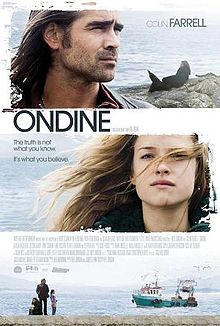
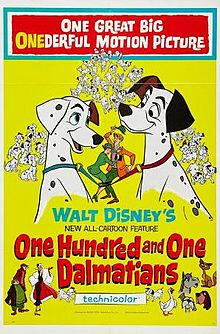
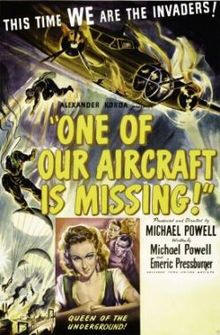
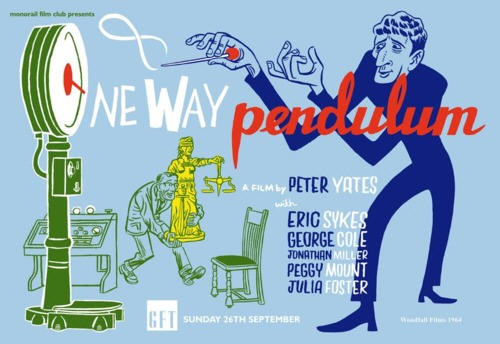
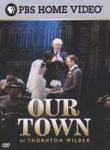
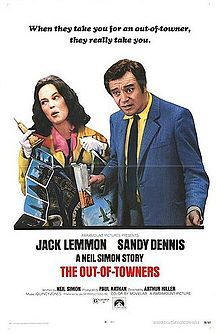
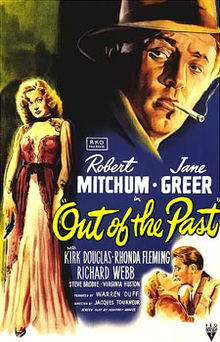
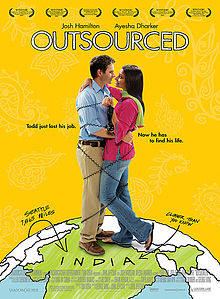
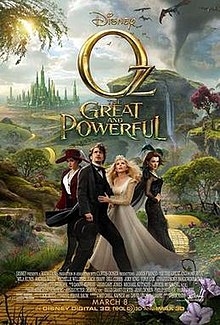
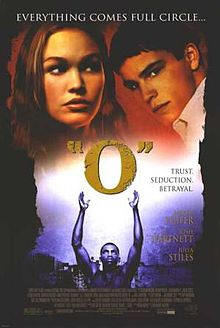
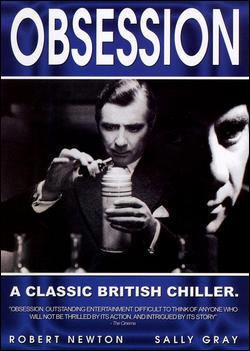
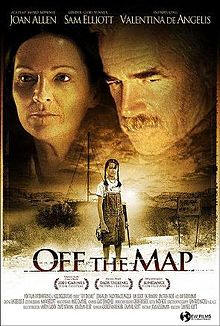
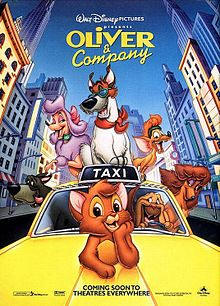
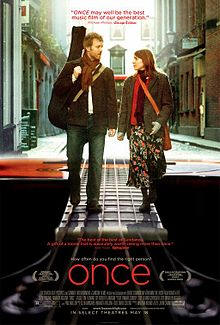
O (2001) A 21st century, hip-hop, basketball version of the Othello story. I love Shakespeare, and I am always interested in adaptations of his works, no matter how far-fetched. One of my favorite versions of King Lear was Ran, by Akira Kurosawa, which obviously didn’t used the original text. I also like Romeo + Juliet, by Baz Luhrman, which did, but set the play in an entirely different, fantastic milieu, and used guns instead of swords. O is one of those that uses only the story, not Shakespeare’s words. Some people have a big problem with that. They find it ridiculous. I don’t. The story has been stolen and re-worked so many times, in so many ways. (Shakespeare himself stole it, for that matter, as he stole most of his story ideas.) Both Verdi and Rossini wrote operas called Otello, which didn’t use Shakespearean dialogue, not even translated into Italian. I find a modern-day interpretation using modern-day language less ridiculous than the 1922 silent movie version—which is included on the special edition DVD. I mean, a silent Shakespeare? What that boils down to is a lot of overdressed guys gesticulating wildly at each other, and the odd title card with a few words from the Bard to keep the plot moving along. But most of the plays have silent versions, and people apparently enjoyed them who wouldn’t have sat through all five acts, nor understood much of Shakespeare’s words. Don’t get me wrong, I favor the original text, I love the poetry, the iambic pentameter. But that doesn’t make me scorn attempts to bring the story to a larger audience. Al Pacino made a whole, delightful little film called Looking For Richard, which was about how to think about and enjoy Richard III. This film attempts to interest the high school generation in the story. I don’t know how that worked, but I know it worked for me. See, the thing is, though I am usually deeply moved by Shakespeare’s words, I am moved on a mostly intellectual level. I am moved by the language, and by the acting. I can’t recall ever tearing up at any Shakespearean scene. Not the death of Cordelia, nor the assassination of Caesar, nor the suicide of Ophelia. Nor the deaths of Romeo and Juliet in any version I’ve ever seen, stage or screen. Moved, but not to tears. However, I sob like a child when Tony is killed in West Side Story. I can’t help it. I know these people, and I know the way they speak; I don’t know rich families in Verona, and I don’t know Elizabethan English. I have to listen hard, and think about the lines. I thought this worked surprisingly well. All the actors are good. Othello becomes Odin, known as O and played by Mekhi Phifer, the only black kid in a lily-white private academy, recruited for his basketball skills. Desdemona becomes Desi, played by Julia Stiles, who was 20 but can easily look 16. And Iago is Hugo, son of the basketball coach, Duke (Martin Sheen), who bitterly resents O for picking Michael Cassio (Cassio, obviously) as his main man on the court, and his father for favoring O. Hugo’s motivations are clear, and his plots diabolic. For the first time, I could really see Othello/O falling for Iago/Hugo’s lies; he tells them so persuasively. Phifer had to be good not only as an actor, but as a B-ball player, there could be no faking his moves or his slam dunks. And Martin Sheen plays an intense basketball coach very well. It’s directed by Tim Blake Nelson, that goofy-looking guy who’s probably better known as an actor than as a director. All in all, I recommend this one. IMDb.com O’Horten (2007, Norwegian) There is a genre of film that has no real plot, and enchants merely from the small and usually odd details of life. Americans are not usually very good at this sort of thing, they are usually from somewhere else. One of our favorites of this type of movie is Kitchen Stories, by the same man who directed this one. This one isn’t as funny as that one, and frankly, you will not roar with laughter in either of them, but I recommend both of them to people who don’t demand a lot of fireworks in their movies. In this one, a man is retiring after 40 years as a train engineer. He is at loose ends. He bounces from one odd situation to another, and there is no real resolution … and yet it is highly satisfying. Typical image from this movie: A man in a business suit, holding a briefcase, sitting on his butt and sliding down an icy street, solemn as can be. No explanation for it, no reason, just an image that slides by and is gone. You just have to smile. IMDb.com O Brother, Where Art Thou? (2000) Reviewed in Coen Brothers. IMDb.com Obsessed (2009) Second feature At the Drive-In with Angels & Demons. IMDb.com Obsession (1949) A nice little thriller directed in England by Edward Dmytryk during the period he was blacklisted in Hollywood by the anti-Americans on the House Un-American Activities Committee. A doctor is fed up with his wife’s affairs, and vows to kill the next man she philanders with. To that end, he makes an elaborate plan, thinking, like all megalomaniacs, that the perfect crime involves intricate skullduggery, rather than simplicity. He imprisons the other man in a cell, chained at the leg, and keeps him there for months, planning to … well, I guess that shouldn’t be revealed, his dumb plan for disposing of the body. You know things will go wrong, but it’s fun finding out how. Robert Newton (Bill Sikes in David Lean’s classic Oliver Twist) is good as the doctor, but the picture is stolen once again by Naunton Wayne, as the imperturbable Scotland Yard detective, sort of England’s answer to Columbo. IMDb.com Ocean’s Eleven (2001) I never saw the original, Rat Pack version of this, from 1960. This is the re-make by Steven Soderbergh, and a bit of a departure for him. It’s fairly smart, with snappy dialogue, even though you don’t believe it for a second. An amusing night at the movies. IMDb.com Ocean’s Twelve (2004) The first time they stole $160,000,000. This time they have to give it back. Has some of the attractions of Eleven, but tries too hard to top itself, too many times. By the end I didn’t quite know who had done what to who. Whom. I suspect there were gaping plot holes, but wasn’t interested enough to root them out. IMDb.com Ocean's 13 (2007) First feature at the drive in with Knocked Up. IMDb.com Ocean’s Thirteen Don’t press your luck, Steve. Off the Map (2003) This is a special little film made by the actor Campbell Scott, who also made Big Night. He’s definitely an actor’s director. It’s hard to describe the delights of this movie without giving too much away, and a plain description doesn’t actually sound that appealing. It’s told from the viewpoint of a 12-year-old girl living deep in the New Mexico countryside with her mother and father. No electricity, no phone, hardly any money, but they’re doing fine ... except the father is totally crippled by clinical depression. He doesn’t know where it came from, or what to do about it. Sounds awful, doesn’t it? But Joan Allen and Sam Elliott and the girl, Valentina de Angelis, along with great support from J.K. Simmons and Jim True-Frost, make it work. It has a hypnotic quality at times, and a great sense of humor. See it. IMDb.com The Office (2001) BBC sitcom. DVD. The Office only lasted two seasons, which is something the British do a lot more than Americans, preferring not to prolong a funny idea until it’s all used up, stale. This one is absolutely wonderful. No laugh track, no slapstick, no huge laugh lines that real people would never say. No gags. Just the worst boss you have ever seen, a real nightmare, who only wants to be loved and thinks he is funny. He’s not ... on purpose. A great supporting cast. IMDb.com Offside (2006, Iran) In Iran women can’t attend men’s sporting events. Some girls who are also soccer fanatics try to get into the stadium for the big game with Bahrain. The acting is poor, the writing is boring. The Iranian regime are barbarians. Militant Islamists are barbarians. I don’t even like peaceful Muslims very much. And soccer is a stupid game. So what’s to like? Nothing. IMDb.com Oliver and Company (1988) Saturday Night at the Toons! IMDb.com Oliver Twist (2005) You often wonder why someone chooses to remake a film, even if it is based on a classic book. Oliver Twist has been made no less than 20 times, according to the IMDb. Most critics agree that David Lean's 1948 version is the best, with Alec Guinness's Fagin the definitive one. (Ron Moody in Oliver! is a close second, though you can't really compare the two since one is comic and the other definitely is not.) You don't have to wonder why this director chose to remake this film, however. Roman Polanski's parents were sent off to concentration camps when he was about Oliver's age, and he had to fend for himself on the brutal streets for a long time. No question this story resonates with him. So, though it wasn't really necessary to make this film, I give him points for making a visually stunning movie, full of vivid Dickensian characters. Unfortunately, it totally laid an egg at the box office. But I had a few thoughts about the book itself. It is one of Dickens' most popular, and it's easy to see why. The book is more complicated than most of the screen versions (maybe one of the several mini-series included the whole plot, but I haven't seen them), and it turns out to be easy to snip out several subplots without any damage to the larger story. And it's the story that, upon reflection, concerns me. Polanski has left out the beginning, where a desperate woman dies giving birth, and the ending, where it is revealed that Oliver is the long-lost nephew of Mr. Brownlow. Okay, we expect unlikely coincidences in Dickens and other Victorians, as we expect sentimentality. That aside, what makes a Dickens story so compelling to this day is the realistic portraits of the evils of the age, the sheer grinding indifference of the upper classes and their moralistic lackeys to the plight of the unfortunates who Dickens loves so much. Oliver bothers me. Just look at him. Raised in an orphanage, then sent to the workhouse, unwanted, unloved, on his own. And yet he is so angelic, so full of goodness. How the hell did he survive ten years? In Oliver! he even speaks like a little upper-class twit (twist?), as if he was on the public school track that leads straight to Oxford, and in this new version his speech is distinctly different from the street urchins. Henry Higgins maintained that an Englishman's speech "absolutely classifies him," but he didn't suggest that accents were hereditary. Then, thrown in with a nest of thieves, Oliver never steals anything. Taken in by Mr. Brownlow, he exhibits all the honor and resolve of the class he was born into. And that's the key, isn't it? Did Dickens even realize that he was making that ancient, eugenic argument that "blood will tell"? His own youth was moderately well-off until he was 12, when his father was thrown into debtors prison and he had to go to work in awful conditions. I can imagine him slaving away, thinking "I'm better than all this." I'm not putting him down; who wouldn't think like that, in that situation? But it's a major flaw in the story for me. There is also the Merchant of Venice syndrome, with the "bad guy" being Jewish. I don't have a lot to say about that, except to note that the 1948 version was banned in Israel as being anti-Semitic ... and also in Cairo, as being too sympathetic to Jews! IMDb.com On the Riviera (1951) Danny Kaye was a huge musical comedy star back in the ‘50s, probably as big as Kelly or Astaire. His films were carefully tailored vehicles for his singular talents, which included wildly original patter songs and athletic dancing skills. They were usually quite funny, with him usually playing an incompetent of some kind, in films like The Court Jester and The Inspector General. But tastes moved on, and his career dwindled in the early ‘60s. He had a TV show for a few years, and then there was hardly anything. I’m a big fan of his, but this is definitely a minor effort. He plays two parts: a dashing French aviator and a nightclub performer who is a dead ringer. It was the second remake of a play called The Red Cat. Tired old plot, used to death. There are some good musical numbers, highlighted by an uncredited performance by Gwen Verdon. There is also a nicely-staged but painful-to-listen-to number called “Popo the Puppet,” where that inexplicable ‘40s and ‘50s tendency to think that grown men talking baby talk was funny is shown to its worst advantage. It’s not funny, it’s embarrassing. One thing I wish I could have seen more of was the airplane the aviator flew in on at the beginning. It seems to have been some sort of jet-powered flying wing capable of flying around the world non-stop, but we never get a very good look at it. Something else that’s curious: At various points people watch television … and it’s in color. (Also high-def, but that’s because it was actually film shown in a box.) Wiki tells me that color TV was not available in the US until 1953. Don’t know about France, where this was supposed to be taking place. But I wonder what audiences thought? Was this supposed to be in the near future? IMDb.com Once (Ireland, 2006) A short and appealing film about people making music. It plays out over about a week, during which a street musician/guitar player/songwriter meets a piano player from the Czech Republic, in Dublin. They are attracted, but for various good reasons they can’t get together. Sometimes you just meet the right person at the wrong time. We were both reminded of a film we both love, Before Sunrise. … unfortunately, I didn’t love this one as much, or even as much as I wanted to. Both characters are people I liked, played by Glen Hansard and Markéta Irglová. The writing was good. It’s nice to see something like this made on a very, very low budget. So what was wrong? Here’s why you probably shouldn’t take my review too seriously: It was the music. For one thing, a guy singing with a guitar is not my favorite genre, by a long shot. I thought all of these songs were pretty ordinary, until one toward the end that was in 5/4 time, a bit of complexity you don’t often see in pop music. (Though one of my favorite Linda Ronstadt songs is in 7/4.) I recognize that the sort of songs this man writes appeal to many people, just not to me. I’m a tough sell on lyrics, and I didn’t like any of these. So make of it what you will. You may love it, as huge numbers of people, including Lee, did. It just didn’t quite make it with me. IMDb.com Once Upon a Honeymoon (1942) This reminded me a little of Hitchcock’s Foreign Correspondent, with Cary Grant and Ginger Rogers rushing pell-mell all over Europe as the Nazis advance. One by one the countries fall, and Cary and Ginger try to stay one step ahead, which is hard, since Ginger is married to a Nazi provocateur and saboteur who is inciting the populations in any way he can. Hubby is played very well by Walter Slezak. It’s a minor film, but not a waste of your time. IMDb.com Once Upon a Time in Mexico (Mexico, 2003) Who needs Montezuma’s Revenge when there are movies as rancid as this? Don’t drink the water, it’ll clean your bowels right out. I’d prefer a severe case of diarrhea to having to see the last hour of this movie. We quit at about 40 minutes. IMDb.com Once Upon a Time in the Midlands (2002) One of those sweet little British comedies about the working class. I like them, and this is an excellent example. IMDb.com Once Were Warriors (1994) New Zealand is a fabulously beautiful country. (I've never been there, but everybody I've ever spoken to who has is rapturous about it.) It's so beautiful that, in the opening shot here, Lee said "It looks like a painting!" Well ... what it was, was a billboard advertising "Beautiful New Zealand!" What's behind the billboard as we pull back is sort of like The Road Warrior set in the South Bronx. This is where the social dregs of Auckland live, mostly on the dole, mostly problem drinkers, mostly Maori. I did a little reading on the Maori. They are not at all related to the aboriginals of Australia. In fact, though they were screwed by the white man, like all indigenous populations were during the Era of Expansion, they got off better than most. And, oddly enough, they had been in New Zealand for no longer than 800 years, so you could call them newcomers. They died of white men's diseases, like all native people did. And there were wars ... but they'd been fighting genocidal wars among themselves for centuries. Bottom line, they got a better deal than most native cultures. Many assimilated. The government has been concerned and sensitive (relatively speaking, of course, there were no atrocities to compare with how the Aussie treated their natives), Maori is an official language in NZ. But the bottom line below that bottom line is that Maoris are nevertheless usually the most culturally and economically disadvantaged New Zealanders. So I expected this to be about the oppression of the Maori culture, and for the villains to be white. But that's not the story. Though it's pretty much an all-Maori cast, it's about domestic violence and alcoholism, and could have happened in any setting ... though I have to say, if Kiwis are anything like Aussies, they can be epic drinkers, putting away quart-sized bottles of beer like soda pop. Jake is a self-loathing (though he'd never admit it, even to himself), self-described "son of a long line of slaves." Beth is his punching bag of 18 years, from a good traditional Maori family, who blames herself for getting the crap beaten out of her. They have 5 kids. The oldest joins a gang of Maori youth with tattooed faces, any one of whom look as if he could eat three Hell's Angels for breakfast and not even spit out the bones. We're really talking The Road Warrior here. Another boy is sent into government custody because the family can't control him ... and it's not a terrible injustice, nor is it portrayed that way. If I were the judge, I'd have done the same thing, and it may in fact be his only chance at salvation. The saddest character is Grace, who Beth and Jake both fail in the most basic way. It's finally a wake-up call for Beth. Maybe things will get better. She seems to be shed of Jake ... but cynical me, I really wonder, if she'd loved a guy for 18 years in spite of all the broken bones and knocked-out teeth and black eyes ... women so often give the fellow just one more chance ... until the guy finally kills her. IMDb.com Ondine (2009) Neil Jordan is a terrific director, with movies like The Crying Game and Mona Lisa. Here he tries to mix myth with reality, and it doesn’t quite work, but it’s good up until the very end. Colin Farrell is a small-time fisherman in a small Irish village. One day he hauls in a beautiful woman (Alicja Bachleda-Curuś), near death, in his nets. She doesn’t want to be seen by anyone. His daughter (a very good child actress named Alison Barry), who is in a wheelchair and is getting dialysis while waiting for a kidney, convinces herself that the woman is a selkie, which is a seal that can shed its skin and become human. It all goes along so nicely, with wonderful photography and spooky atmosphere, that it was a sad surprise to me to find out how mundane and uninteresting the real story is. IMDb.com One From The Heart (1982) Francis Ford Coppola was said to have directed this entirely from a trailer, watching on TV. Huh? The sets are fabulous; nothing else is. IMDb.com One Hundred and One Dalmatians (1961) Saturday Night at the Toons! IMDb.com One-Hour Photo (2002) Robin Williams stretches himself here, and the plot doesn’t unfold quite as you would expect it to. But not real memorable. IMDb.com One of Our Aircraft is Missing (UK, 1942) I’ve always like British movies from WWII better than American ones. Ours are always relentlessly gung-ho, I guess because that’s how we built morale in 1940s America. The Brits always go the other way. They understate it all, with droll wit and “Do duck your head, old chap!” “Oh, I say, thanks, you old thing!” sang-froid. Here we have the story of a crew of six on a bombing mission to Stuttgart. Their plane is disabled and they have to bail out. The scenes on the plane are very tense and claustrophobic, extremely well done. Then they get on the ground in Holland and can relax a bit, with typical British calm. They are smuggled out of the country right under the noses of the damn Nazis, by the resourceful Dutch Resistance. My hat is off to undergrounds everywhere. It takes real nerve to sabotage the new rulers who are occupying your country, at least as much as it takes to be a soldier, maybe more. The film is unusual as it has no musical score at all. It’s hardly needed, in my opinion. The directors were the team of Michael Powell and Emeric Pressburger, both of whom had big careers later on, but it’s more remarkable to me because of names further down in the credits: edited by David Lean, cinematography by Ronald Neame, who just died in 2010, age 99! It is also the first film appearance of Peter Ustinov, who has a small part as a Dutch priest. IMDb.com One Way Pendulum (1964) Here’s one for my list of extremely odd movies. It’s not a long list. It’s from a stage play by N.F. Simpson, who was an absurdist, like Harold Pinter and Samuel Beckett. It was influenced by the famous “Goon Show,” and in turn influenced Monty Python. It was made a year before one of my favorite films, Richard Lester’s The Knack … and How to Get It, and there is a kinship, though this one has no actual plot. It concerns a ditsy family in a small house in London. The father is busy reconstructing the Old Bailey in the living room. The son steals talking scales, or speak-your-weight machines (“Your weight is ten stone, eight pounds”) and keeps them in the attic, where he’s teaching them to sing. I didn’t even know there were talking scales in 1964. The mother cooks so much food she hires people to come in and eat the leftovers. The daughter (Julia Foster, who was one of Michael Caine’s girlfriends in Alfie) wants to have her arms shortened. It begins in the more-or-less real world, but gets crazier by the minute, and about halfway through diverges into another reality, with an absurdist trial happening. (The judge proposes one of the better arguments against the death penalty I’ve ever heard: Capital punishment precludes society from prosecuting the dead man for crimes he might have committed had he lived.) I can’t say that I laughed much, but I was interested, sometimes fascinated. I suspect this sort of lunacy might have played better on the stage. It was directed, very early in his career, by Peter Yates, probably best known for Bullitt. He also did The Hot Rock, a favorite of mine. IMDb.com One Week (1920) Buster Keaton two-reeler. This is one of the well-known ones. Buster is a newlywed, and the couple has received a build-it-yourself house in a lot of boxes. But Buster’s rival has switched the numbers on the boxes. When the house is completed, it is all out of whack. This provides endless opportunities for pratfalls, and Buster finds every one of them. When a storm comes, the wind blows the house around like a carousel. The whole damn thing was mounted on a turntable! Then they find out the have to move the house, start towing it, and the rope breaks. The house is on the train tracks. A train is coming down the tracks … and I won’t tell what happens, except to say it is perfect, not what you were expecting … and then the payoff, out of nowhere. Hilarious! IMDb.com Only Angels Have Wings (1939) Here’s a nice little film set in the mountains of Columbia, telling the story of the men who fly planes over the Andes … and sometimes even make it. Cary Grant is the tough-as-nails head of the operation. Jean Arthur shows up on her way to somewhere else, and stays, and—who would have guessed it?—falls in love. Rita Hayworth and Richard Barthelmess provide complications, he being a pilot held in contempt by the others because he once bailed out of a plane and left his navigator to die. All in all, a fine adventure-romance directed by Howard Hawks. The flying stunts using models are pretty good for the time. IMDb.com Open Range (2003) Opens okay, but degenerates into stupidity pretty quickly. IMDb.com Open Water (2003) Aaaaaaaaaaaaaaaaaaaaagh! Get me out of the water! This is the best thriller I’ve seen in years. Maybe it’s because I have two strong phobias: being underwater, and being in the water with sharks. The first is because I can’t swim, and I can’t swim because the evil Coach S., during my first swimming lesson when I was about 12, thought holding my head underwater would cure me of my reluctance to do it myself. I coughed up a lot of water, went home, never went back and have spend the last 45 years thinking of ways to kill Coach S. The second phobia ... I’m not sure, but I think it has to do with growing up on the Texas Gulf Coast, going to the beach and standing in water so murky you couldn’t see five inches down into it, and feeling things bumping my legs, then seeing seiners haul in 8-foot hammerheads from water no deeper than I had been standing in. Haven’t been in ocean water more than knee-deep since then. It’s the most claustrophobic movie since Rear Window. The cameras get you right down into the water with these two stranded divers, and you don’t see a lot more than they see. You’re with them as all the illusions of civilization break down, gradually, and they realize that, in the end, we are all meat, and there’s nothing you can do about it. The only questions are which creature will eat you, and whether you’re still alive when they do. WARNING: THIS IS A BAD DREAM MOVIE!!! IMDb.com Operation Mad Ball (1957) This is from early in Jack Lemmon’s career. He had made three or four movies, including Mr. Roberts and It Should Happen to You (co-starring with Judy Holliday), but he hadn’t really arrived as a big-time box office draw. The Apartment and Some Like it Hot were in his near future. This is one of those “service comedies” that were so popular in the ‘50s, that tended to make it look like war had been a lot of fun. So many guys had been in the military and knew the language and situations that I guess it was a guaranteed audience. I imagine their wives wanted to see what their men had experienced. These movies tended to take place in the rear areas, or involve an odd SNAFU, like Operation Petticoat or The Wackiest Ship in the Army. (Come to think of it, in any war, at least since WWII, more men serve in the rear areas than in combat zones.) Here Lemmon plays Pvt. Hogan (oddly enough, the same name he had in a movie we just saw: Under the Yum Yum Tree), one of those guys who knows how to get things done, one way or another, in war or peace. It takes place just post-war, and involves a bunch of mostly non-coms setting up a big party under the noses of the officers, and in particular an asshole major played very well by Ernie Kovacs. Hogan spends most of his time bamboozling the officers and ordering sergeants around. It reminded me of Ex-PFC Wintergreen in Catch-22, the man who was really calling the shots in the European Theater, no matter what the generals thought. IMDb.com Operation Petticoat (1959) Sort of the tail end of the “Wasn’t World War II a barrel of laughs?” genre. I can sort of understand it. Millions of guys (and quite a few dolls) were in uniform 1941-45, shared common experiences, and even those in combat had a lot of time when they weren’t actually fighting. Many others never fought at all. It takes a lot of behind-the-lines personnel to back up one soldier in the field. And even combat veterans—those who didn’t actually lose their minds—eventually adjusted to civilian life and eventually looked back on this most exciting time of their lives with nostalgia. Enter the service comedy, to cash in on that feeling. They actually lasted long enough to produce one of the most extreme and, some say, objectionable examples, “Hogan’s Heroes.” But by 1959 I think they were starting to go away. I tend to like them. This is one of the better ones, directed by Blake Edwards early in his career, starring Cary Grant and Tony Curtis. Grant and Curtis both do what they do best. Most of these comedies have a poignant scene somewhere in them, where somebody gets killed, reminding us that after all, this is war. Not this one. One mildly tense moment when the submarine is being depth bombed by our own destroyer is about as stressful as it get. To my surprise, the business of the pink submarine was based on fact. Somewhere in the Pacific they really did have only enough white primer and red primer to cover one sub, and instead of painting it peppermint they mixed the paint and came out with pink. It’s a striking image. But peppermint might have been funnier. IMDb.com Origin of the Species (1998) Six people, friends from childhood, get together one summer weekend as they have for the last ten years, since high school. They interact in various ways. Old issues are brought up, new issues arise. This is a small movie and not a bad one, but it didn’t affect me much. It may very well be a generational thing. These 29-year-olds just weren’t very interesting to me, unlike the people around my age who made Return of the Secaucus Seven and The Big Chill so fascinating. So don’t assume that you won’t like it, even if you are of my generation. The writing is not bad and the acting is good. IMDb.com Osama (Afghanistan, 2003) Not the Osama I’d like to spend some quality time with; just him, me, and a rusty Swiss Army knife. This is one of the most horrifying movies I’ve ever seen, the first movie made after the Taliban was ousted from power in that miserable country. While they were there, women were not allowed to leave their homes without a male escort, and not allowed to work, so I suppose they were expected to starve to death gloriously, allahu akbar! (God is Great!) A widowed woman cuts her daughter’s hair and dresses her as a boy (calling herself Osama) so she can work. I try to dislike all religions equally, and Da Lawd knows Christianity has much to answer for, both in the past and today ... but I despise Islam. I just hate everything about it. I know these were (and are) fanatical extremists, but still ... You know this story will end badly, and it does. IMDb.com Othello (1922) This was included on the DVD of O, so I thought I’d give it a look. (The IMDb lists no fewer than 35 versions of Othello for movies and TV!) It stars Emil Jannings as the Moor. Jannings was very good in The Last Laugh, and he starred in The Blue Angel and won the very first Best Actor award for The Last Command and The Way of All Flesh. (It wasn’t necessarily just one role in those very early days.) (That second picture, by the way, is the only Academy Award performance that is lost. The film no longer exists.) I imagine Hollywood wanted to take the Oscar back in the late ‘30s, when he enthusiastically made films for the Nazis. Iago, much the better part, is played by Werner Krauss, who was wonderful as the doctor in The Cabinet of Dr. Caligari. Here he mugs outrageously. Jannings glowers, frowns, and clutches his massive breast in the throes of jealousy and rage. It’s a preposterous idea, really, making a silent movie of a Shakespeare play. You lose all but little quotes from the language, which is the main reason to see Shakespeare. All you can do is dramatize the plot—and most of the Bard’s plots are preposterous, when you think about them—and Othello has always been a hard sell for me. I mean, the guy is so stupid! Dumber than Lear. Dumber than Forrest Gump. I never liked him. Whereas, though I don’t like him, I sort of have to admire Iago for his incredible cunning. He gets his way by having other people do his dirty work. Sort of the Dick Cheney of the 16th Century. IMDb.com Our Gang Two-Reelers. TCM was having a day-long marathon of what we used to call “Little Rascals” back when they were showing public domain copies on early TV. I TiVoed ten of them. Our Gang is what they were originally called, and that’s what I’ll use here. We loved them. I find myself wondering if kids still do, or if the world they show is now hopelessly alien to them. I mean, little kids going out in the big bad world all on their own? No parental supervision? No stranger danger? No seat belts or child safety seats in cars? No iPhones to call your friends on? These kids might as well be playing on Mars. Like so many films of this era, some of them are tainted by racism. Back in the bad old unenlightened days of my youth, those were shown on TV, too. And I will admit that one of the worst was a real favorite of me and my friends. It’s called “The Kid From Borneo,” and features a “wild man,” dressed in leopard skins, who somehow ends up in Spanky’s house. Spank starts feeding him stuff from the icebox (remember that term?), and the guy devours it all, growling “Yum yum, eat ‘em up!” which are the only English words he knows. He eats a can of sardines without opening the can, then he eats the key. He eats everything. We howled with laughter … but I think we would have howled if he had been white, too. These shorts have now been removed from broad distribution, or censored, and for once I agree … to a point. These things don’t belong on Saturday morning TV, for sure, or on Nickelodeon, or anywhere that children will watch. But I hope TCM still will show them. I don’t know if they do; that one wasn’t among the ones I just watched. Here it is. What impresses me more, given the times, is how racist they are not. Stymie, Buckwheat, and Farina are just part of the gang … a situation that, ironically, probably didn’t happen all that much in real life. Stymie in particular is often the wisest of the group. He will get scared by ghosts, as all “darkies” did in those days, rolling their eyes and such, but he’s no more scared than any others in the gang. They interact with and are treated exactly as the white children are. Stymie was, in fact—and I’m sorry to say this, but it’s true—my only interaction with a black kid during my whole childhood. Me and my gang all liked Stymie, though. He and Spanky and Alfalfa always had the best lines. Mama’s Little Pirate (1934) Somebody discovers pirate treasure, so the gang wants to go out looking for some. But Mama won’t let Spanky go. He splits in two and his devilish side says he should sneak out, which he does. They find a cave and tie a long string to Buckwheat so they can find their way back. Naturally, she follows them. They find a gigantic treasure chest and fill their pockets with gold until they can barely walk. Then they are chased by a huge caveman … until Spanky wakes up in his bed. IMDb.com Mike Fright (1934) The gang forms The International Silver String Submarine Band and wreak havoc in a radio station before performing a pretty good rendition of “The Daring Young Man on the Flying Trapeze.” IMDb.com The First Round-up (1934) They all go on a camping trip, but won’t allow Spanky and his younger friend to go. But when they get there, worn out and hungry, Spanky is already there. They hitchhiked! Only Spanky remembered to bring food, or a good sleeping bag … or much of anything else. At night they get spooked, and run home. A pretty good one. IMDb.com Mush and Milk (1933) A bunch of kids in a boarding school run by an awful old woman. After they milk the cow Pete the dog knocks over the pail, so they mix up some more milk from plaster of Paris. James Finlayson, master of the double-take-and-slow-burn, has a small role. IMDb.com Forgotten Babies (1933) Impossible to make this one these days. The kids go fishing and elect Spanky to babysit all the really young kids, about a dozen of them. The kids wreck the house. One kid keeps tottering to the top of the stairs and then starting down. I hope they had a safety cable on him. These days, it would be child abuse to film that scene. IMDb.com Free Wheeling (1932) The prop department at Hal Roach and MGM always outdid themselves in these little two-reelers. Here they create a donkey-powered taxi, a typical Rube Goldberg machine with ingenious linkages, cobbled together out of scraps and covered with misspelled words. The plot: A rich kid with a hypochondriac mother who is convinced he is sickly just wants to go out and play with Stymie and the gang. It is one of the few times I’ve ever seen that Stymie’s race is mentioned. To the mother he is “that little colored boy.” IMDb.com Fish Hooky (1933) The school is going on a field trip to an amusement park on a pier, but the gang doesn’t know that, so they play hooky, only to find they have missed all the fun. When they go anyway there is a chase through the park, over all the rides.. Old Our Gangster Mickey Daniels plays a truant officer. IMDb.com Birthday Blues (1932) Skinflint Pa won’t buy a new dress for Ma’s birthday. To raise money for a new dress, the son and his friends bake a cake with prizes in it and sell tickets to other kids. Naturally the kitchen is a disaster area. IMDb.com Hook and Ladder (1932) More amazing vehicles, this time three fire trucks. They find a barn on fire, and it is full of dynamite. Stymie saves the day! IMDb.com Free Eats (1932) Two midget pickpockets disguised as infants infiltrate a charity dinner at the home of a rich woman, and steal all their jewelry. Only the gang know these “kids” can talk, and are packing heat. They aren’t believed at first, but eventually they expose the bad guys. IMDb.com Our Hospitality (1923) One of Buster Keaton’s best. It involves a family feud but the plot isn’t nearly as important as the highlight of the movie, a working recreation of Stephenson’s Rocket, which has a pretty good claim to being the first railroad locomotive engine. The train and cars are amusing enough, but the track … oh, my. Instead of moving a log, the builders just made the track hump over it. At one point someone grabs onto the end of the train and stops it dead, that’s how powerful it was. There is also a hair-raising sequence dangling over a waterfall where Buster was actually injured. IMDb.com Our Town (2003) Talk about full circle. One of Paul Newman’s early roles, before he’d done any movies, was as George Gibbs in a 1955 television production of Thornton Wilder’s masterpiece, Our Town. (It must have been an ideal property for those early, poverty-stricken TV days, as it requires no sets at all.) And but for Empire Falls and his voice work in Cars, his role as the Stage Manager in this PBS production was his last film appearance. I’d love to see that old B&W version. I’ll bet he was pretty raw. Forty-eight years later, for this one, he is clearly the master of his craft. You gotta love Our Town if you’re a small-town—or any town—theater person. You can stage it literally anywhere. It takes no money at all for scenery and the props are two tables, two ladders, and a few chairs. (You could even dispense with the tables and chairs in a pinch.) There have been many versions of this play over the years, and the main role, the Stage Manager, has been tackled by Art Carney, Spaulding Gray, Hal Holbrook, and … no kidding … Frank Sinatra. The best-known version was the first, in 1940, with William Holden as George. I’m pretty sure this is the version I saw, many years ago, and it impressed me deeply. I wouldn’t watch it again, though, as they used sets and changed the ending so that young Emily’s death in childbirth is only a dream. She wakes up, and everything is okay. I think this totally ruins it, and even if it’s true that Wilder approved all the script changes, the author is not always right. I can only think that, script approval or not, Wilder’s philosophy toward Hollywood must have been pretty much like Ernest Hemingway’s, which was, basically, take the money and run, as fast as you can. This new, Newman production is vastly superior. IMDb.com The Out-of-Towners (1970) This is a minor work by Neil Simon, written directly for the screen, but it’s still funny. I don’t think any actor who ever lived could have played the character of George Kellerman and taken me through the whole movie without driving me crazy. George is a whiner, though he never actually whines. He feels he is entitled to a better deal from everybody else, including God. As soon as things go wrong, he rails against fate or anyone who happens to be in the area and might have caused him trouble. Usually these are the little guys; when his luggage goes astray, he takes the name of the agent who had nothing to do with his misfortune. He takes everybody’s name, and intends to sue them all. How he got where he is without being up to his neck in litigation is a mystery. Through the whole picture, as disaster after disaster befalls him and his calm, long-suffering wife (Sandy Dennis), if only he had taken her advice everything would have been fine. But he never listens to her, he always knows best, and he’s always full of shit. He is a pipsqueak blowhard and a buffoon. He managed to develop a terrible ulcer living in small-town Ohio. He is the last person on Earth who should be moving to New York City. Like I said, Only Jack Lemmon could have played this so interestingly that I didn’t want to actually jump into the screen and strangle him … though I kept wishing Sandy Dennis would. IMDb.com Out of the Past (1947) There have been many attempts to define the genre known as film noir, but none that are really satisfactory. Damon Knight once said that science fiction was whatever he was pointing at when he said science fiction. A Supreme Count justice once defined pornography by saying he knew it when he saw it. Either of those suit me fine when it come to noir. I know what it looks like, and boy, is this film noir, through and through. The main element is the B&W photography (though there have been a few color films that qualify), the use of shadows and light, camera angles that emphasize the starkness of the settings. Film noir never happens in mansions—unless it is Philip Marlowe visiting a wealthy client in The Big Sleep—they happen on the streets, in dives and waterfronts and back alleys. Women are usually unreliable, though there is often a good woman as well. And smoke. There’s always smoke. Just about every scene in this movie begins with one or more characters lighting a cigarette. I’d almost be tempted to actually count the number of cigarettes smoked in this film. Everybody smokes. Which worries me a little. I mean, Disney photoshopped a short film called “Pecos Bill” such that he no longer rolled his own, and film ratings these days warn of smoking along with sex and violence. I’m not defending smoking, but with the Orwellian re-writers so hard at work, how long will it be before films like that are banned? That, or CGIed such that Rick sitting in his café in Casablanca no longer has a butt smoldering in the ashtray? Okay, enough of that. The stars are Kirk Douglas as the bad guy, and Robert Mitchum as the retired P.I. forced to go back to work for him. The plot is confusing, but who cares? There will never be another actor who fits so splendidly into film noir as Mitchum. Those sleepy eyes, the stony face, that voice … he was the greatest. I think his performance in Farewell, My Lovely was the best he ever did, but this one comes close. IMDb.com Out of Time (2003) Denzel Washington. Goes along pretty well until the last reel, which is always the toughest. Not totally stupid, but no more than an entertaining time-waster. IMDb.com Outsourced (2006) Here is a bright and funny little romantic feel-good comedy set mostly in India, maybe an antidote to the horrific early scenes in Slumdog Millionaire. A guy from Seattle is sent to India to train the people who are taking over the phone-ordering jobs of a company that is interested in only the bottom line. He tries to make them work like Americans, but has a lot to learn about India. It’s very funny. It has no deep political message, but manages to get in a few licks here and there. Some phone customers from the US are angry to be talking to a person in India who is taking American jobs. The assistant manager and love interest (the incredibly beautiful Ayesha Dharker) says they are happy to refer unhappy customers to a firm that sells only MADE IN USA products. They will sell him an identical item ... for $200 more. Uh … er … that is … okay, I’ll buy it from you. A real patriot, that, until it comes time to pay up. Probably shops at Wal-Mart and never gives it a second thought. (Lee and I never shop at Wal-Mart.) And at the end, the Indians find that their jobs are being outsourced to China! A personal note: My sister and I went to Australia about … my god, is it 20 years ago? How time flies. We continued on around the world, and one stop was Bombay, now Mumbai. The scenes in this movie showed me that, though I know there is a New India, with much prosperity and new construction, a lot of it is still as we saw it, an incredible shambles that somehow functions. (A lot like New York City.) When the couple in the movie must travel to an island because a shipment has gone to the wrong Gharapuri village (the call centre is in another town called Gharapuri) I began to recognize things. They begin at the Gateway to India, a huge monument erected for the visit of Queen Victoria back in the days of the British Raj. The island turns out to be Elephanta Island, where Kerry and I took a ferry to see the ancient cave sculptures there. “Ferry” is a pretty grandiose word for the crappy little boat we boarded, though. Halfway there, with not much of Bombay still visible and nothing of Elephanta Island, the engine conked out. We spent the next half hour alternating between staring into the ugliest, smelliest, most crap-filled waters I had ever seen, wondering how it would be to sink into that shit, and watching three or four crew members standing around the open engine hatch, seeming to think they could fix the freakin’ engine by will power alone. Somewhere down in the hold somebody was hammering at something … it was the boat ride from Hell, believe me. If they hadn’t got the damn engine started when they did, I knew I would have started heaving the crew into the water. IMDb.com Over the Hedge (2006) How we got this DVD is more interesting than the movie itself. Bruce Willis was finally getting his star on Hollywood Boulevard on October 16th, at 11:30 in front of Grauman's Chinese Theatre. Now, when Vanna White gets a star they close off one lane of the street for a few hours and the one or two hundred people showing up for the ceremony squeeze in there. When Bruce gets his, they close off almost the whole street for the whole morning. (And the other side of the street was getting ready to close for some sort of The Nightmare Before Christmas promotion at the El Capitan Theatre as we were leaving. Hollywood is a thrill a minute!) The street was barricaded into regions for the stars, the paparatizzi, and the hoi polloi. That is to say, us. The place was jammed, probably about a thousand people. We tried to get in and some asshole in the event crew told us the area was closed. Closed? Closed? Then who were those people craning their necks and listening to Johnny Grant, the affable old honorary "Mayor of Hollywood," vamping until the celebs arrived? Another guy told us we had to go into Grauman's parking lot and get green armbands. Why? Who knows, but we went and got them, and were let in with the teeming masses. (There was one level of attendee below us: about 500 people behind the barricades across the street, where a man stood with a sign asking "Bruce Willis, where is my money?") Once inside we resolved that the next time, we were coming with one of those little folding stepladders. You'd think they'd build a platform, they'd only need to have it about six feet high or so, and people could see better, it'd take them about five minutes to erect it along with the sound system and the barricades. But no, it was the same little dinky two-foot podium they used for Nancy Sinatra's star. Maybe half a dozen people there had brought their ladders. The rest milled around and held their cameras up in the air. Since I'm usually the tallest one there it's not a problem for me, but Lee can't see shit. So I ended up holding the camera as high as I could and hoping for the best. Eventually all the celebs were assembled in the theater, and Johnny started calling them out. First the man of the hour, then Ben Affleck, Billy Bob Thornton, Jeffrey Katzenberg (the K in SKG, with Spielberg and Geffen, a guy I worked with on an ill-fated project in the '80s), Sly Stallone, Kevin Costner, Demi Moore, Don Johnson (though why a guy whose career is in the toilet would want to be here I don't know), a few others. I managed to get one shot of Costner and a glimpse of Stallone, but of the others I saw not a trace unless they came up to the podium to speak, which was Billy Bob and Ben. Our local city councilmen spoke—briefly, thank god—and a proclamation from Arnold was read. Bruce's mom was there, looking very good, and Scout and Rumer and maybe Tallulah Belle, but I couldn't get any good pictures of them because they were too short. Johnny Grant had promised us all a free DVD, so when things were winding down us lucky folks with the green armbands were herded back to the Grauman's lot (moo! moo!) and each of us were handed an Over the Hedge DVD and Xtra-Large T-shirt. This was a special edition DVD, with a border around the cover commemorating Bruce getting his star on the Boulevard. Hot damn! Probably be worth a lot of money ... in about 1000 years. Oh, yeah, I'm supposed to be reviewing the movie here ... Well, what can you say about the 1001st CGI extravaganza featuring warm, cuddly, wise-cracking animals who don't eat each other? The CGI was terrific (yawn). The famous actors who have now completely replaced what used to be voice-over talent in Hollywood are all adequate to the job (snort, snarf). There are some laughs, a few larfs, and even a laff or two (oh, boy, am I sleepy!). The plot is about what you'd expect ... ZZZzzzzzzzzzzzzzzzzzz................ IMDb.com Overnight (2003) See, what happened was, this bartender named Troy Duffy wrote a screenplay called The Boondock Saints and got it to Harvey Weinstein of Miramax Films. Harv loved it. Next thing you know, Troy’s got a $300,000 salary to direct the film, and a $15,000,000 budget, and also a contract for his band. Whoopee! Suddenly Troy is the Hollywood golden boy. He figures he’s the king of the world! All sorts of actors start sucking up to him: Vincent D'Onofrio, John Goodman, Matthew Modine, Billy Zane, Patrick Swayze. Two guys, Tony Montana (really? That’s the name of the Al Pacino character in Scarface) and Mark Brian Smith, start filming what they figure will be a “Making of” documentary. Well, it could happen. We know from the example of Quentin Tarantino that a stupid-looking, working class, offensive, blowhard vulgarian can actually conceal some real writing and filmmaking talent. Why shouldn’t Troy be the next one? For about ten minutes I’m with him ... though I can see he’s riding for a fall, naive enough to think that just because names are on dotted lines, something will actually come of it all. I could have told him different, but he wouldn’t have listened. Troy listens to no one but himself, and the advice is usually bad. For fifteen minutes he’s the biggest news in town. And fifteen minutes later, no one will return his phone calls. It’s easy to see why. He is the very definition of an asshole. Every sentence he speaks contains the word “fucking” at least twice. He betrays every friend he has (many of whom are his brothers). He describes himself as “a deep cesspool of creativity,” and truer words were never spoken. Amazingly, the film actually does get made, on half the budget he had counted on, and in Toronto. Uh-oh! Moving the production of my movie, Millennium, to Toronto turned out to be the final nail in its coffin. He gets Willem Dafoe and Billy Connelly, two fine actors, to star in it. It is finished, taken to Cannes ... and nobody makes an offer. Probably because it sounds like a piece of shit. We never see any actual footage. (Oddly, it’s become something of a cult film on DVD. Maybe I’ll have to take a look at it ... and maybe not.) At the end of the film Troy is broke and basically on the street ... but believe it or not, the IMDb lists Boondock II: All Saints Day as currently being in production. I guess you can’t keep a persistent asshole down. Oh, by the way, since I haven’t mentioned it yet ... this is a really good film, in spite of its subject matter. Sort of a low-rent Lost in La Mancha. If you want to see how a film can go horribly, completely wrong, see this one. This is a wonderfully gratifying karma-in-action movie. IMDb.com Owning Mahoney (2003) Philip Seymour Hoffman, Minnie Driver. Excellent work by both, in a based-on-fact story of a compulsive gambler who managed to steal an amazing amount of money from the bank where he worked for an amazingly long time. IMDb.com The Ox-Bow Incident (1943) Hollywood made so many crappy westerns—Saturday matinee serials, “singing cowboys” in ridiculous outfits, endless B and C movies—that I sometimes forget that some of the best movies ever made were in a western setting. I can easily think of a dozen. This, which I had somehow never seen, can stand with any of them. Henry Fonda and Harry Morgan ride into a dusty little shithole in Nevada and quickly find themselves caught up in a so-called “posse” formed to catch some rustlers who murdered a local man. It is nothing more than a lynch mob, and they have pretty much established the guilt of these men before they even find them. Most of them are having a grand old time of it, until they find the “rustlers.” One is a feeble old man, another is a Mexican played by Anthony Quinn, and the leader of the group is Dana Andrews, who has a wife and two young daughters. Some begin to have doubts. But in the end only seven of the men vote to take the accused back to town for trial. They string the varmints up, and I’m sure it will come as no surprise to you to hear that they were all innocent. The movie is a powerful indictment against vigilante justice, based on a novel by Walter Van Tilburg Clark, and quite faithful to the book. The performances are first-rate all around, including Jane Darwell, playing a character about as far from Ma Joad as she could be. IMDb.com Oz the Great and Powerful (2013) I don’t see a lot of 3D movies. Partly it’s the extra expense, and partly it’s that I don’t think it really enhances most movies. I’m fine with the flat. But every once in a while I figure I’ll sample the technology again. I did it with Avatar, which was greatly enhanced by 3D, and with Hugo, which didn’t really need it. This one looked like a good one to try out for my bi-yearly 3D because the trailers showed a truly magical landscape. (Before the movie began we saw trailers for two upcoming juggernauts: Iron Man 3, and Man of Steel, both of them in 3D. And I realized I had less than zero interest in seeing them, in 3D, 2D, 1D, or ZeroD. When, oh when, will audiences tire of idiotic superhero movies? It’s looking like the answer is never.) So, right off, the production design is dazzling, Oscar-worthy. Vista after stunning vista … until, frankly, I got a little tired of stunning vistas. Especially when almost everything that was happening in those vistas was all wrong. It was clever of them to open the film with the old 1930s aspect ratio and in black and white like the classic, then expand to wide-screen color when Oz got to Oz. And that’s about the last clever thing they did. First and worst, James Franco was all wrong for the role. I just wasn’t interested in him at all. Then, his companions on the Yellow Brick Road were pretty poor substitutes for the Scarecrow, Tin Man, and Cowardly Lion. They were both CGI creations: a broken ceramic doll and a flying monkey there for comic relief, who was given no funny lines or behaviors. I quickly grew to hate him. In fact, what the movie lacked was any sense of wit, any innocent delight. The script was plain rotten. Every line was predictable. The only thing I had any interest in was the sibling rivalry between the three sisters: Mila Kunis, Rachel Weisz, and Michelle Williams. Something much, much better could have been made of that, but they didn’t. I guess it had already been done, in the musical Wicked. Mila’s red hat and leather pants was about the most interesting thing about her. And how long will it take before everyone is as tired as I am of magical duels, a la Harry Potter, when two people face off and hurl competing bolts of electricity at each other? That’s a scene guaranteed to put me to sleep. Can anyone think of something more interesting for two wizards, witches, warlocks, whatevers to do when they go at each other? Throw elephants at each other, maybe? Give each other raging hemorrhoids, attacks of diarrhea, turn them into Justin Bieber? Anything but those boring, uninteresting bolts of un-magical magic. IMDb.com
|





146964_f.jpg/220px-Once_Upon_A_Honeymoon_(1942)146964_f.jpg)